

THow can the story of the Greater Poland Uprising be made engaging for children? How can historical events from more than a century ago be presented in a way that is accessible, interactive, and enjoyable for entire families?
The answer was Mela and Szczun on a Historical Trail – a temporary exhibition created for the Greater Poland Uprising Museum in Poznań.
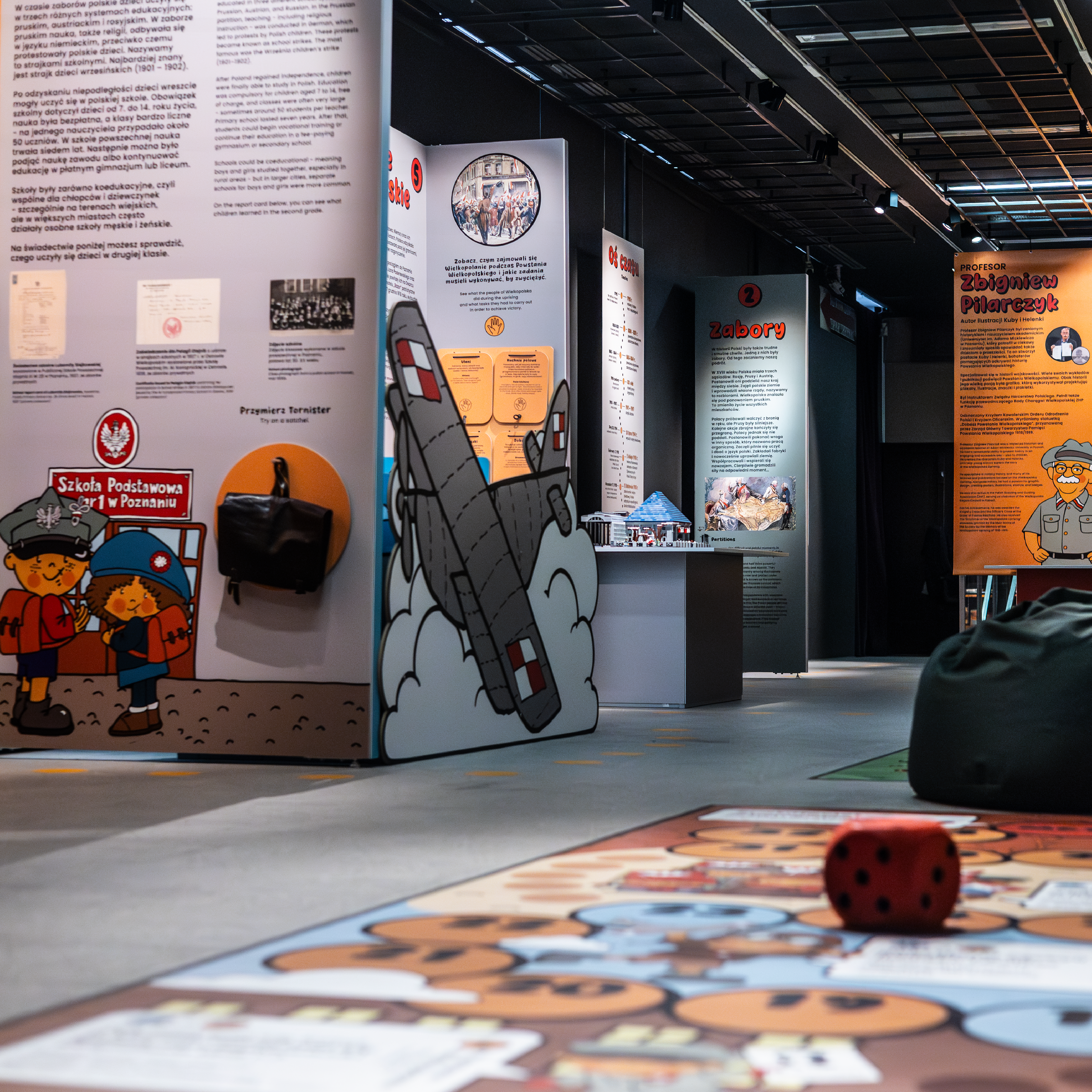
Our task was to develop a complete educational exhibition concept for children and families that uses play, movement, and sensory experiences to introduce visitors to the history of Greater Poland and the Greater Poland Uprising. The exhibition consisted of twelve interactive stations engaging sight, hearing, touch, smell, and physical activity. Visitors explored the region’s history through games, experiments, tasks, and hands-on interactions designed specifically for younger audiences.
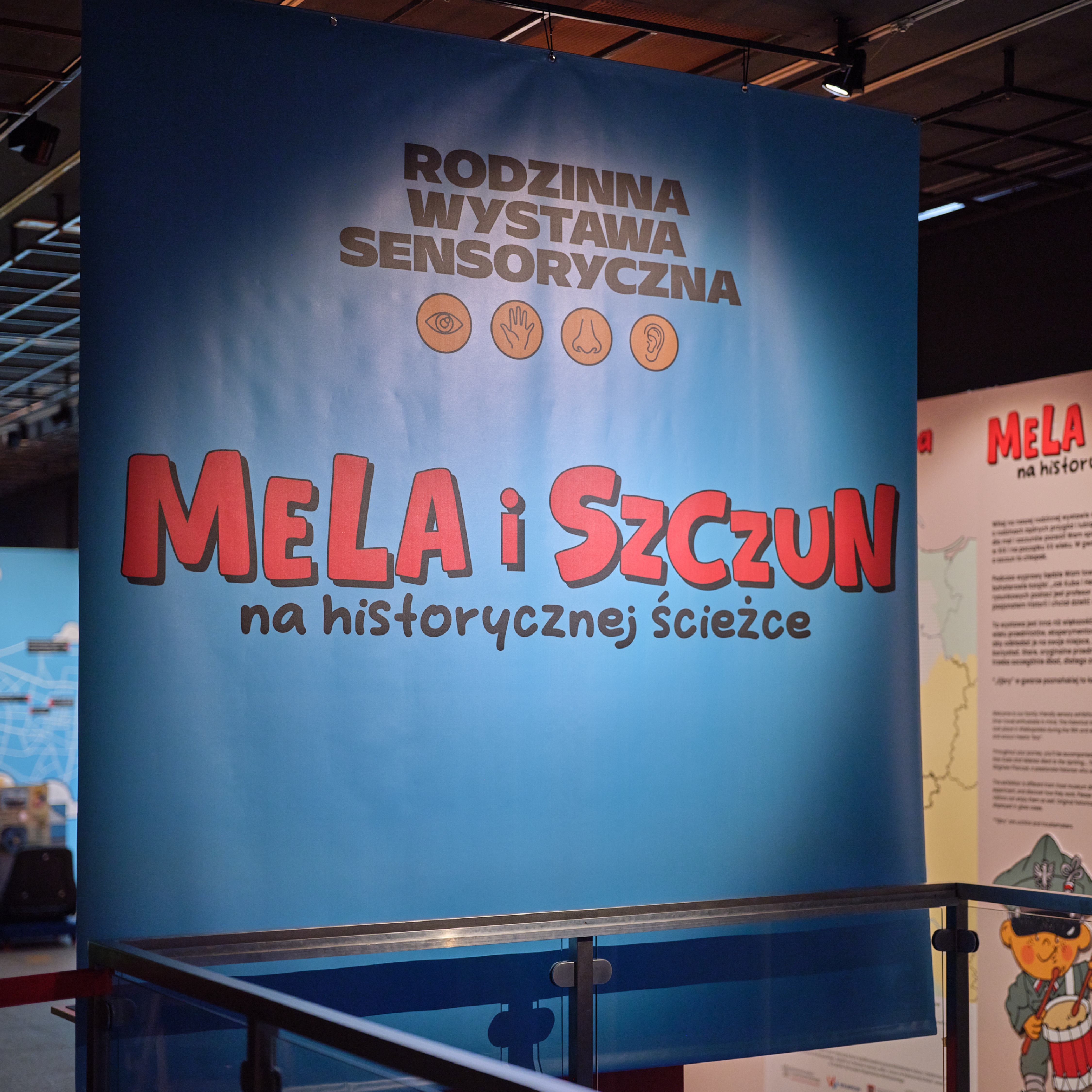
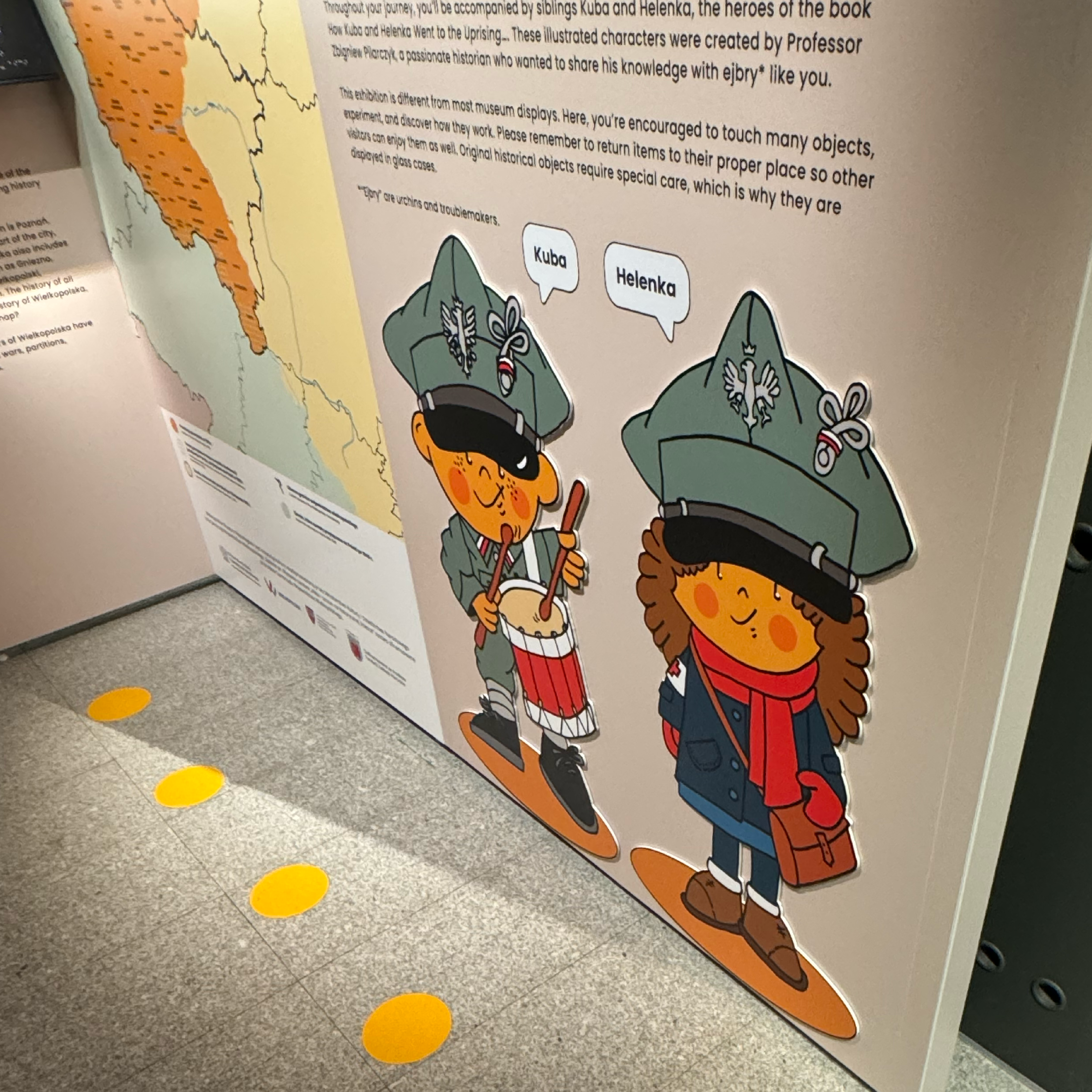
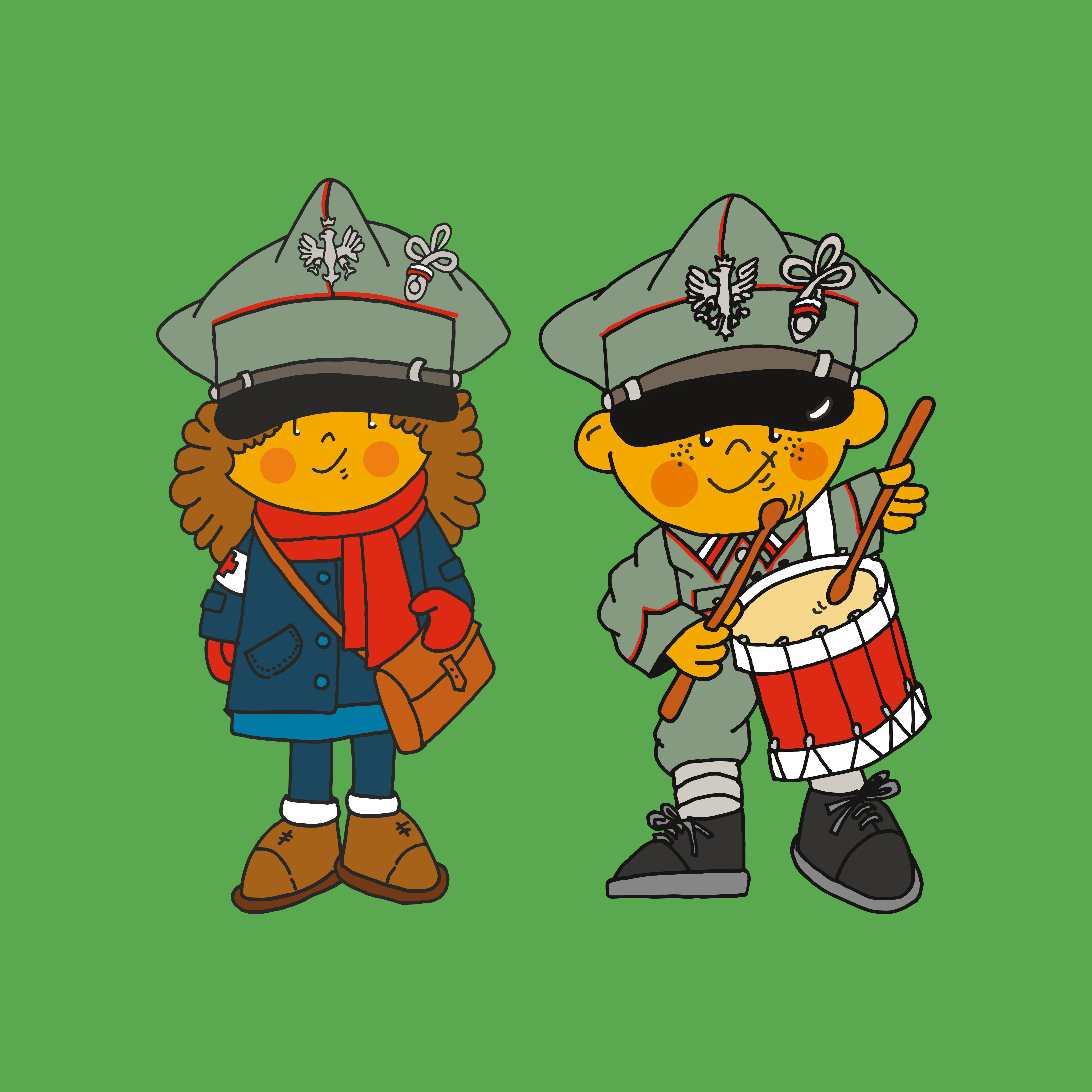
The starting point for the project was a series of illustrations created by Professor Zbigniew Pilarczyk depicting Mela and Szczun – two characters inspired by the Poznań dialect. Our role involved digitising the original drawings and creating a complete visual identity system for the exhibition.
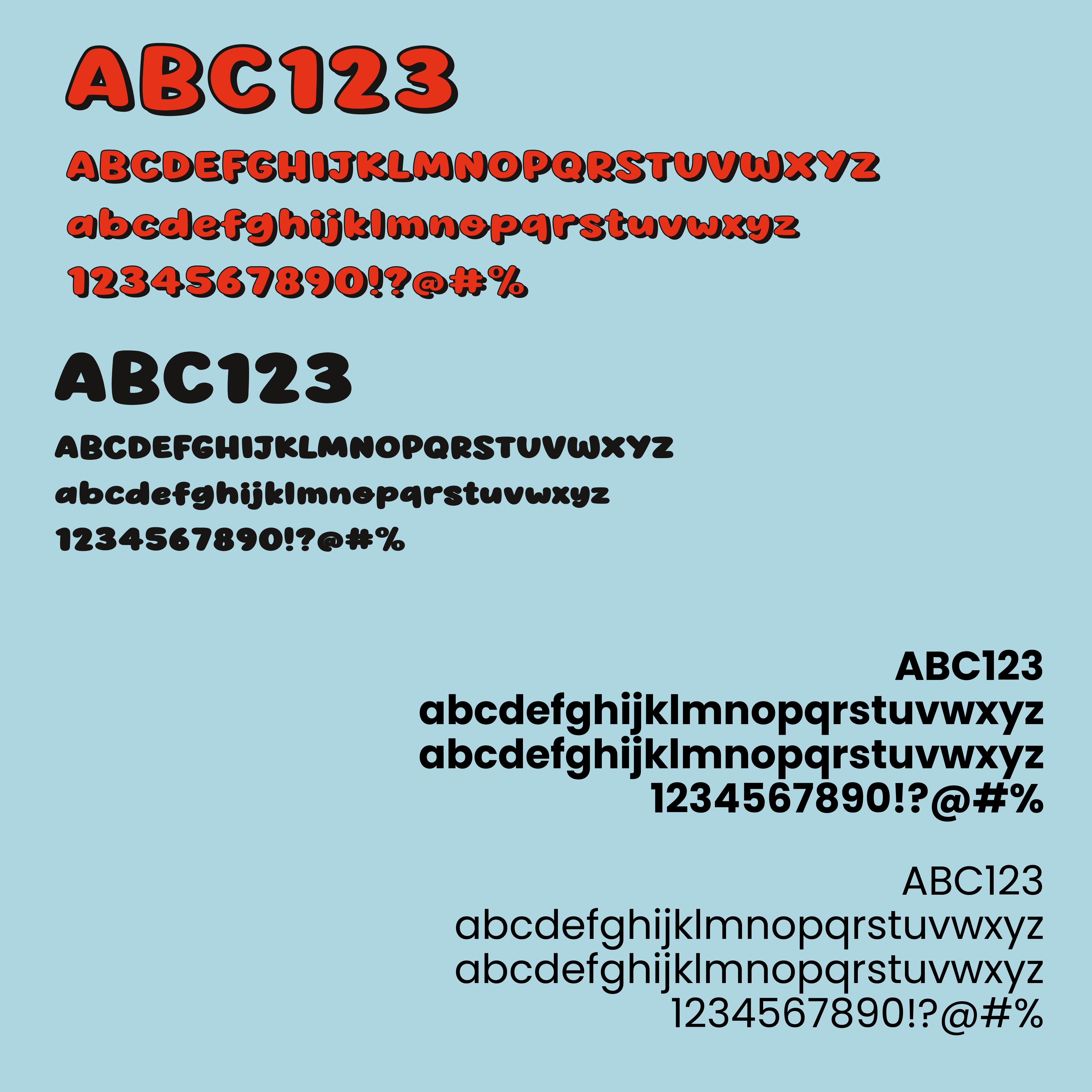
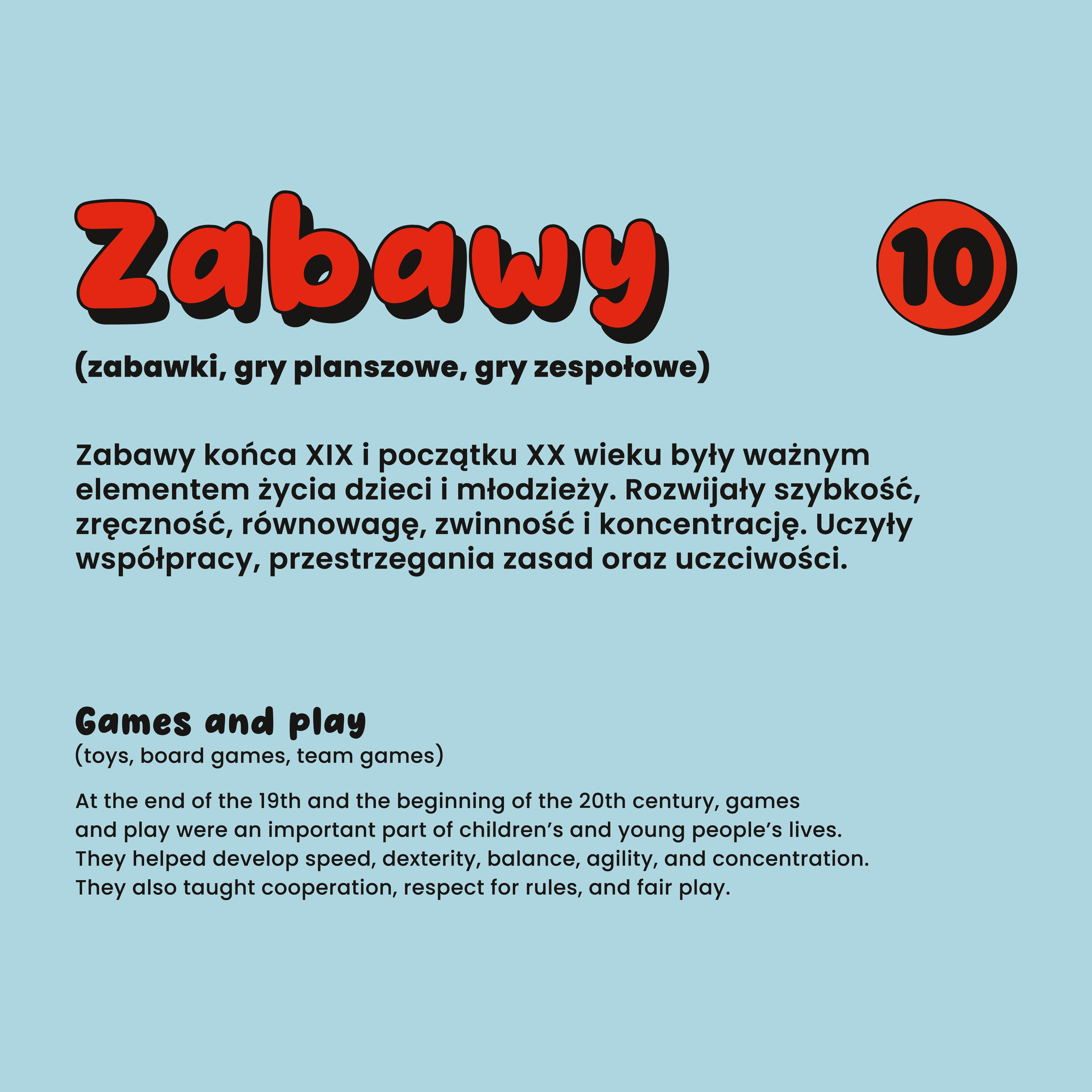
We developed the exhibition title, typography system, visual communication guidelines, exhibit signage, and a set of sensory icons used throughout the display. The visual identity was designed to appeal to children while remaining clear and readable for adult visitors. Hand-drawn, comic-inspired typography was combined with a clean geometric sans-serif typeface for educational content.
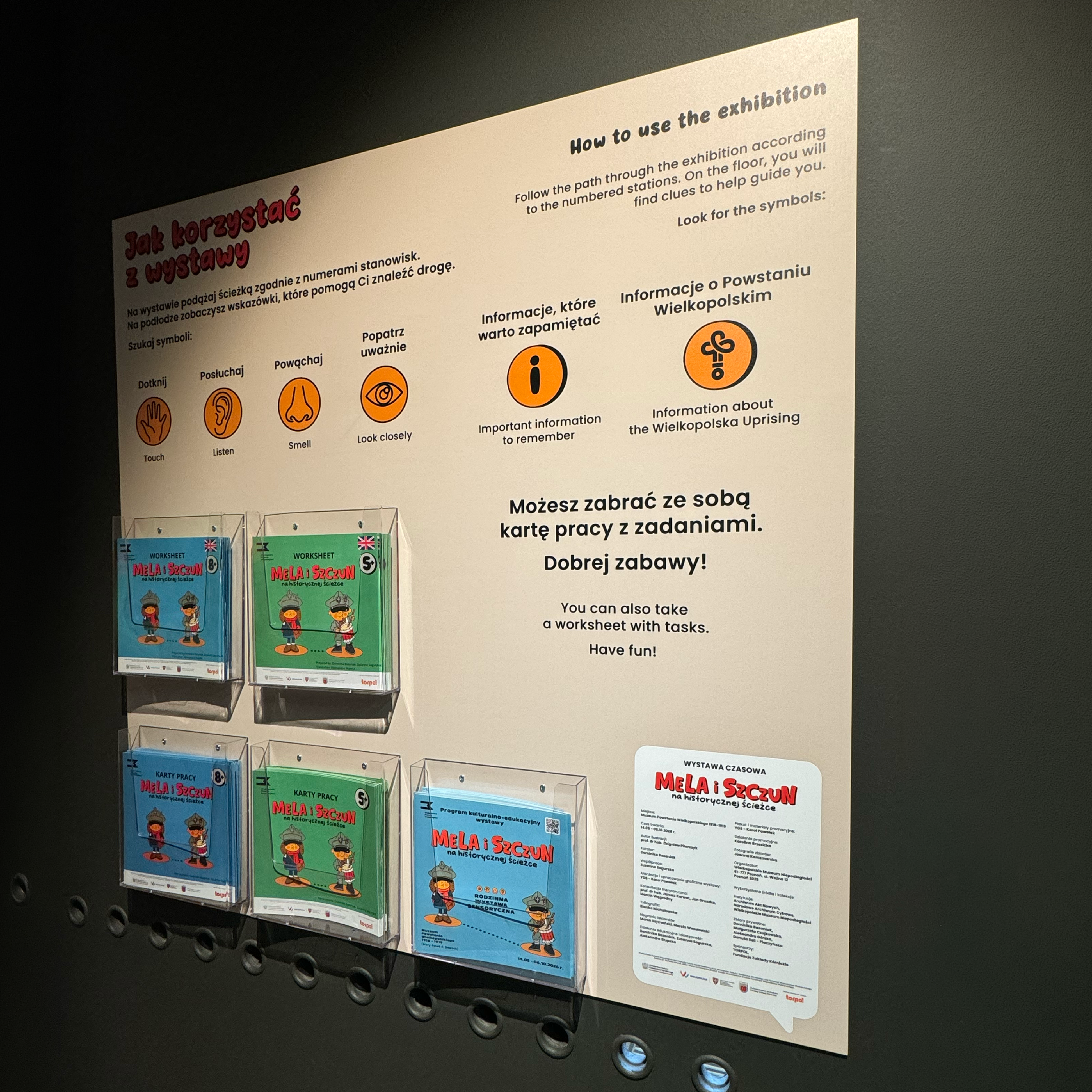
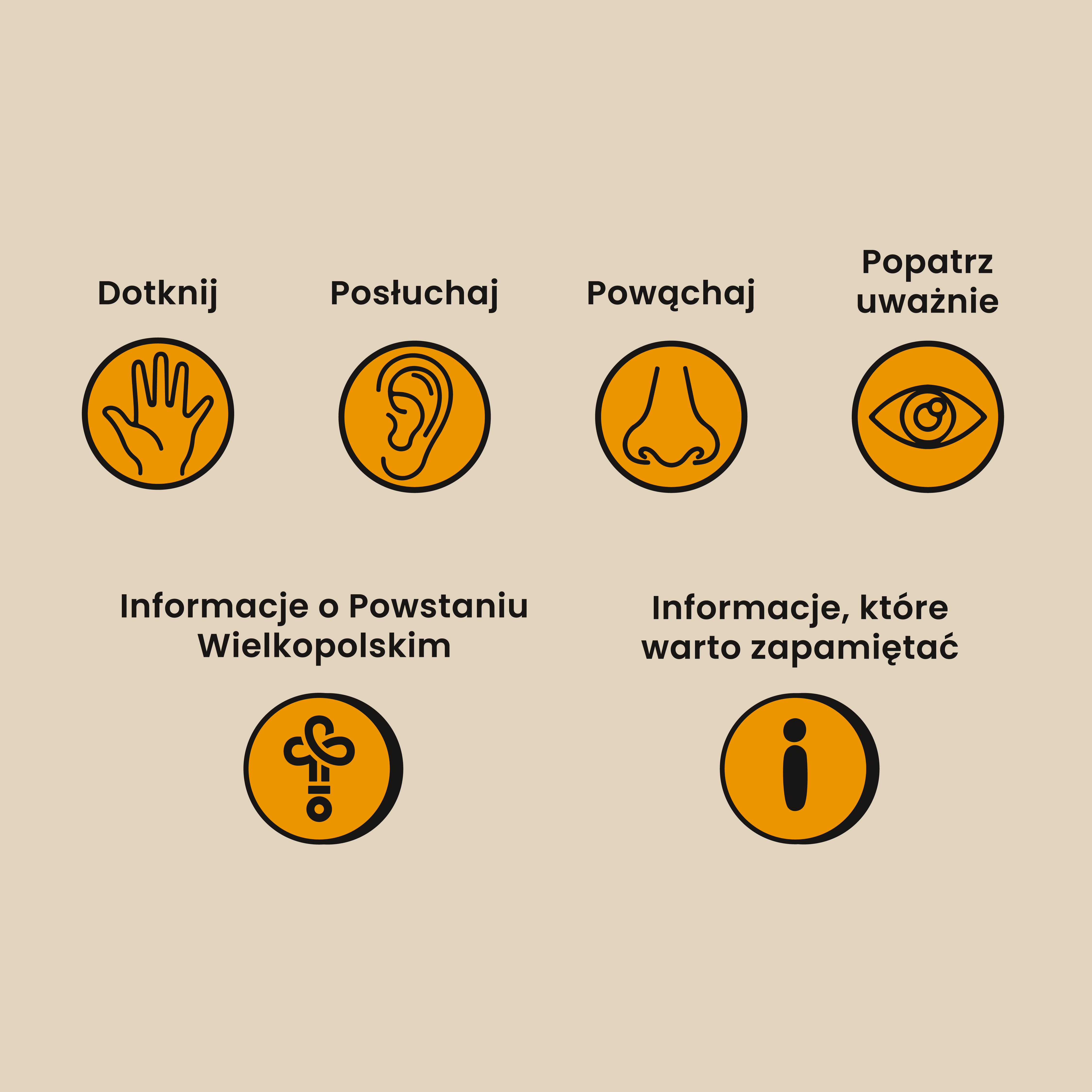
An important element of the project was the wayfinding and sensory icon system, which informed visitors about the type of activity available at each station. The icons clearly indicated whether a particular exhibit encouraged listening, touching, smelling, observing, or physical participation.
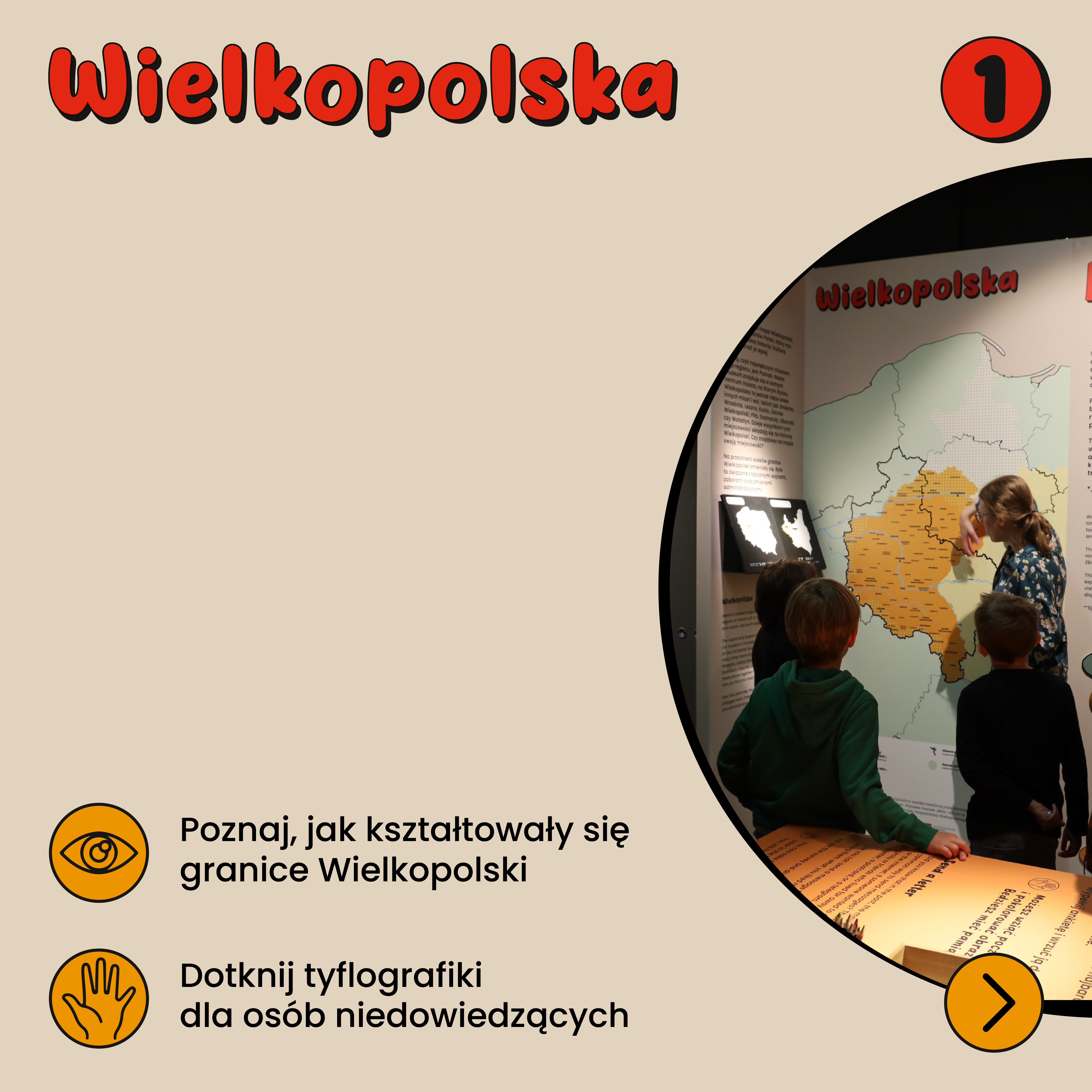
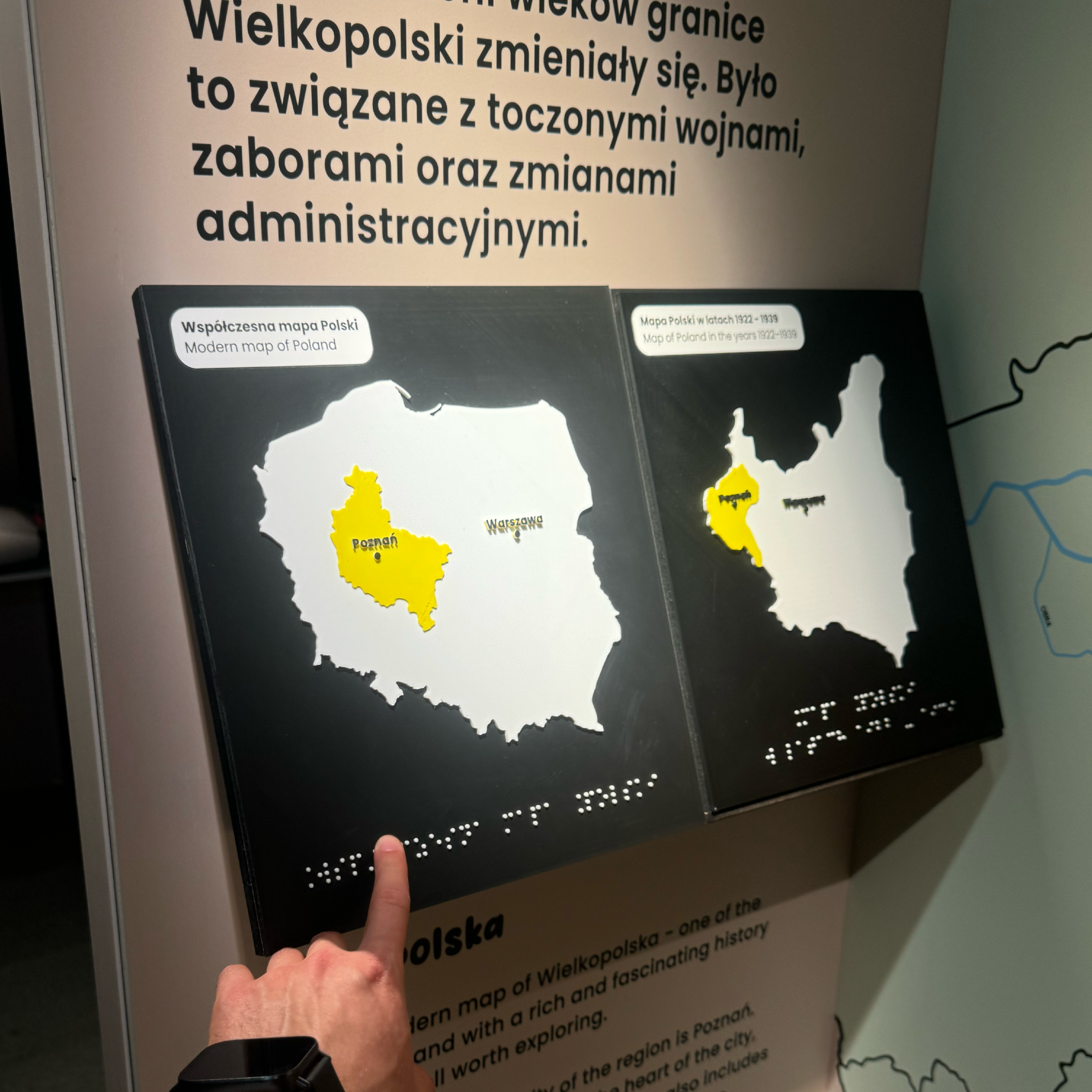
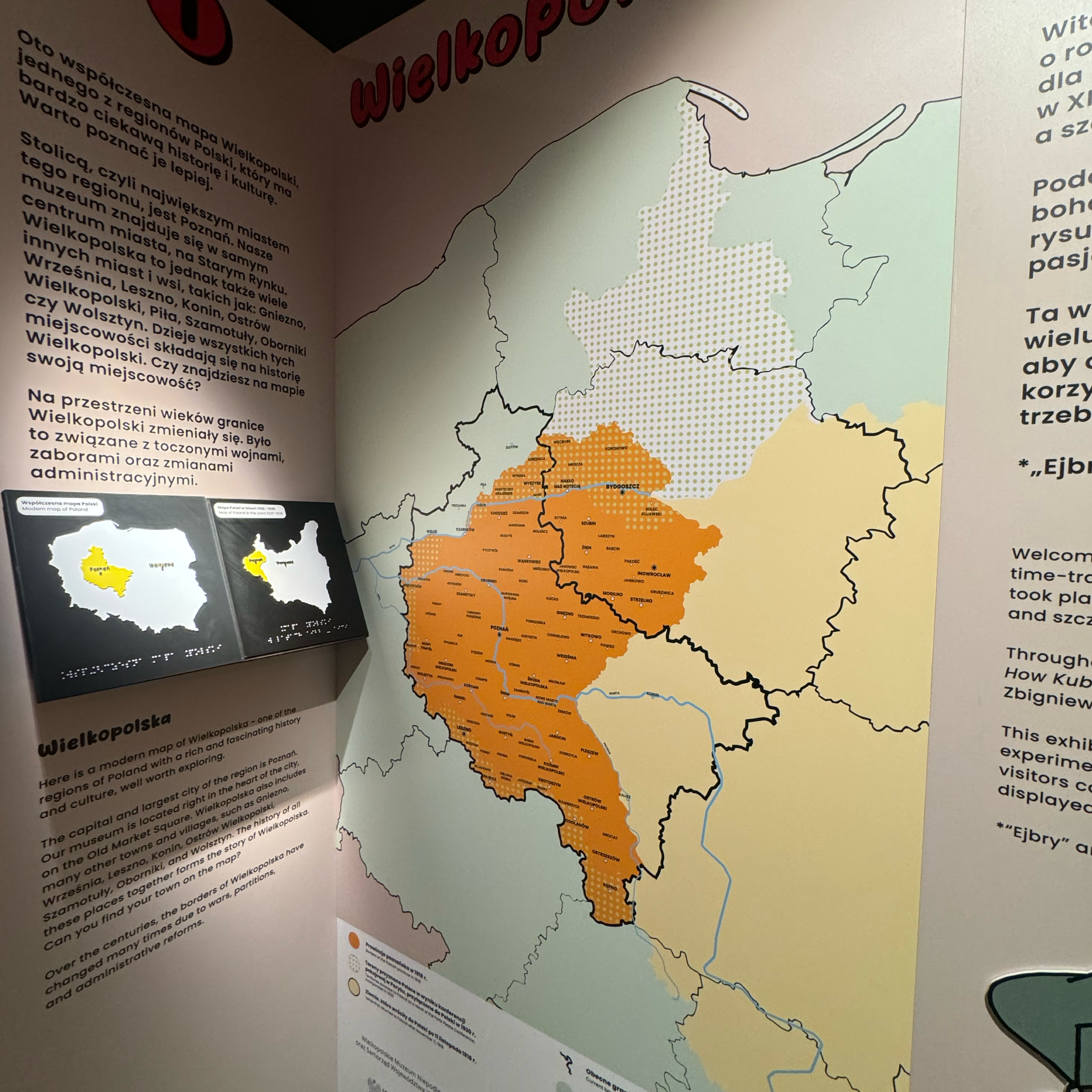
The first station introduced visitors to the exhibition by presenting the history of Greater Poland and the changing borders of the region over time. As part of the exhibition design, we created a large-scale map illustrating key territorial changes related to Polish history and the Greater Poland Uprising. The display also included tactile graphics produced using 3D printing technology, allowing visually impaired visitors to explore historical borders through touch. Braille descriptions and three-dimensional figures of Mela and Szczun completed the installation.
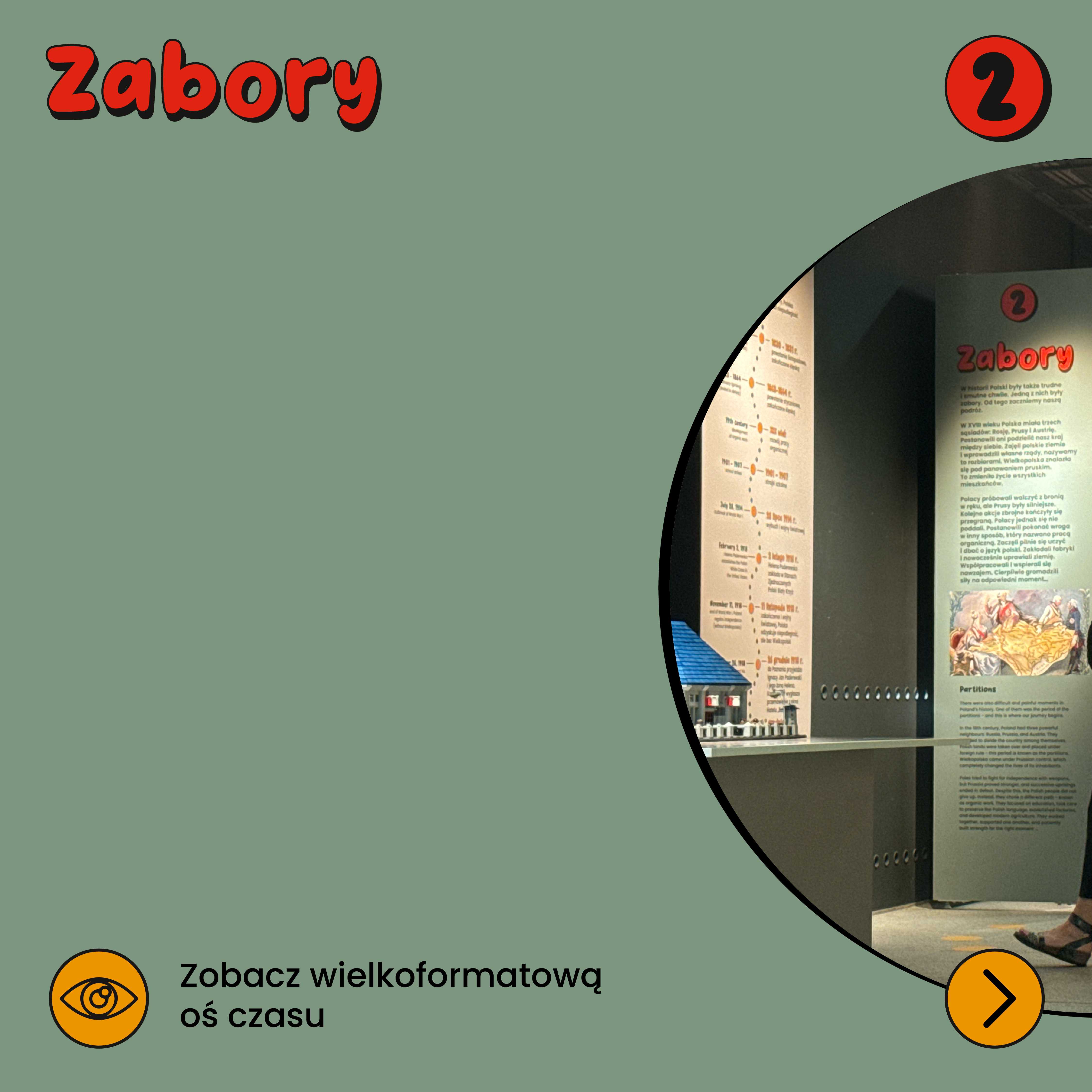
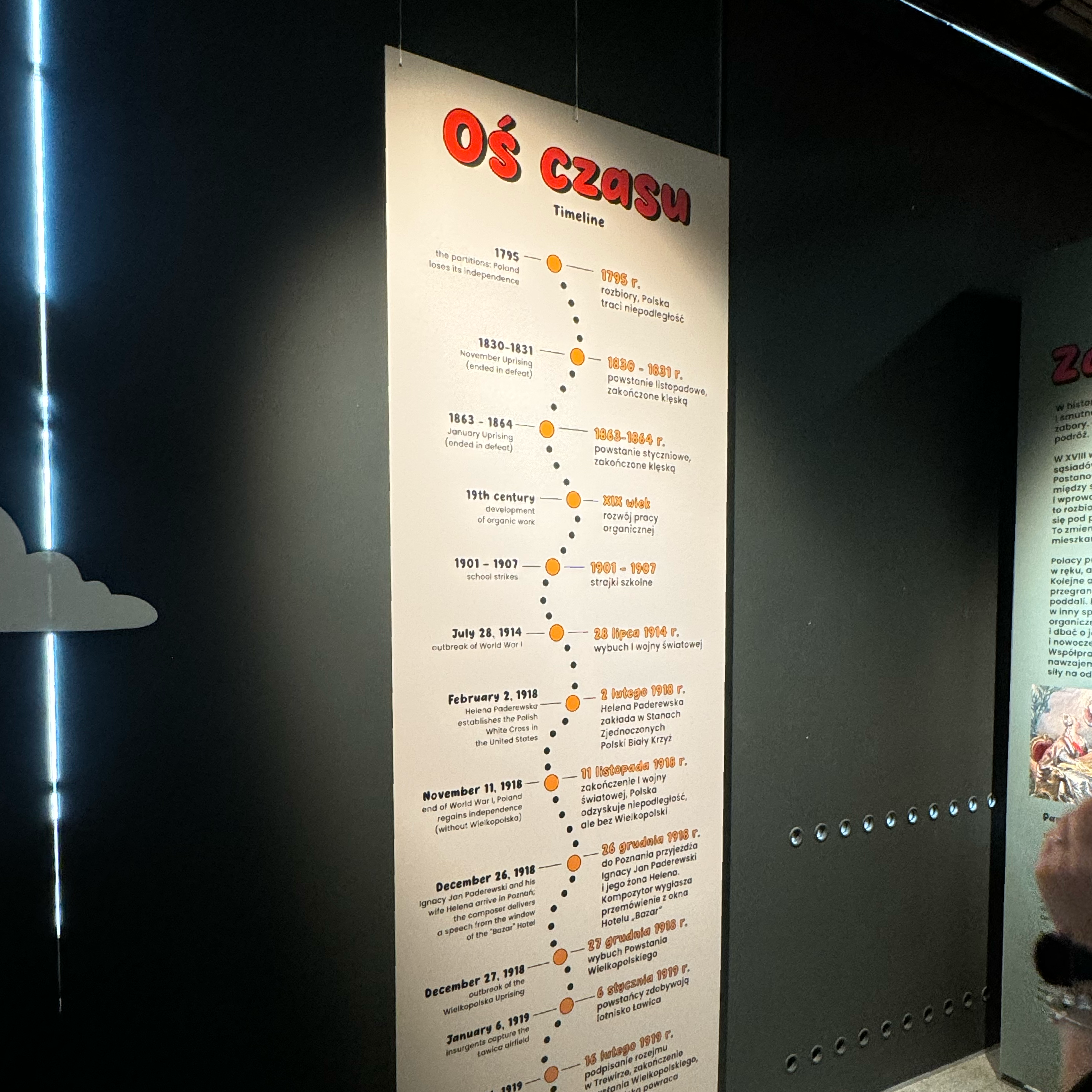
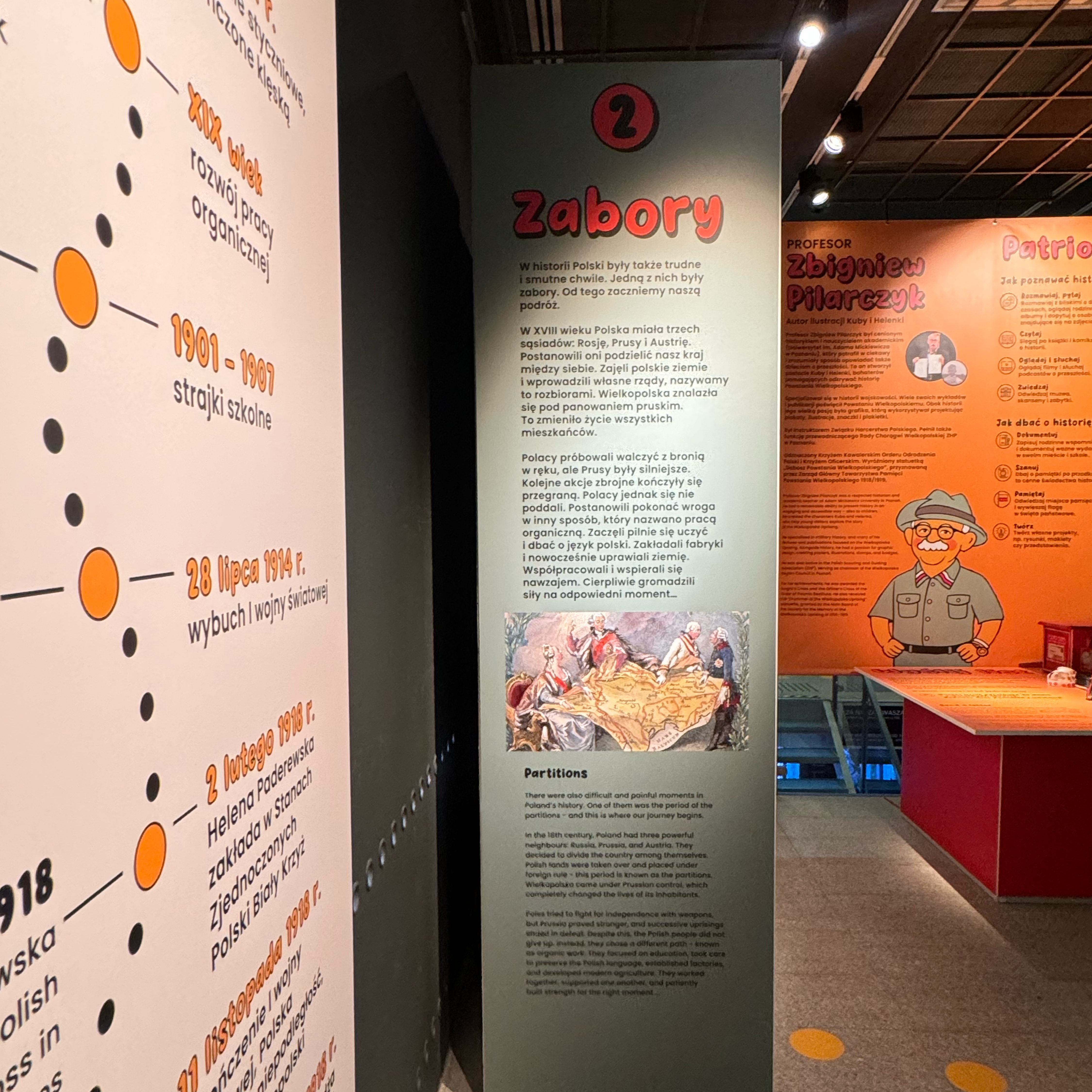
The second station presented the key historical events that preceded the outbreak of the Greater Poland Uprising. Its central element was a large-scale timeline illustrating the history of Poland and Greater Poland during the period of the partitions. Through a clear visual structure and carefully designed narrative, visitors gained an understanding of the political and social context that led to the struggle for independence.
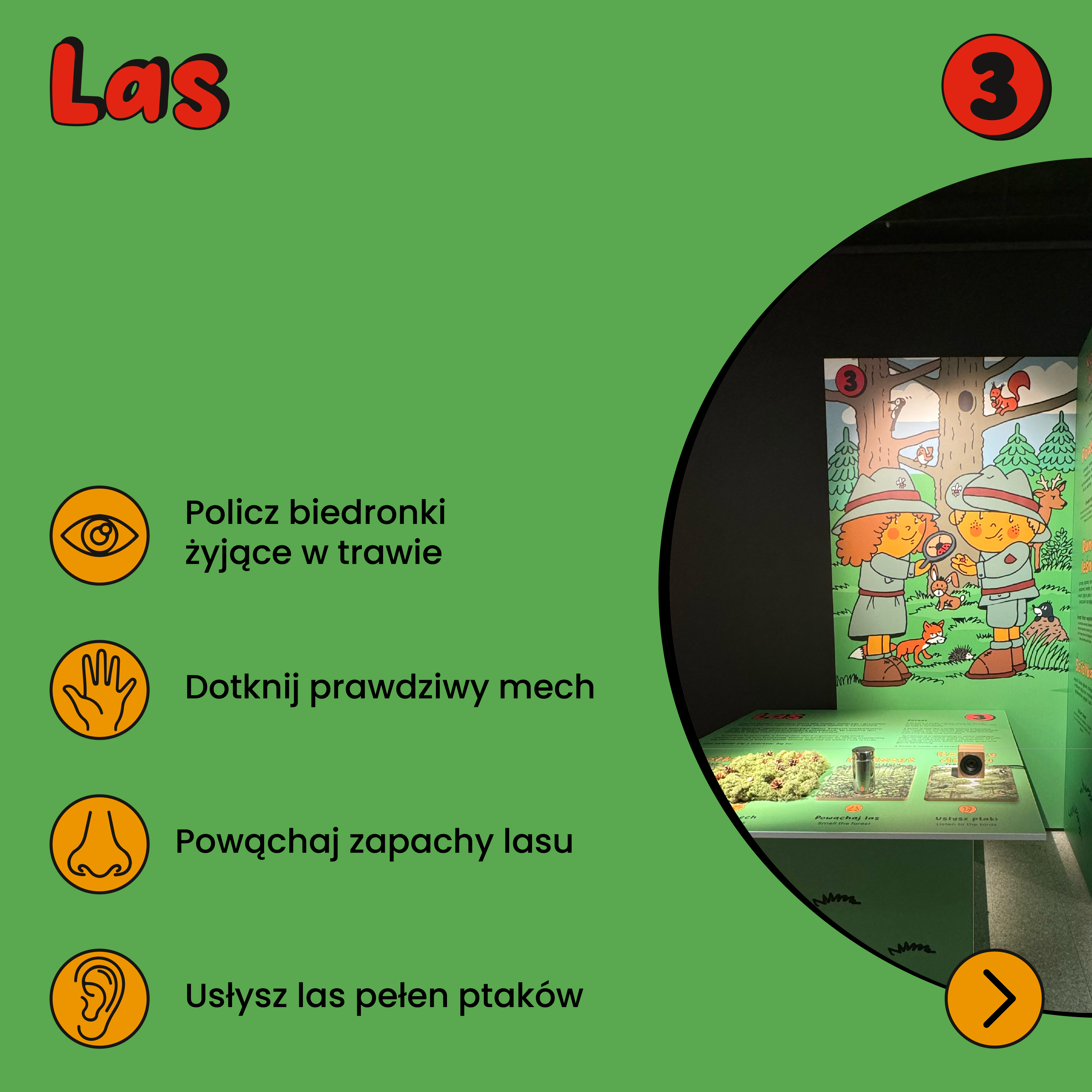
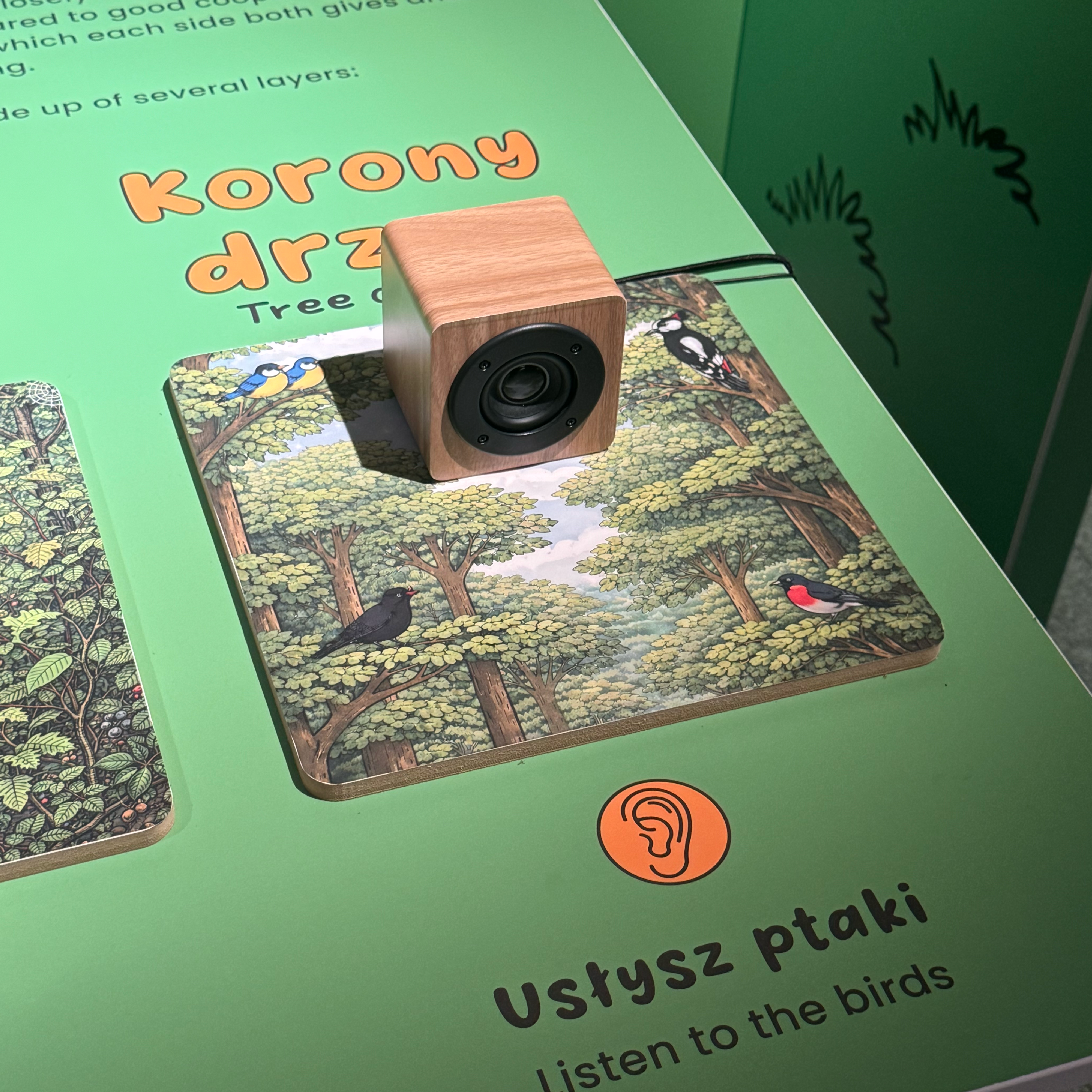
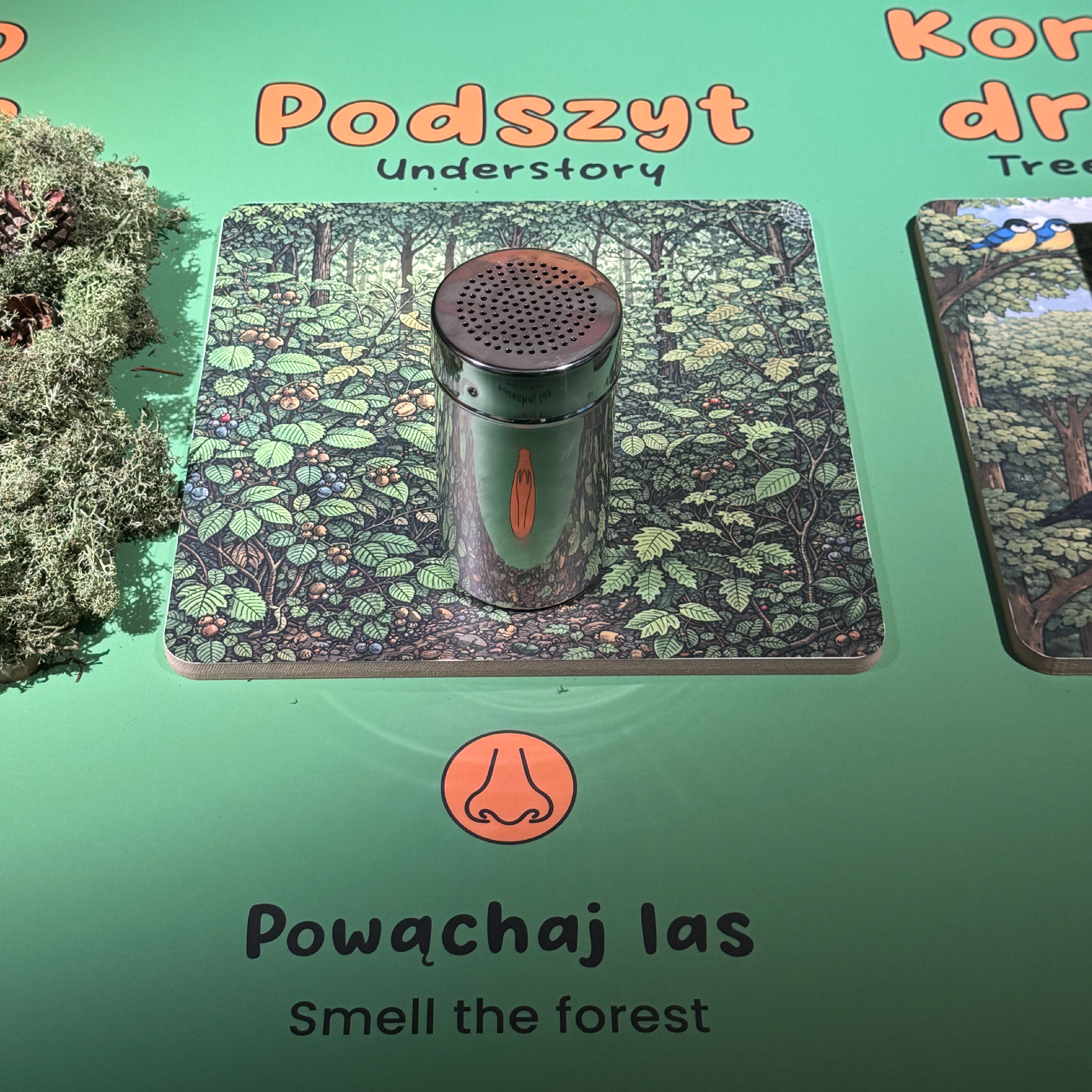
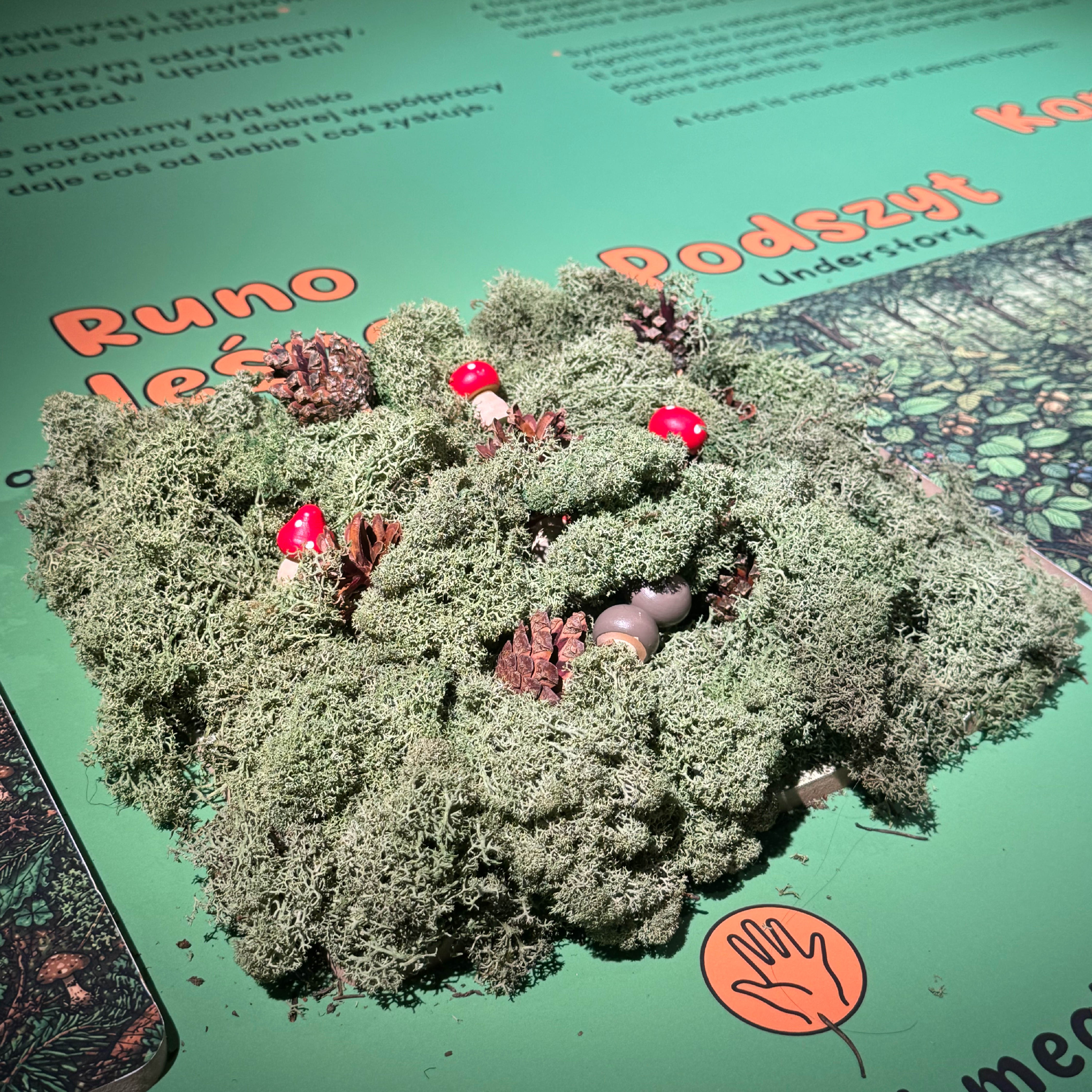
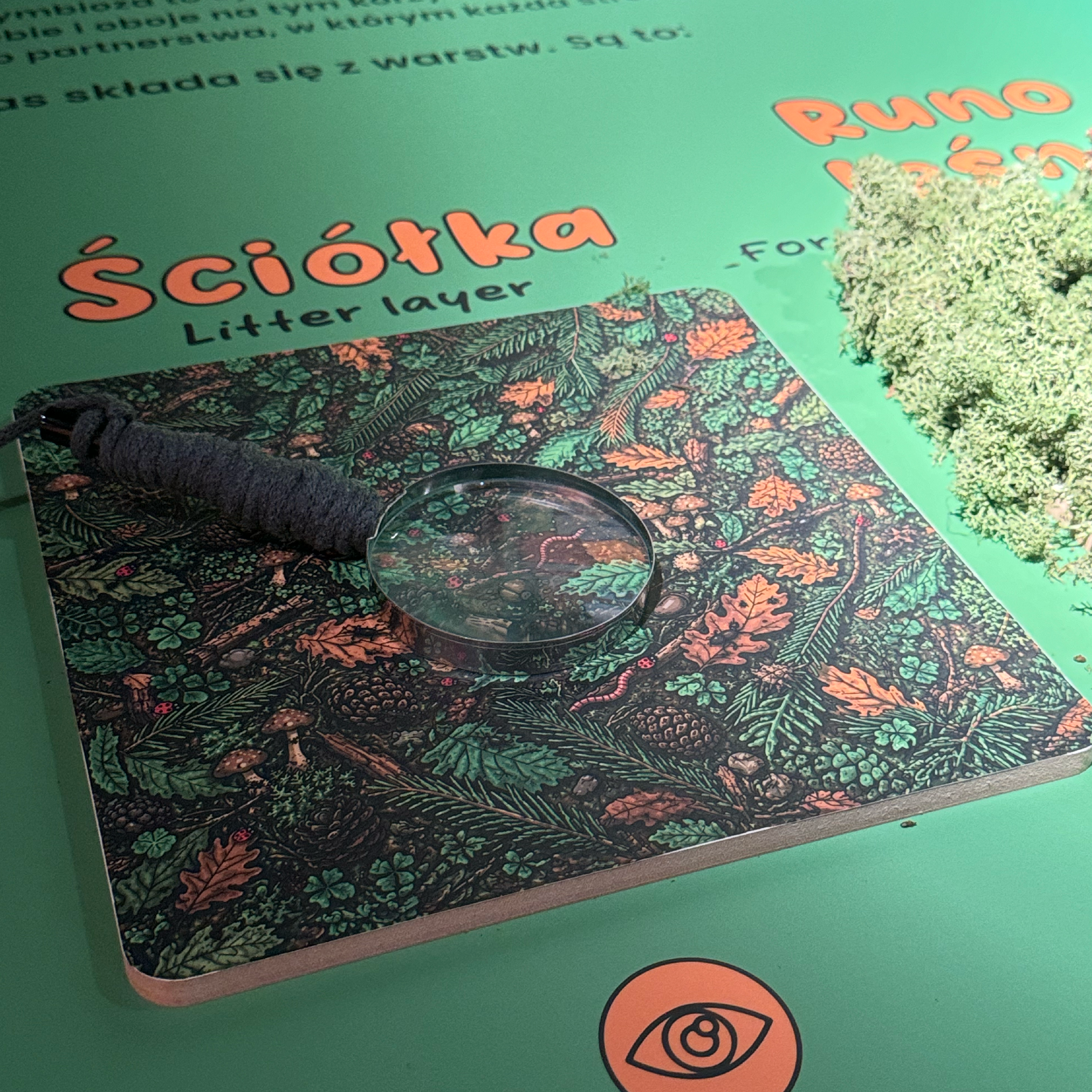
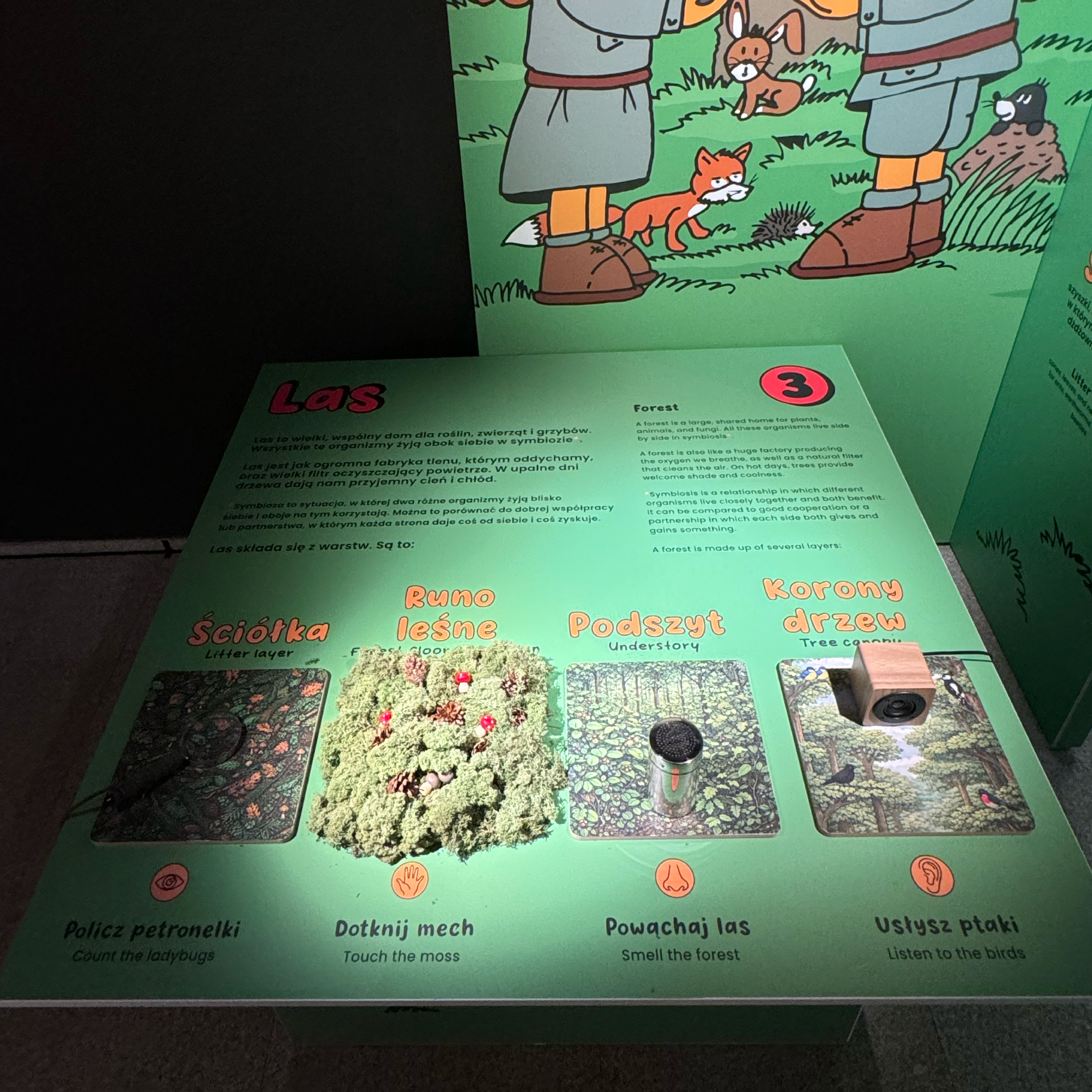
Dedicated to the natural environment of Greater Poland, this station was designed as a sensory learning experience. Visitors explored the layers of the forest through four interactions engaging sight, touch, smell, and hearing. Children searched for hidden ladybirds within forest-floor illustrations, touched elements representing woodland vegetation, discovered the scent of the forest, and listened to authentic nature sounds. The installation demonstrated how learning can be based on direct experience and exploration.
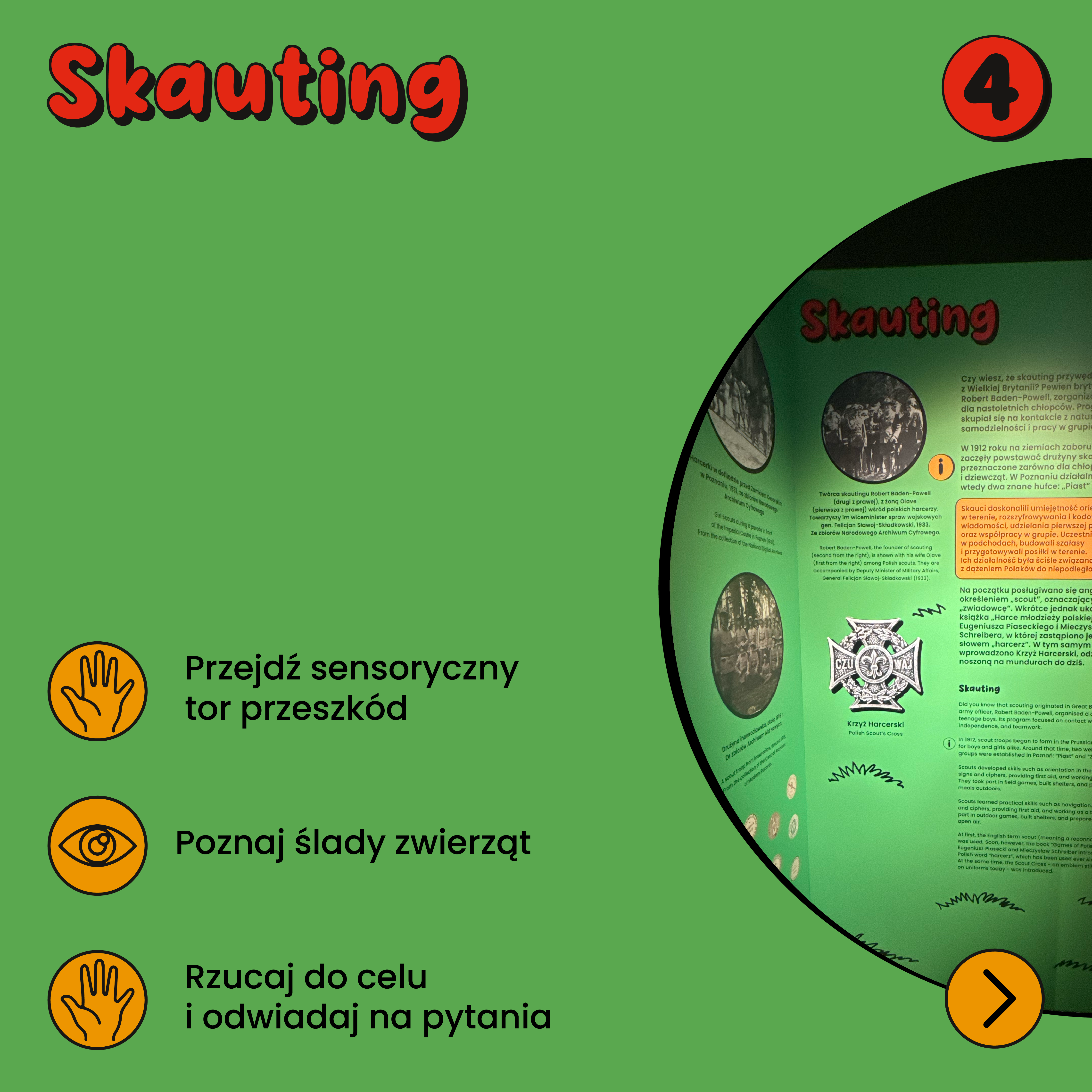
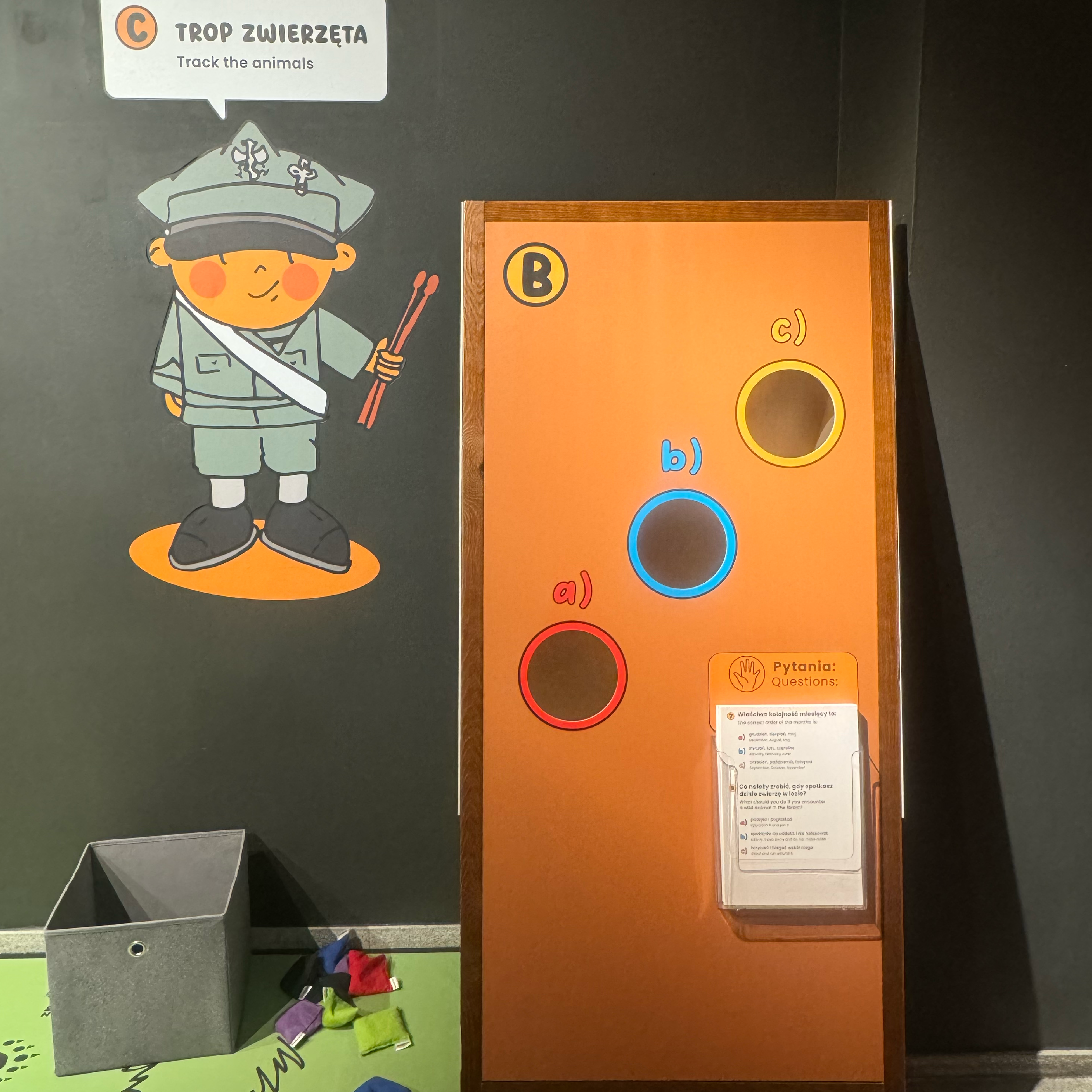
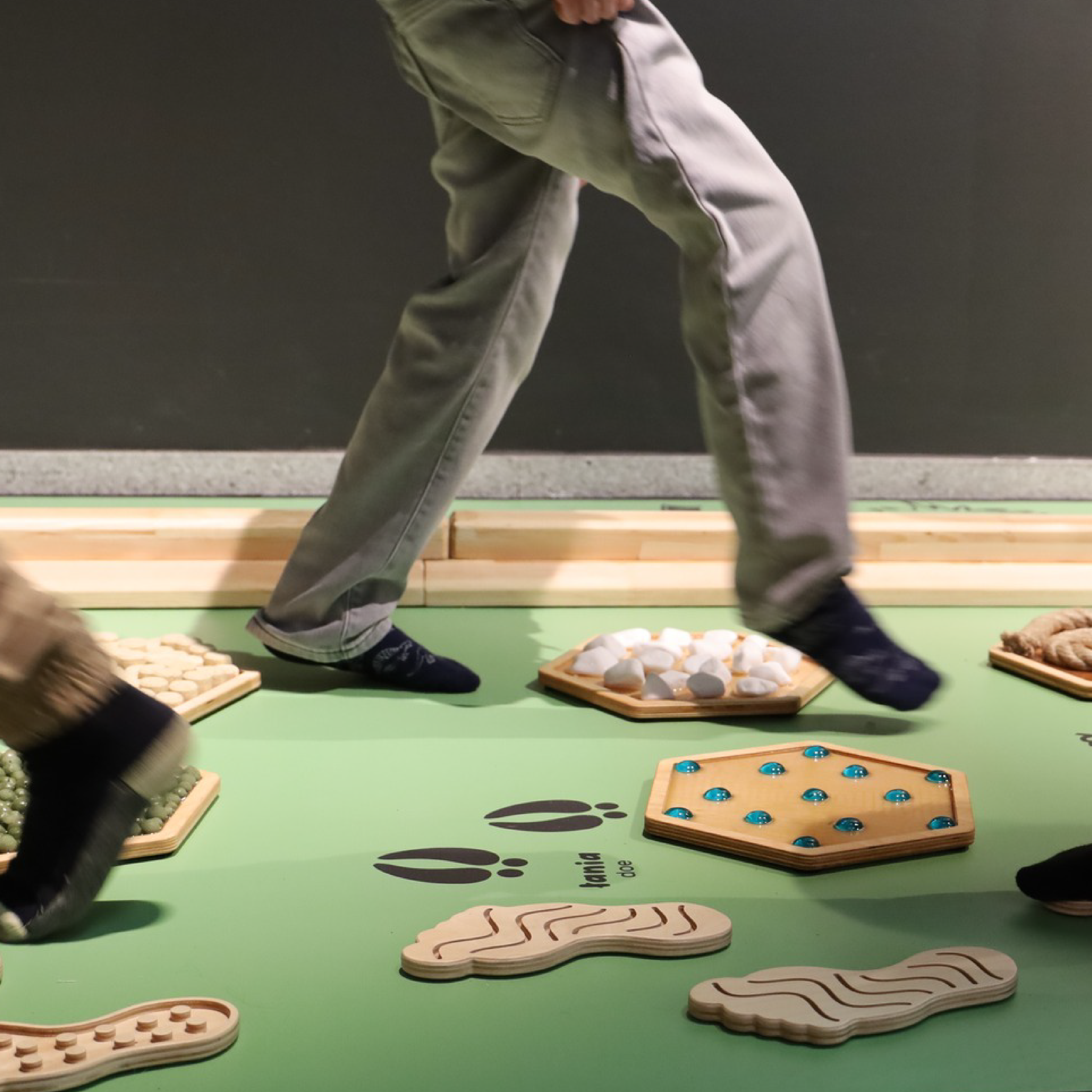
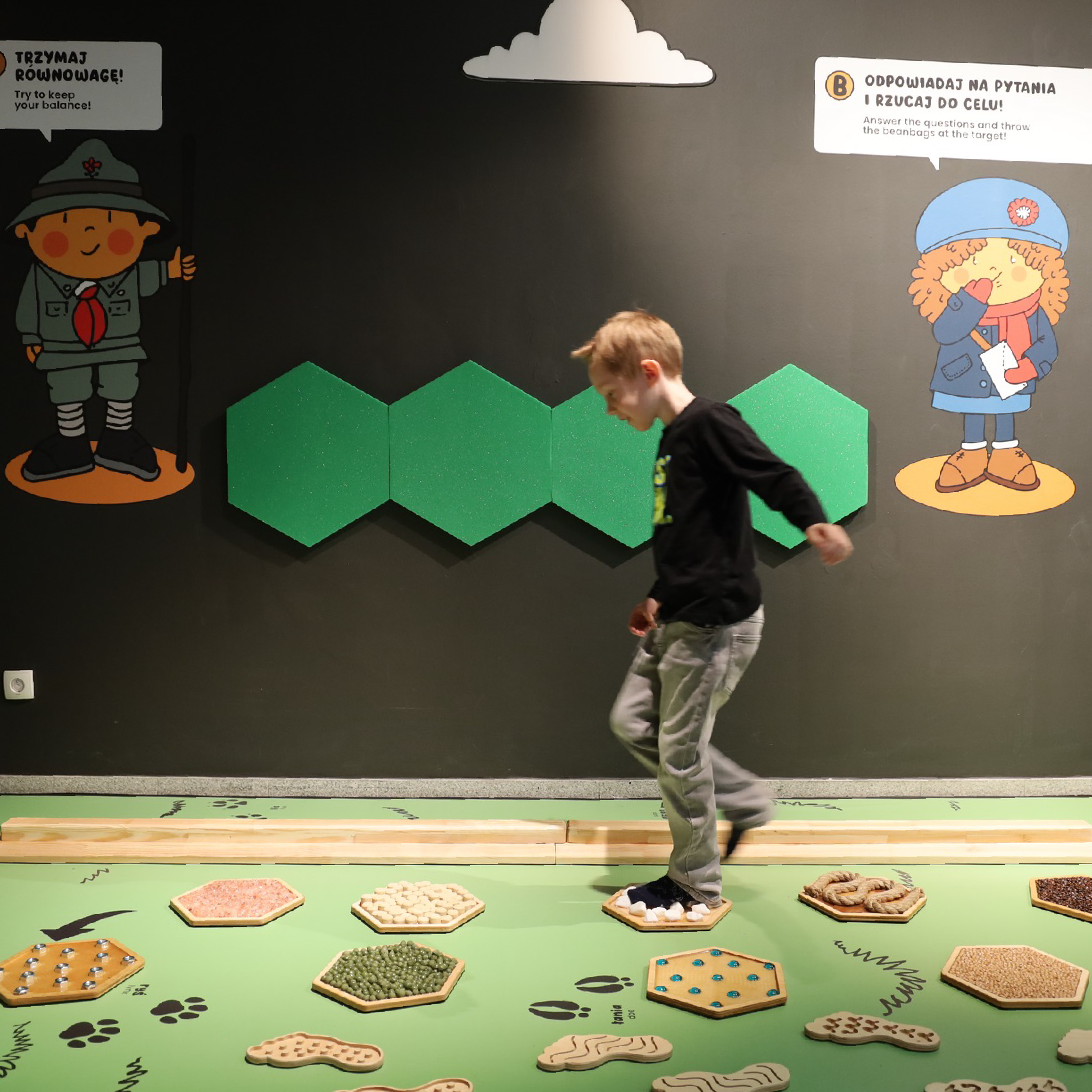
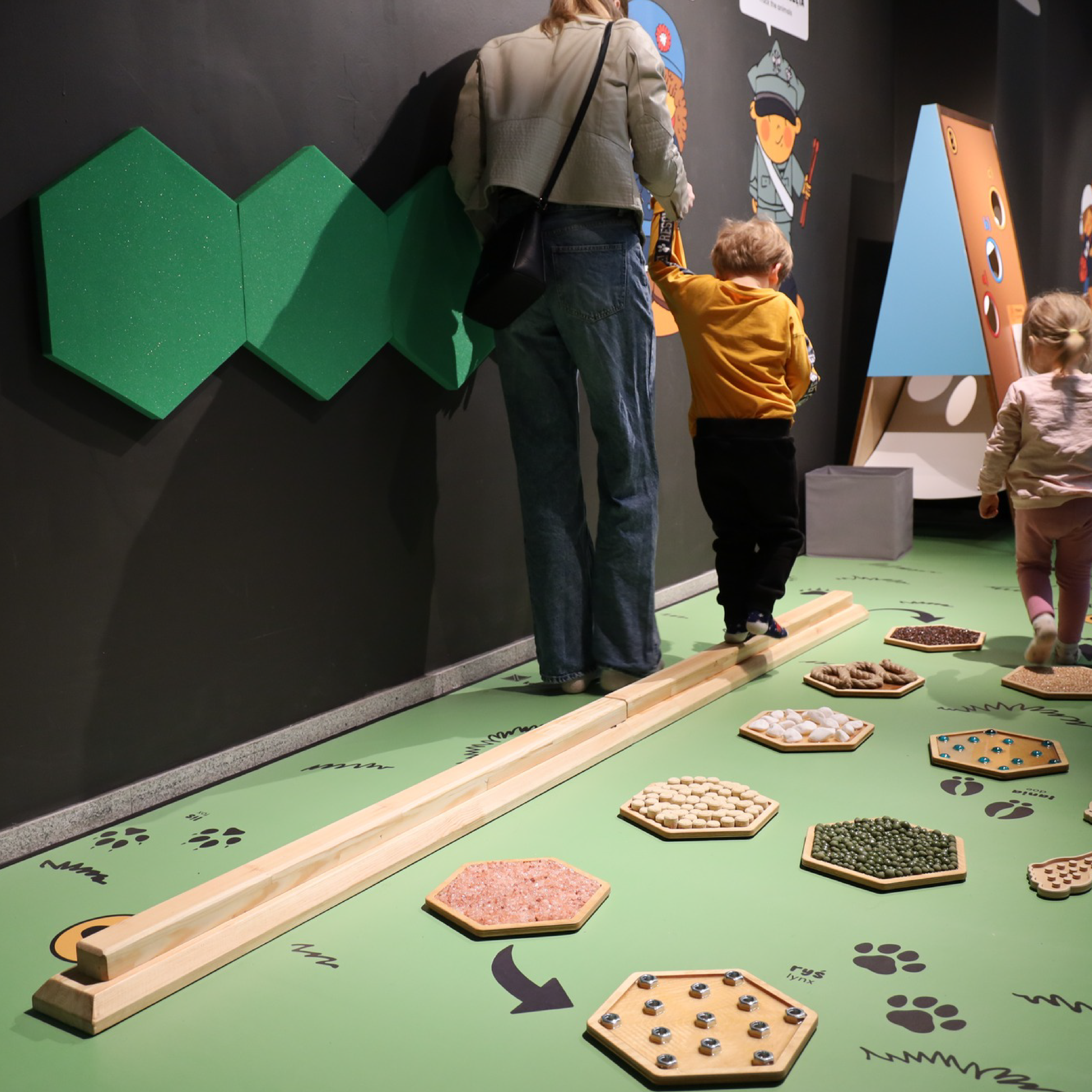
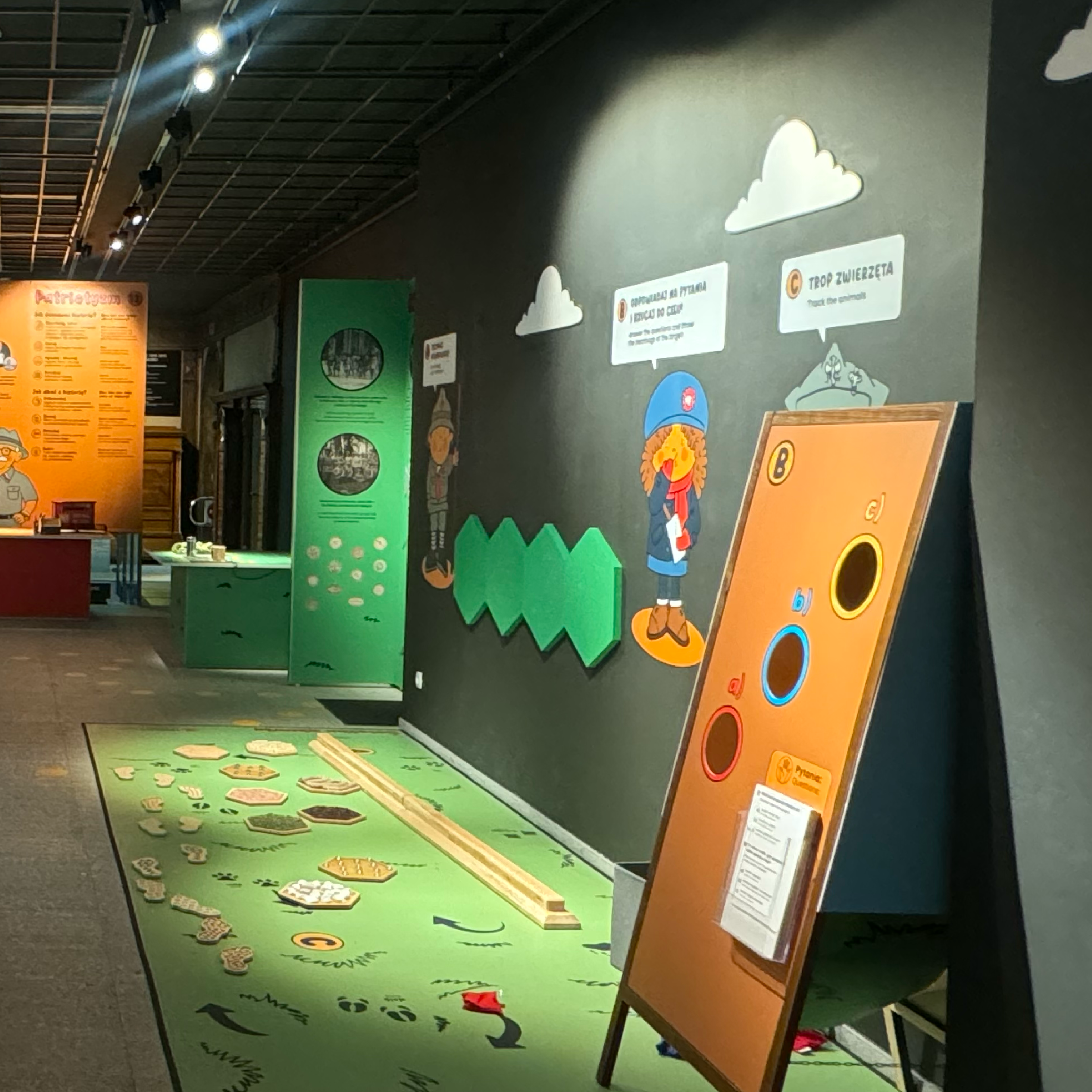
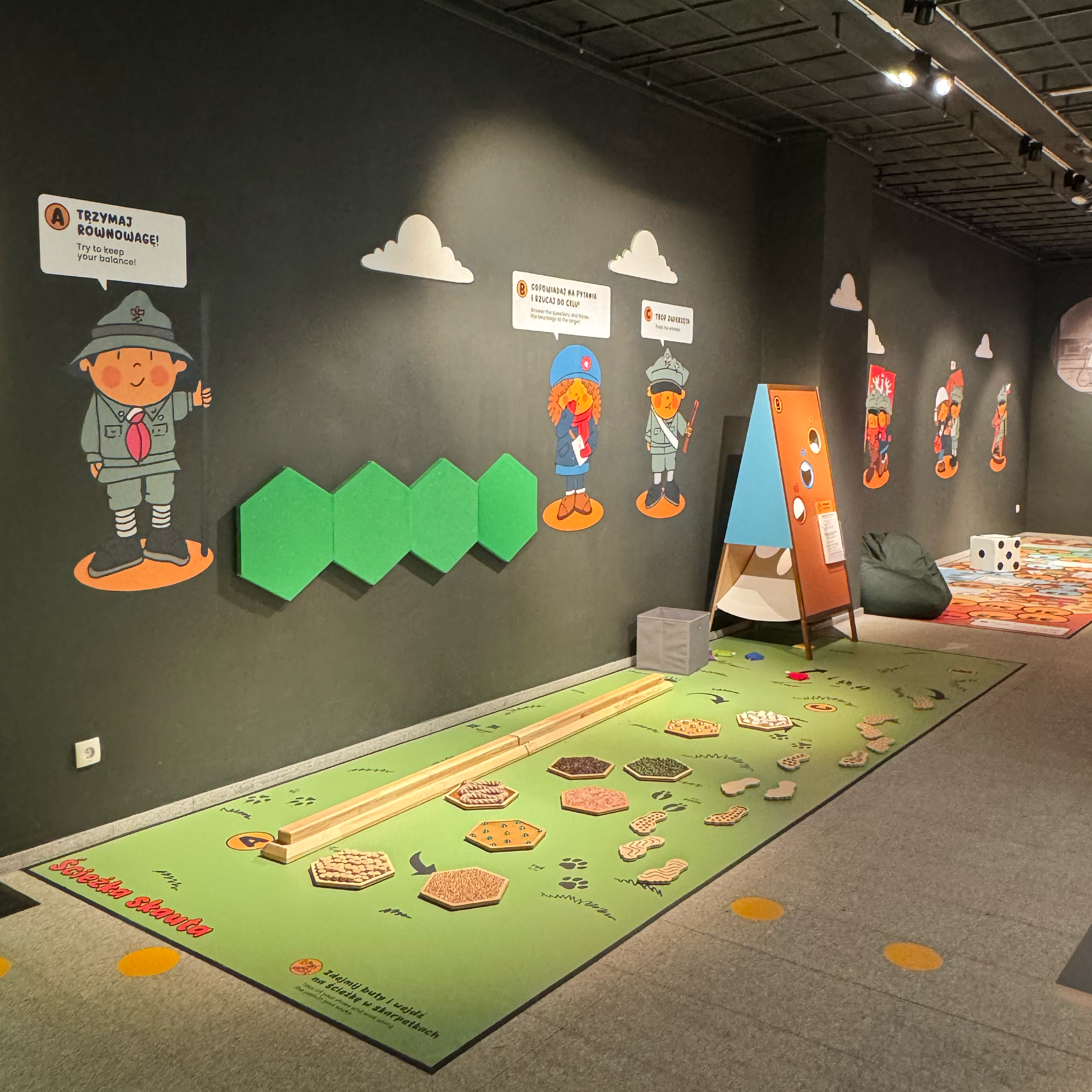
This section introduced visitors to the history of scouting and the origins of Polish scouting organisations. The central feature was a large-scale obstacle course inspired by scouting challenges. Participants practised balance, identified animal tracks, and answered questions related to the exhibition. The station combined historical education with physical activity, encouraging children to learn through movement and play.
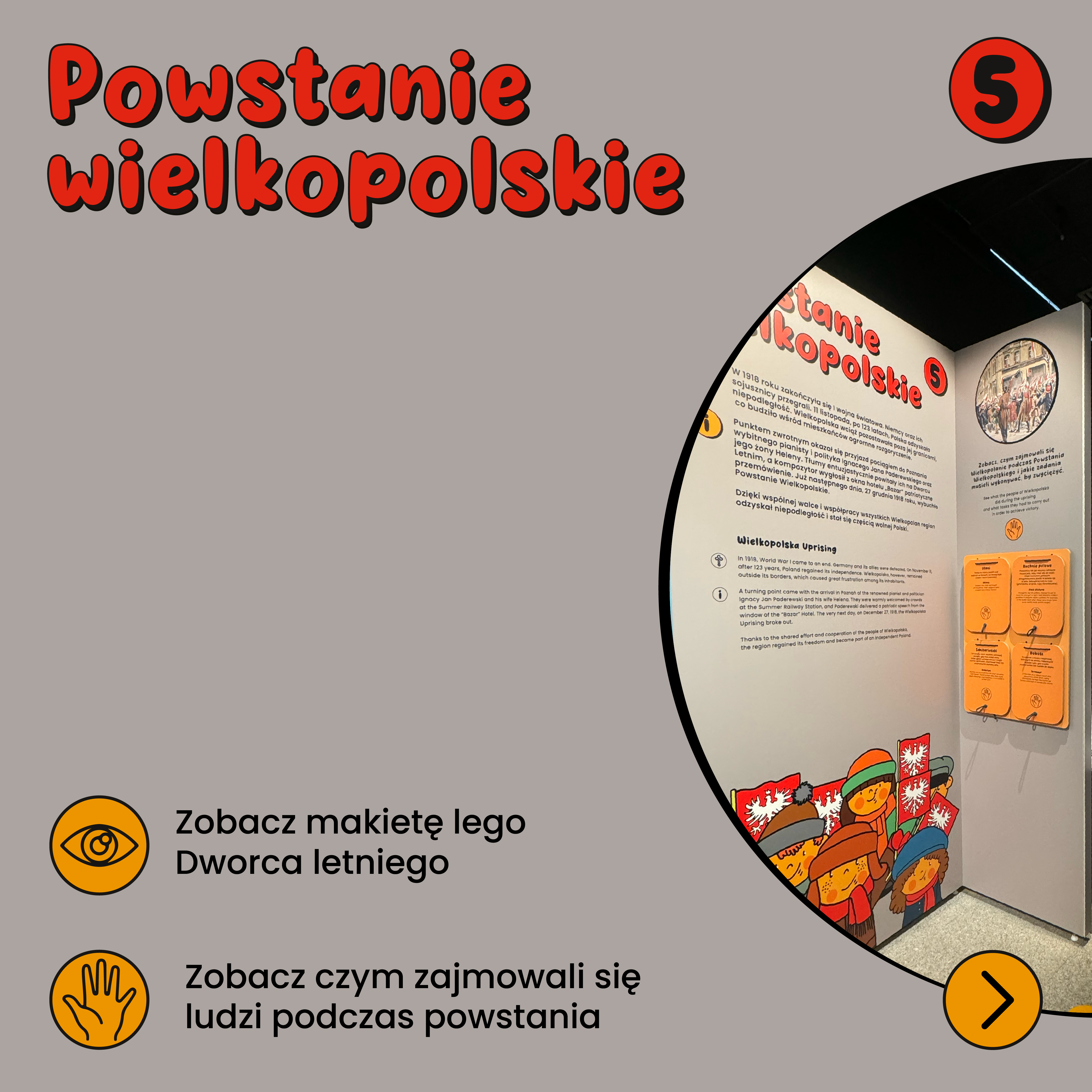
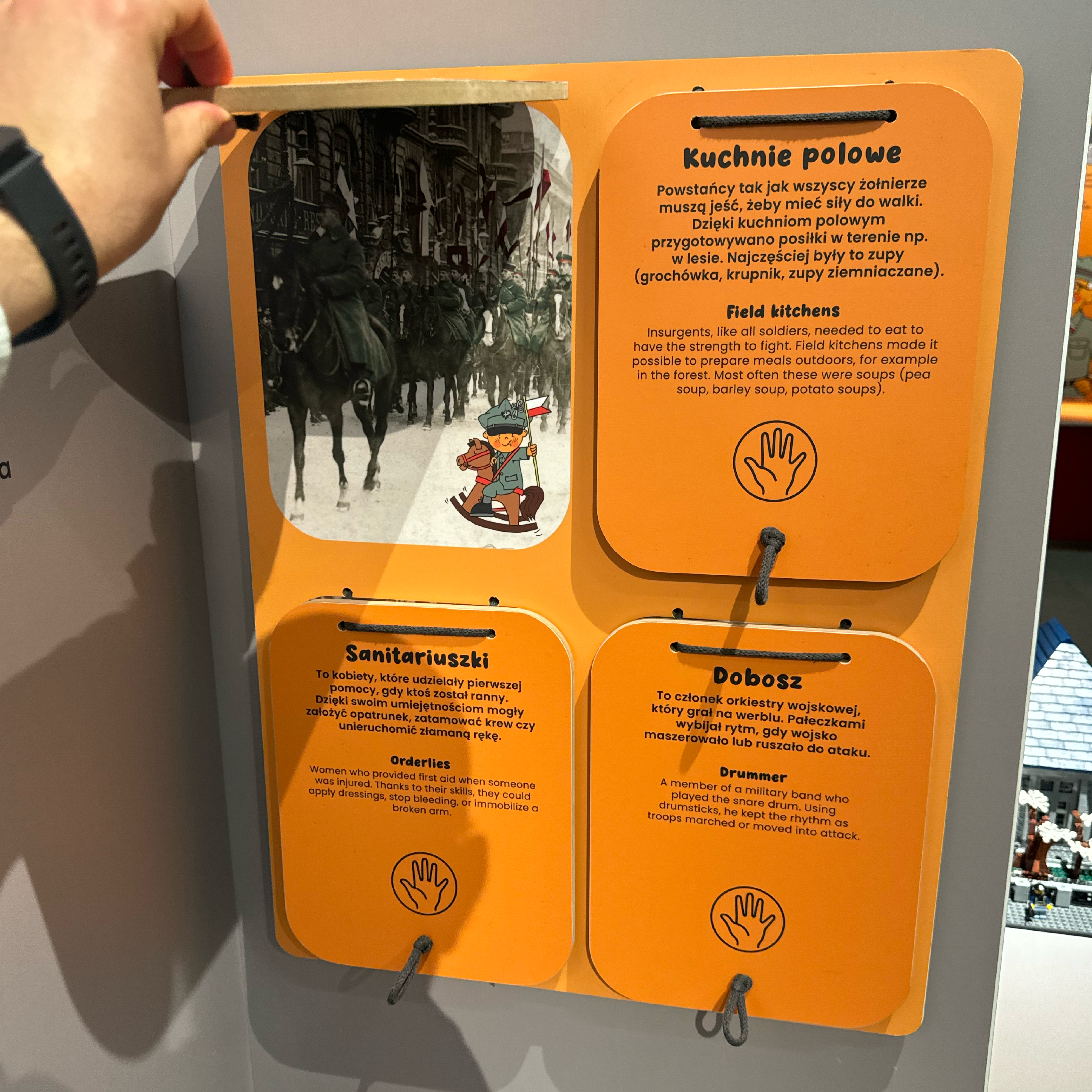
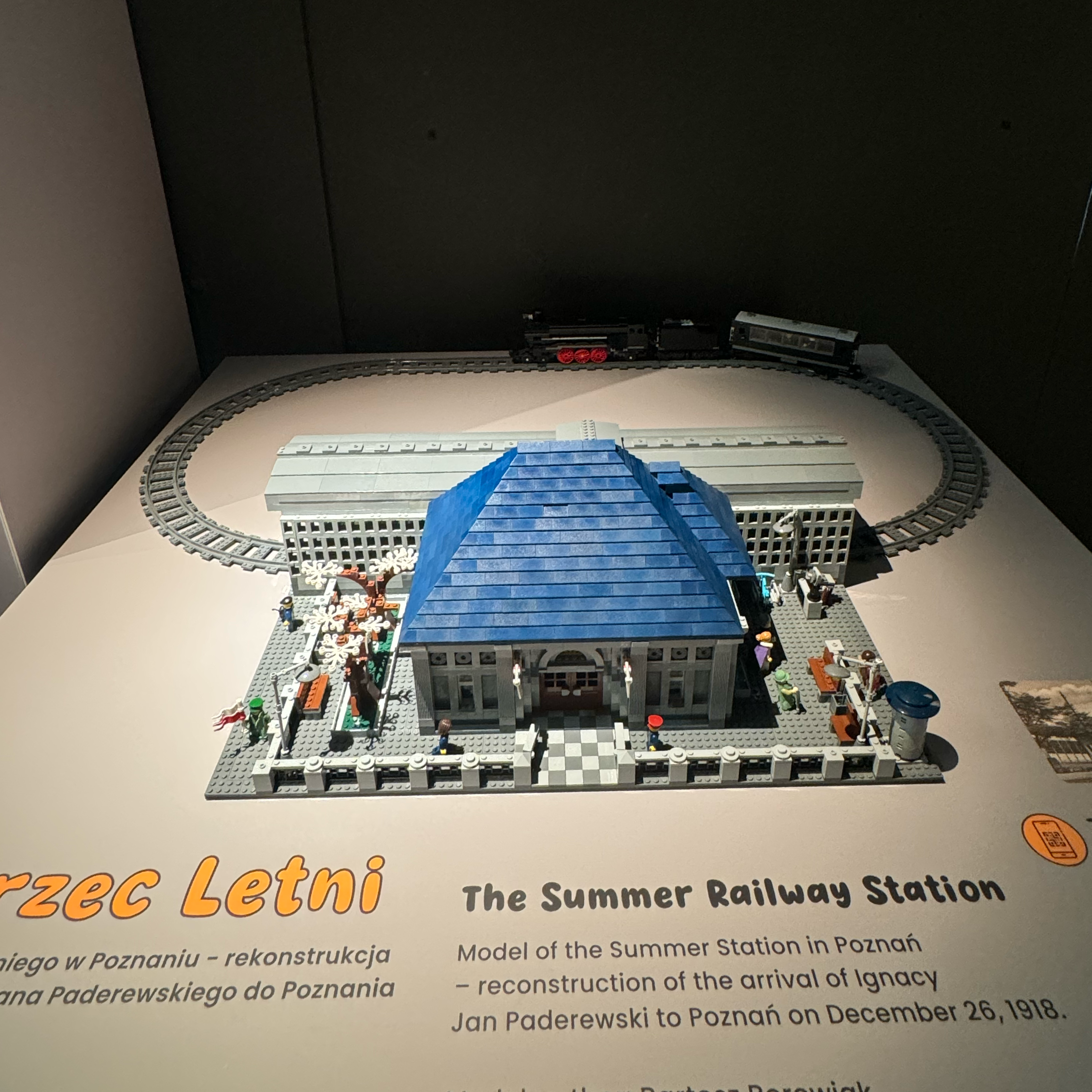
This station focused on the outbreak of the Greater Poland Uprising and the arrival of Ignacy Jan Paderewski in Poznań. Interactive panels equipped with movable flaps allowed visitors to discover archival photographs, illustrations, and stories about everyday life during the uprising. A key attraction was a LEGO model of the Summer Railway Station, representing the location where Paderewski arrived in Poznań.
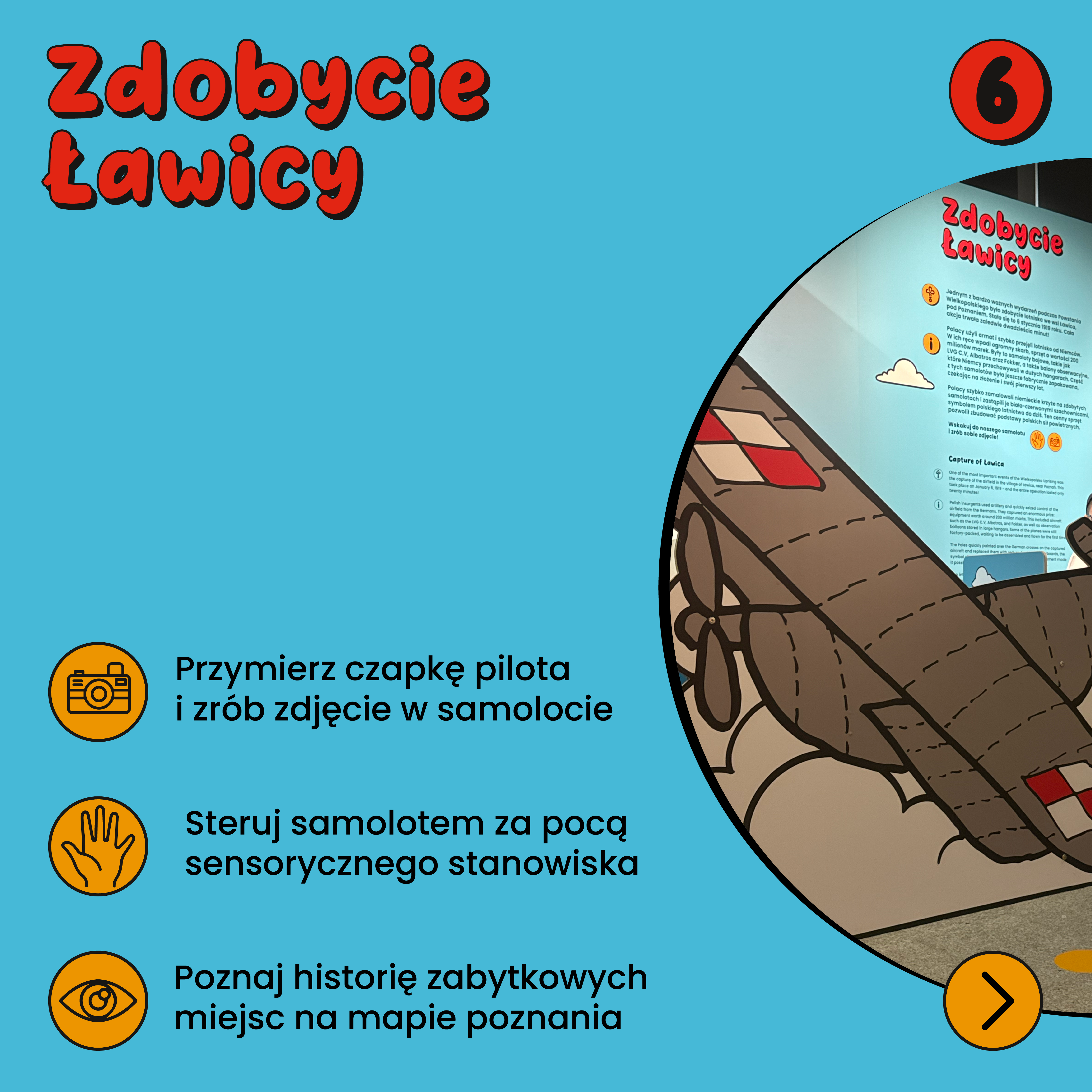
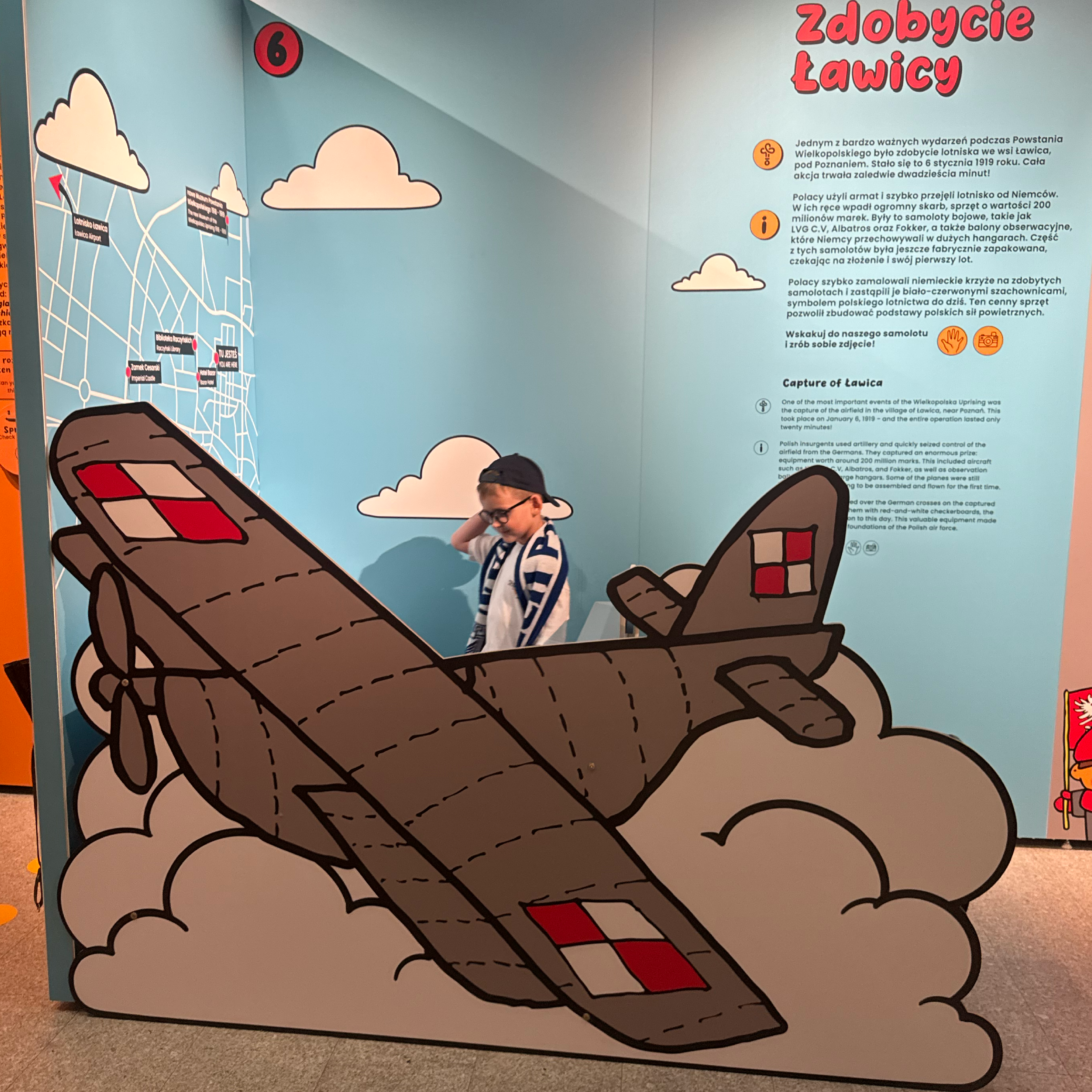
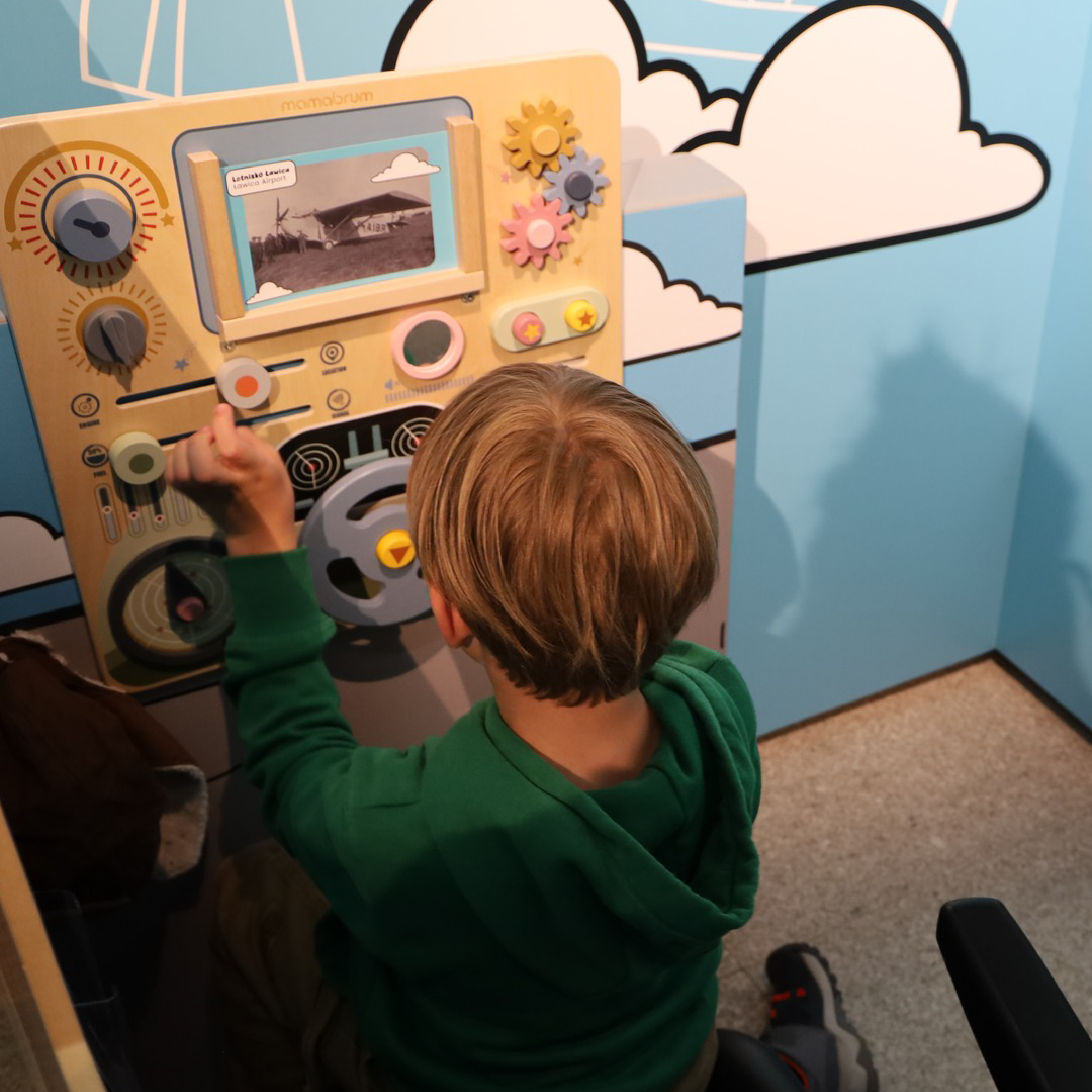
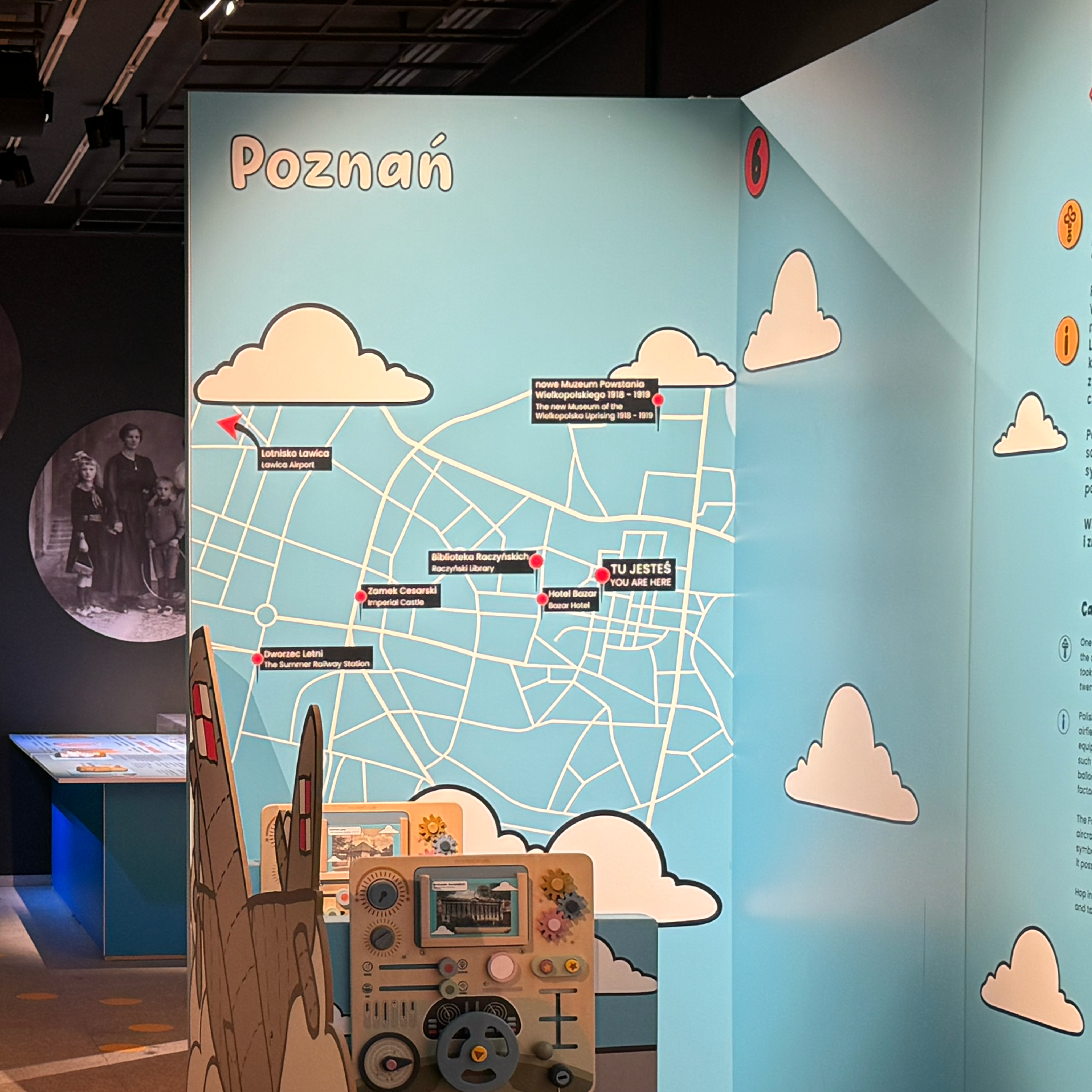
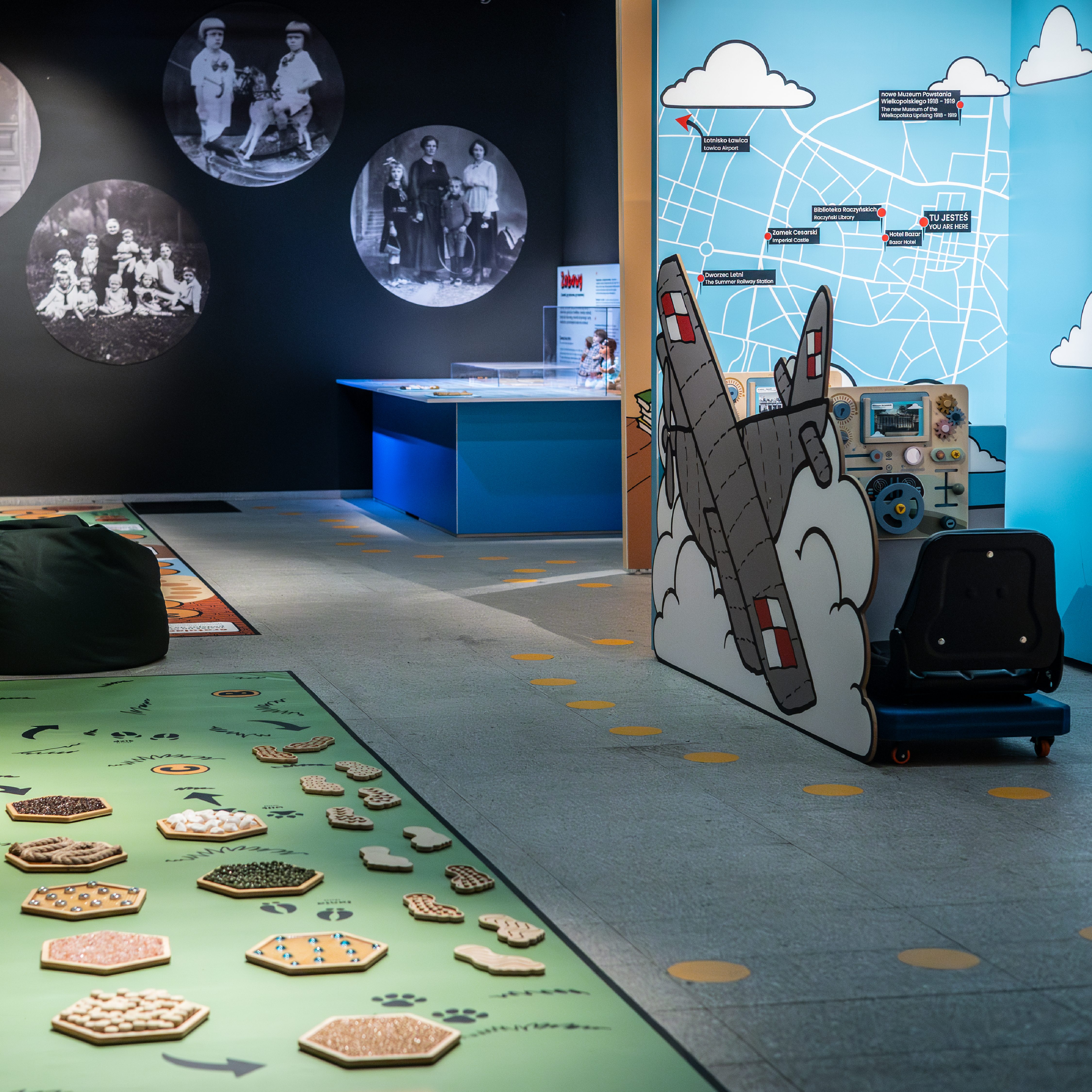
One of the most spectacular elements of the exhibition was dedicated to the capture of Ławica Airfield. We designed a large-scale aircraft installation that children could enter and explore while taking on the role of a pilot. Inside the structure, sensory controls and interactive elements encouraged imaginative play. The station also featured a large map of Poznań highlighting locations connected with the Greater Poland Uprising.
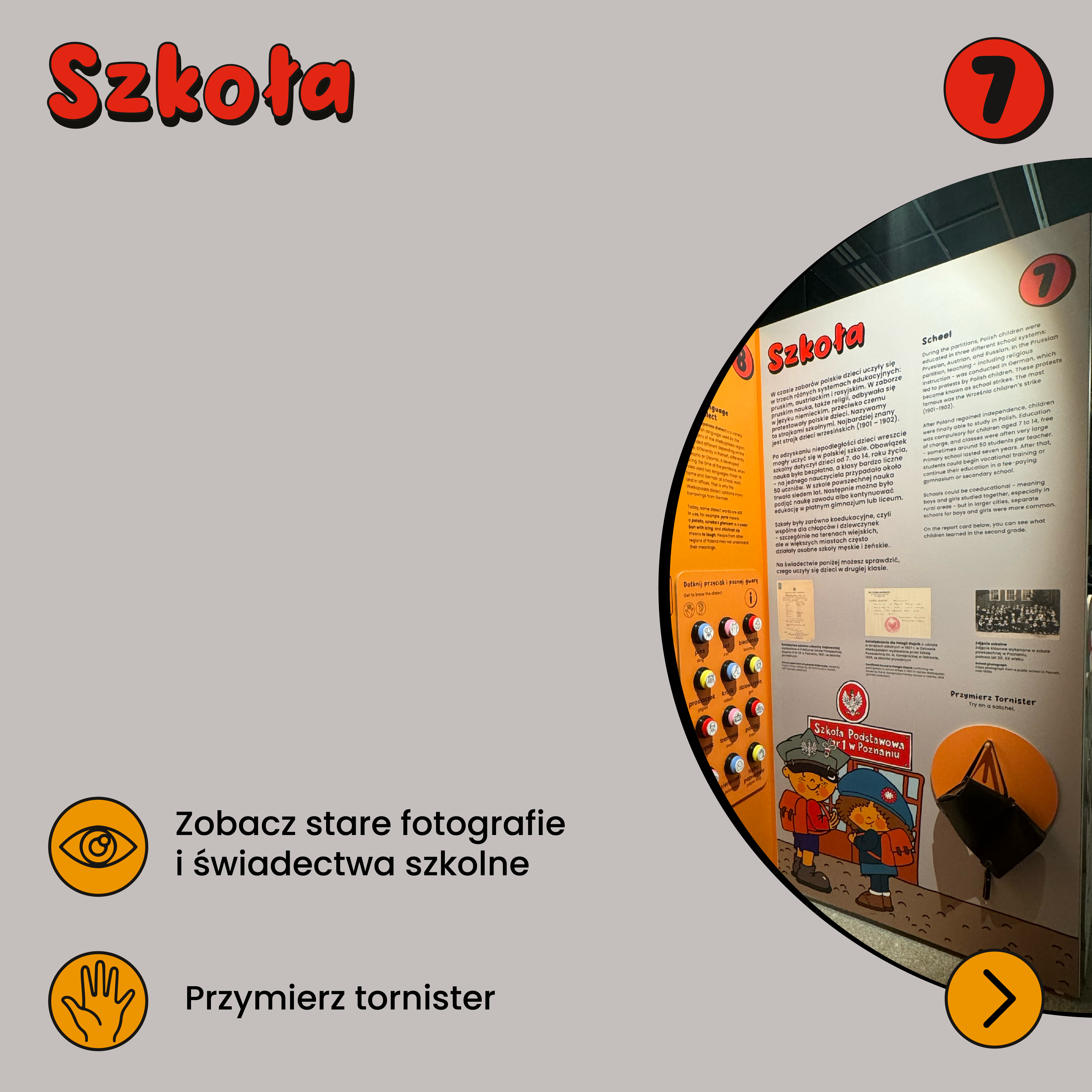
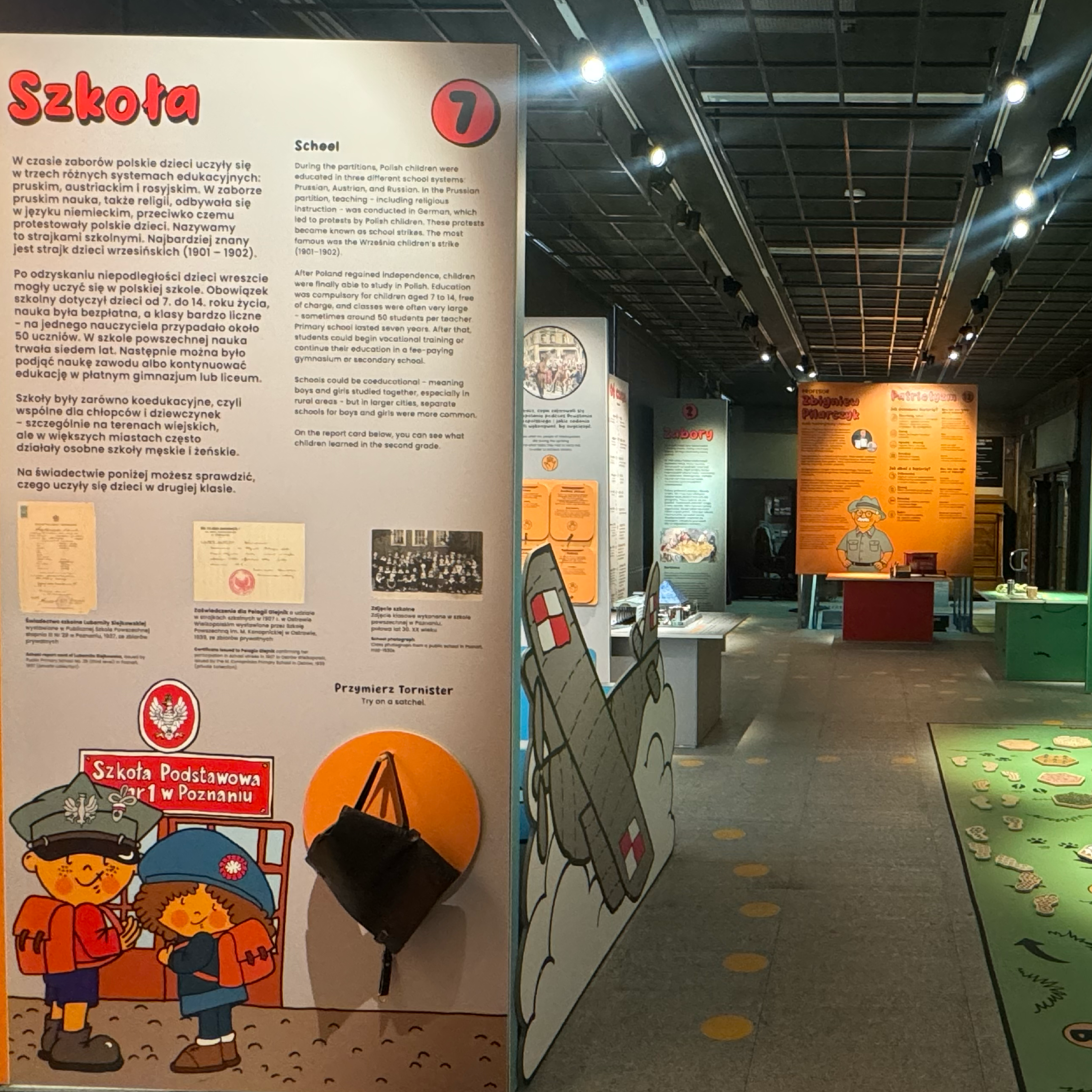
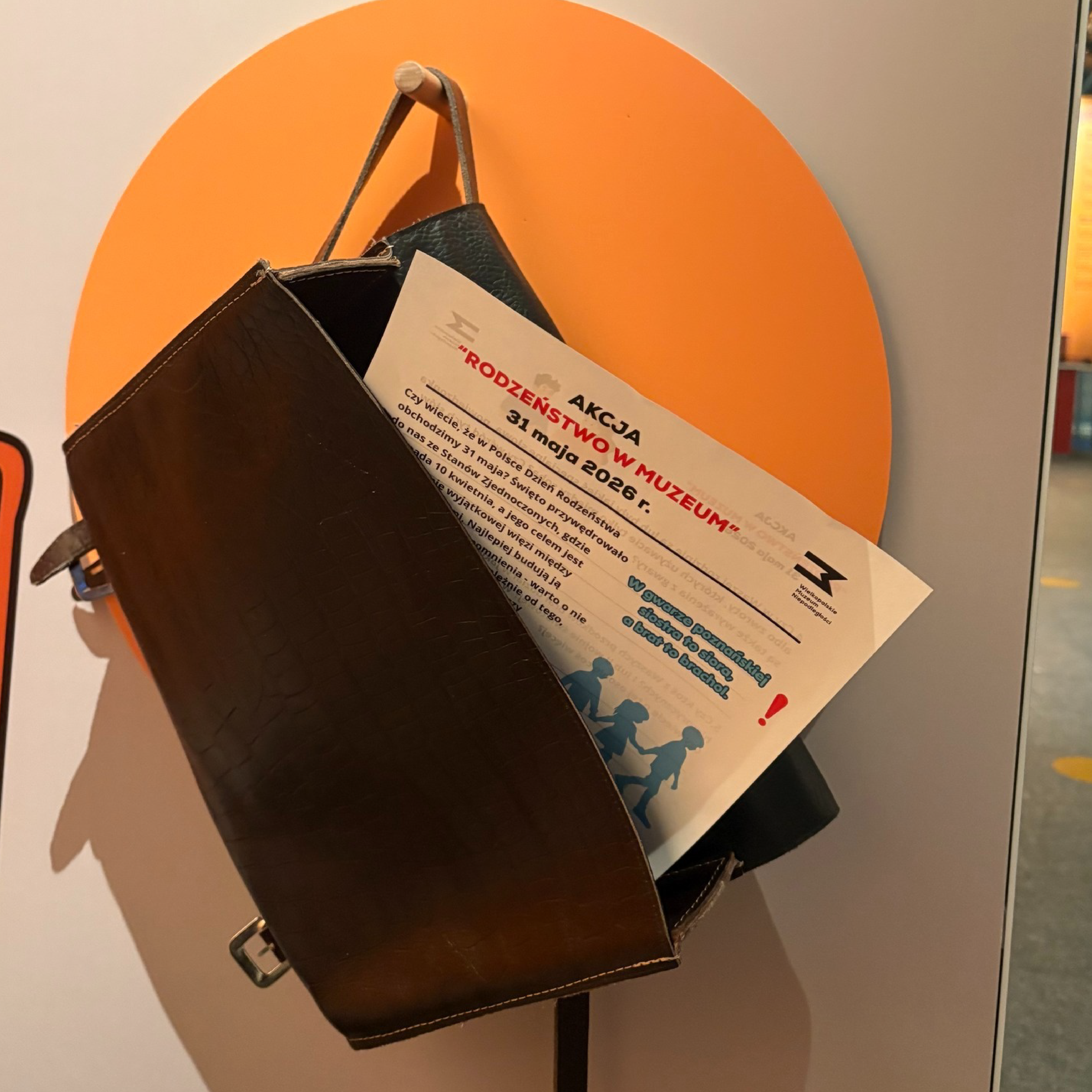
This station explored the everyday experiences of children attending school during the period of the partitions. Visitors could view archival class photographs, historical report cards, and educational materials from the era. A historic school satchel was available for children to try on, helping them imagine the lives of their peers more than a century ago.
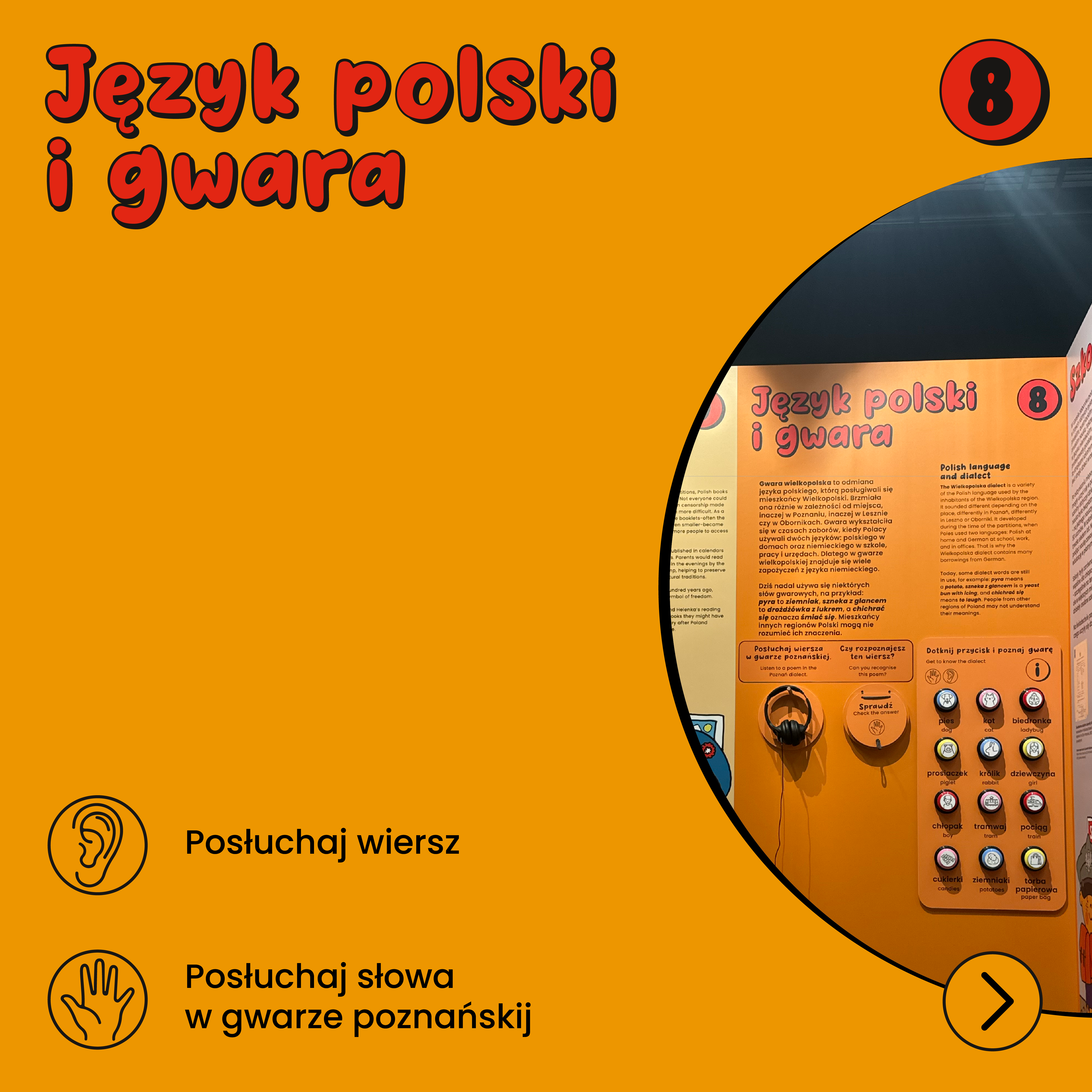
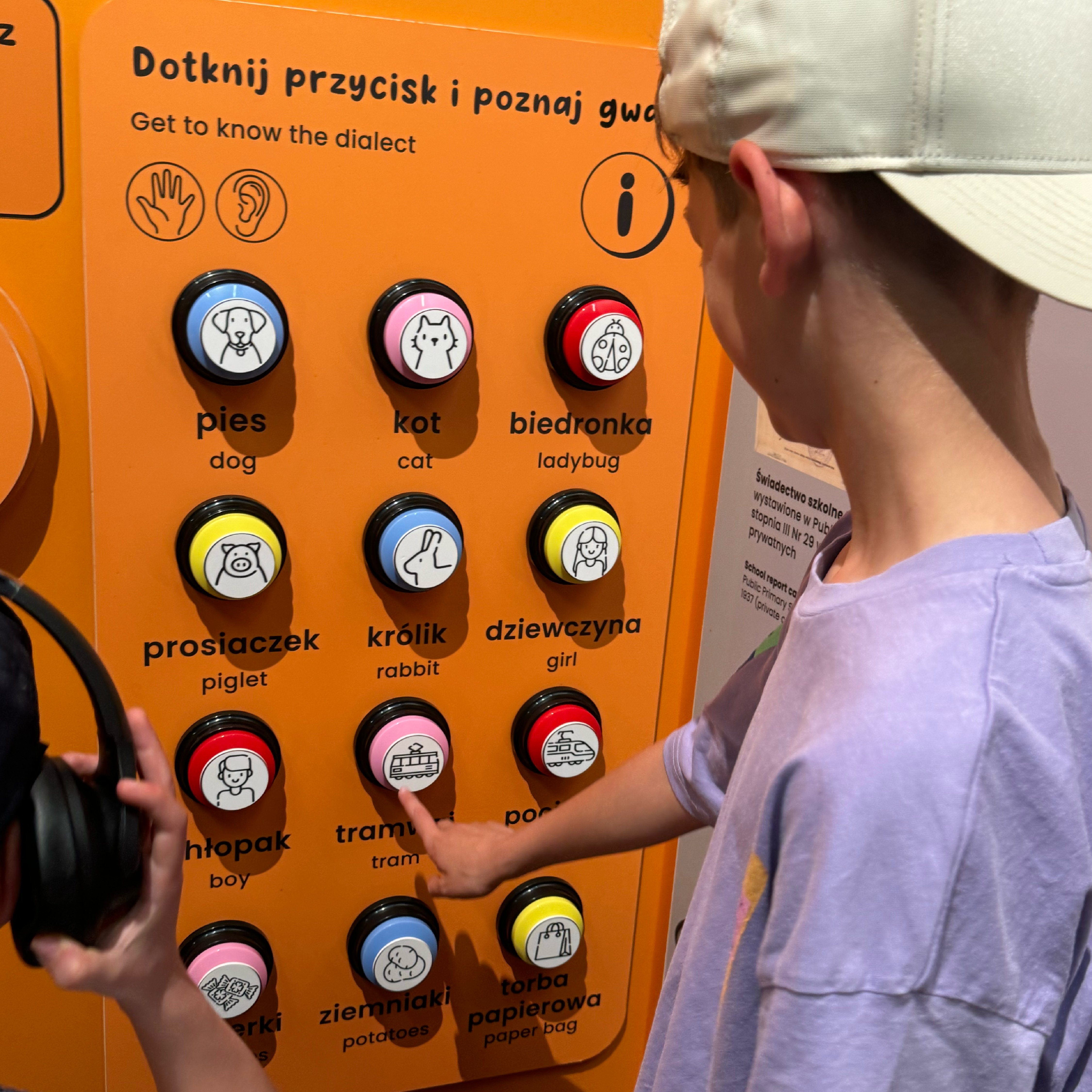
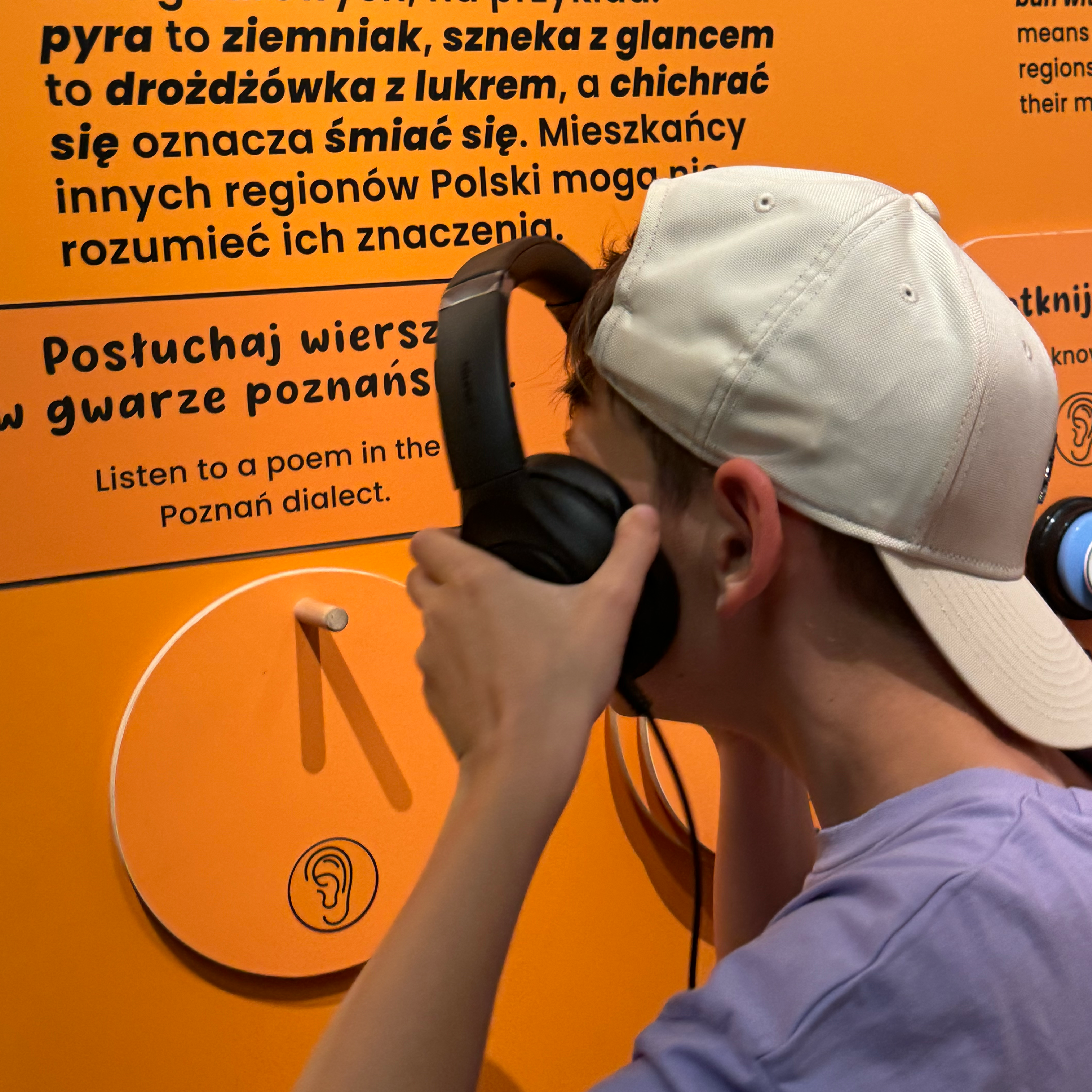
Dedicated to language and regional identity, this station explored the Poznań dialect through interactive audio experiences. Visitors could listen to characteristic local words such as bimba, tytka, and kejter, learning their meanings and pronunciation. The installation also included a listening area where selected works by Julian Tuwim could be heard in dialect form.
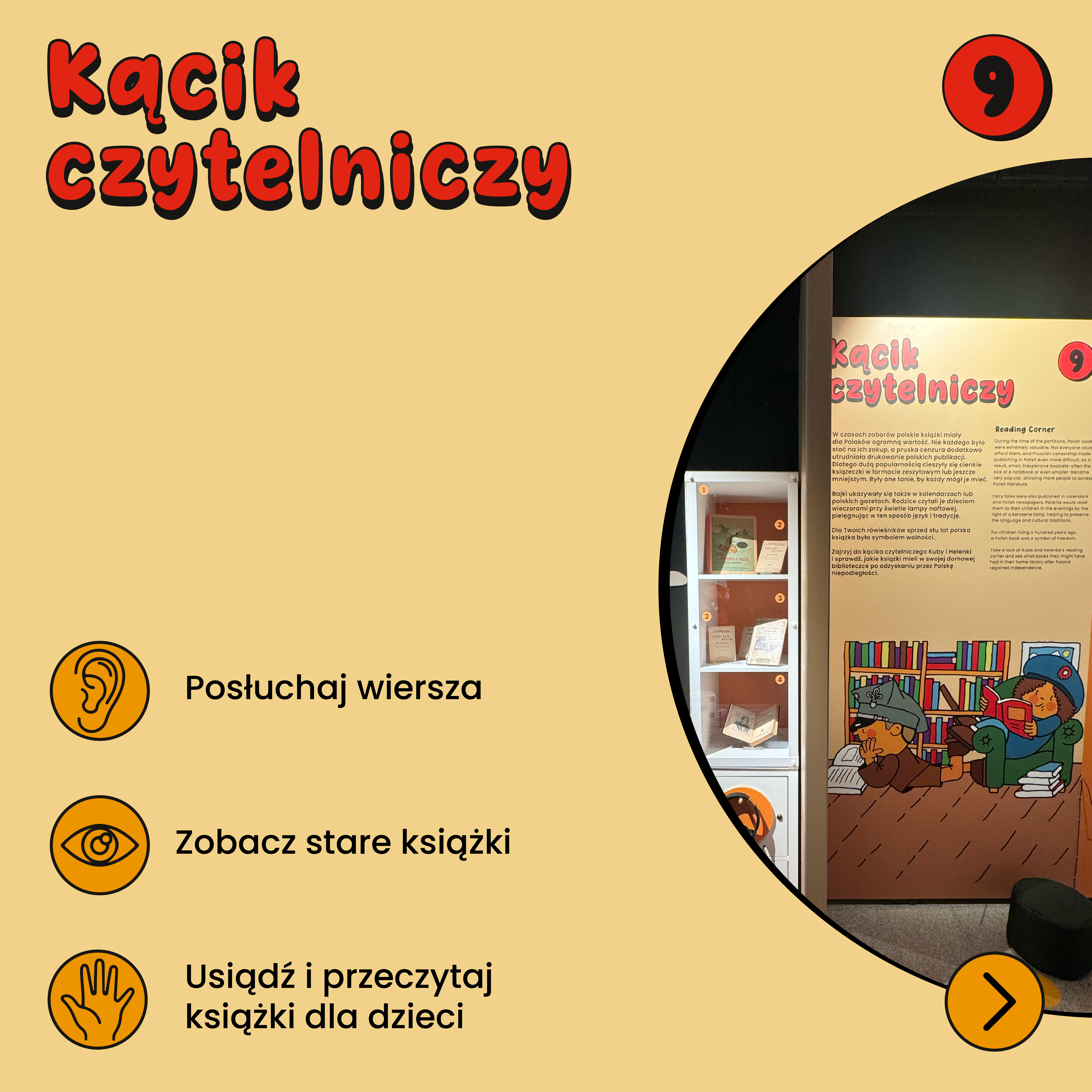
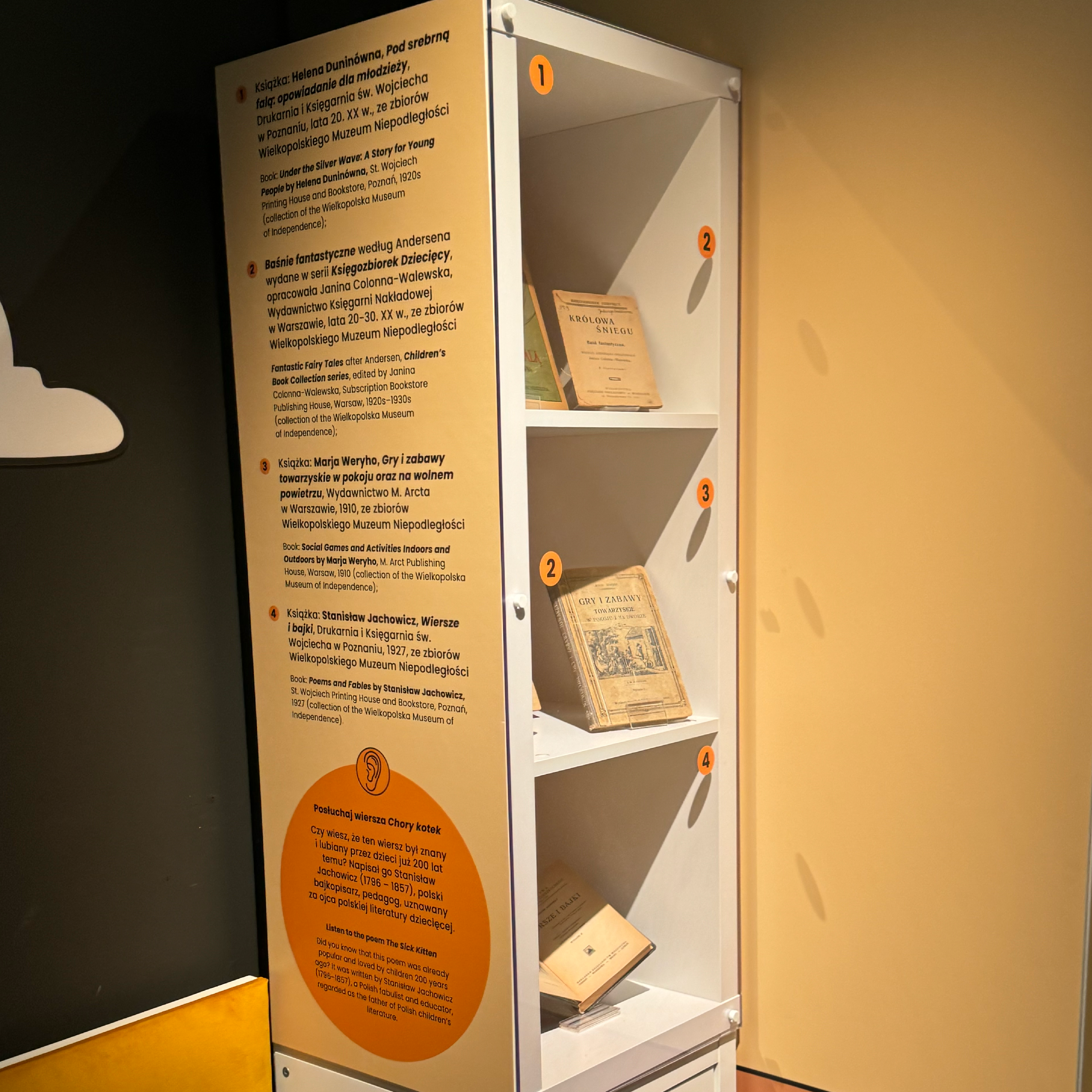
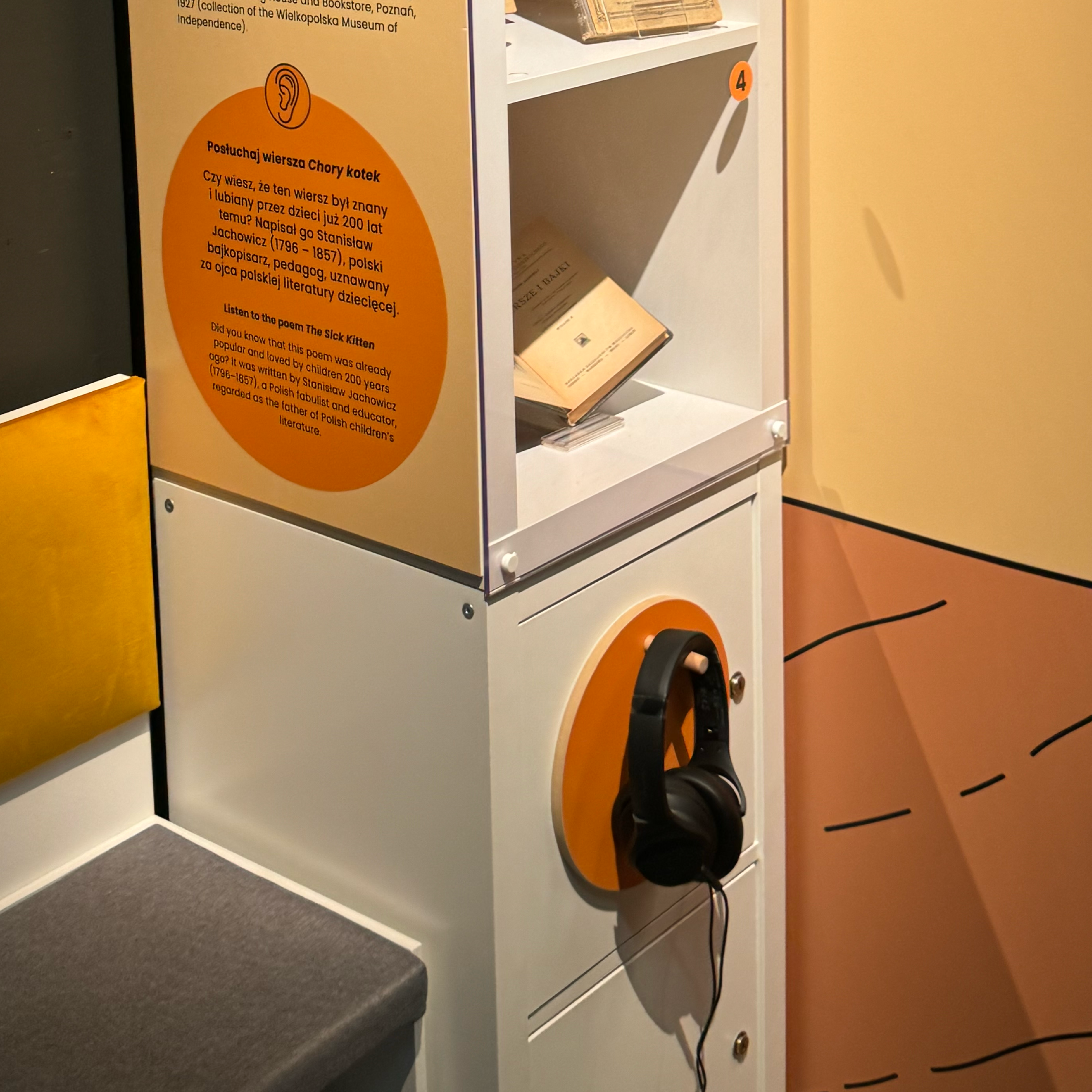
The reading corner provided a quiet space for rest and reflection during the exhibition visit. It featured books and publications from more than one hundred years ago, introducing visitors to the reading culture of children living during the time of the Greater Poland Uprising. Visitors could browse publications and listen to recordings of the classic poem The Sick Kitten, known to generations of children.
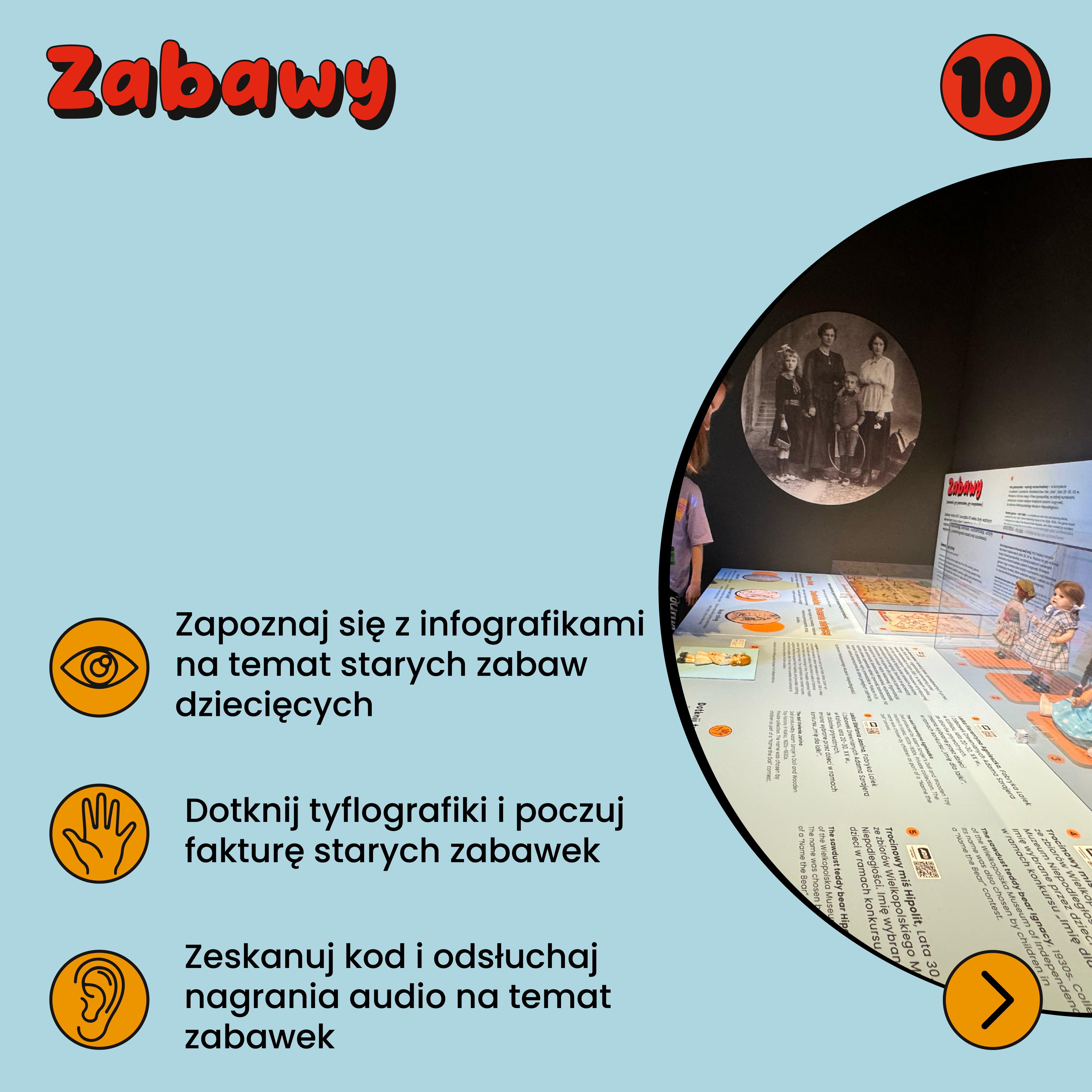
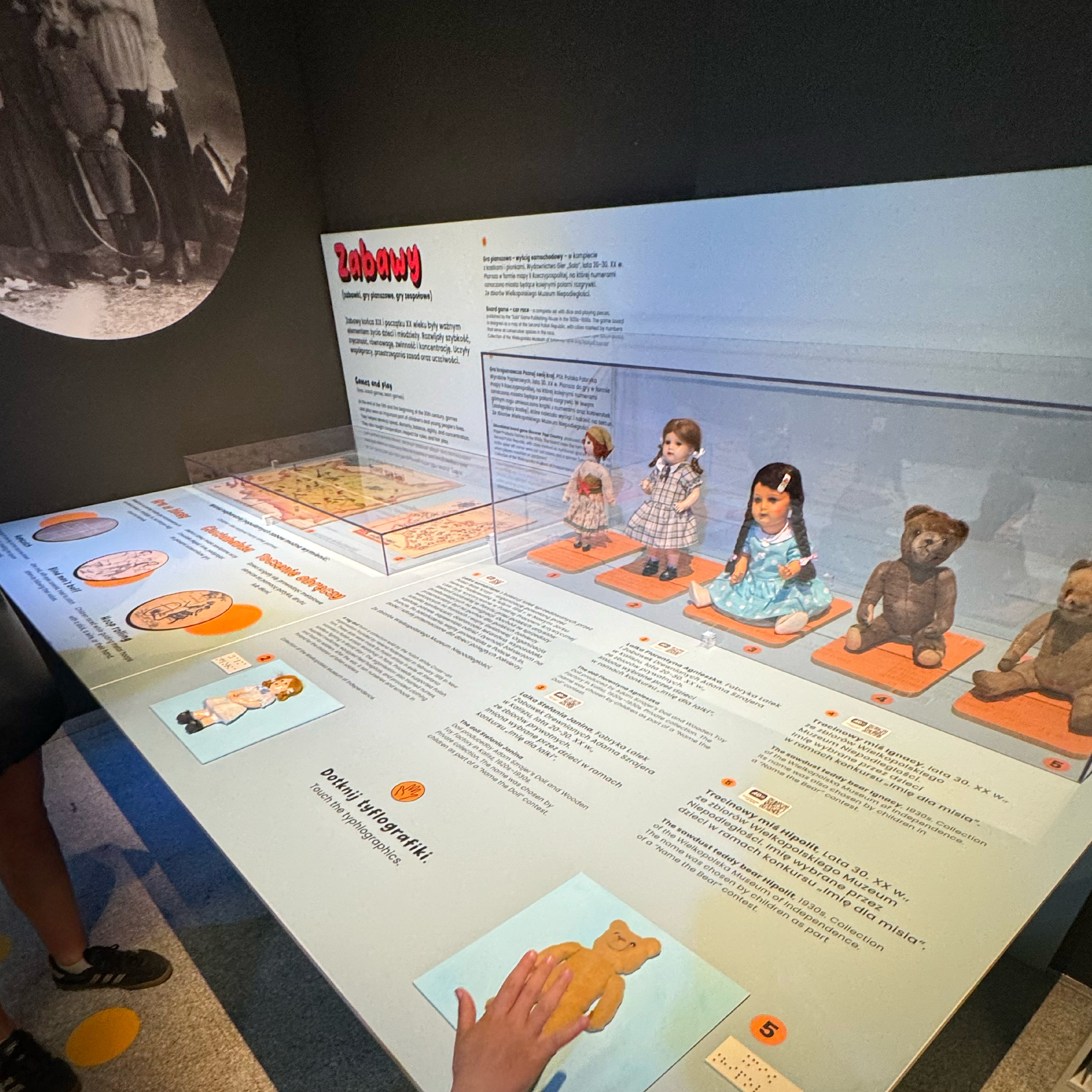
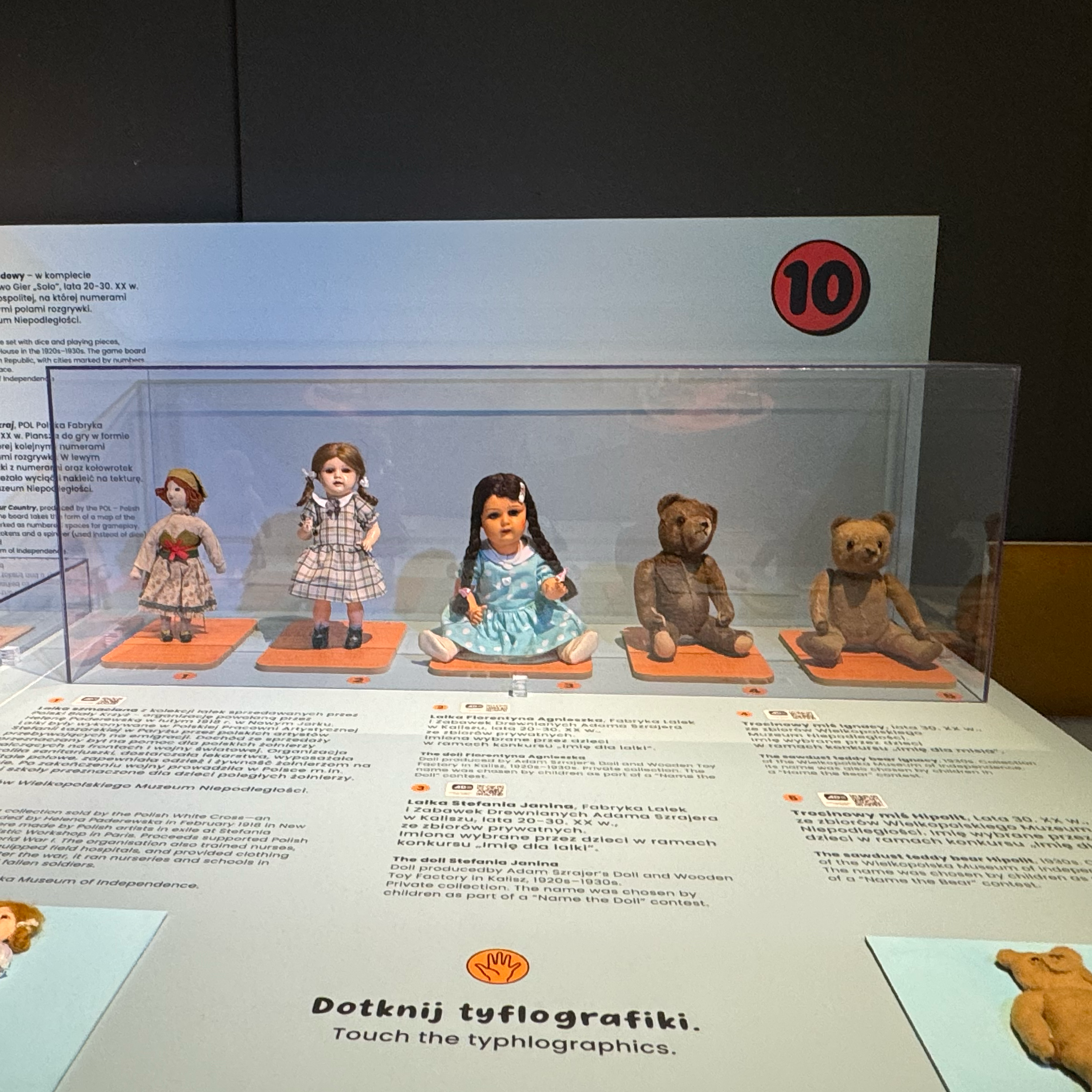
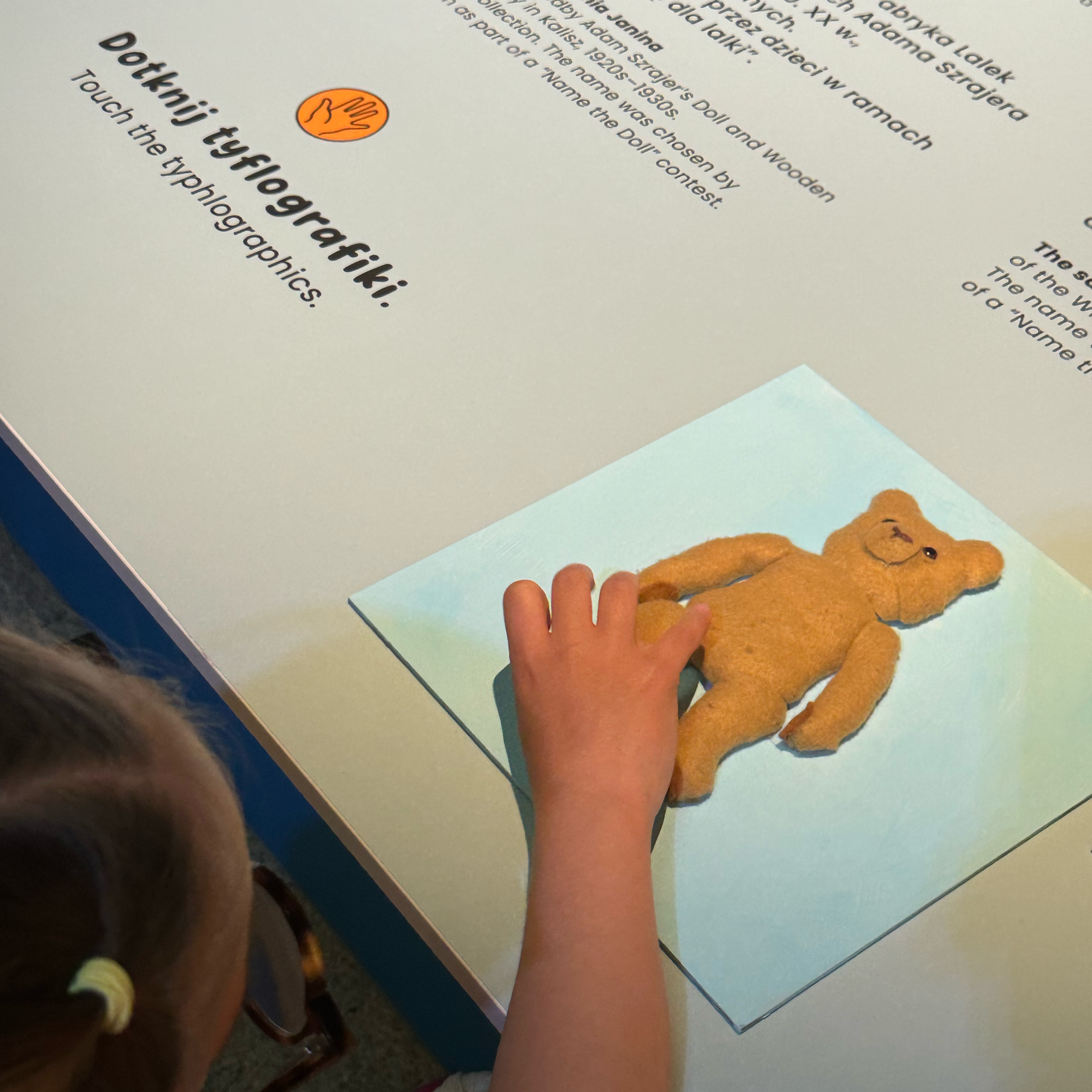
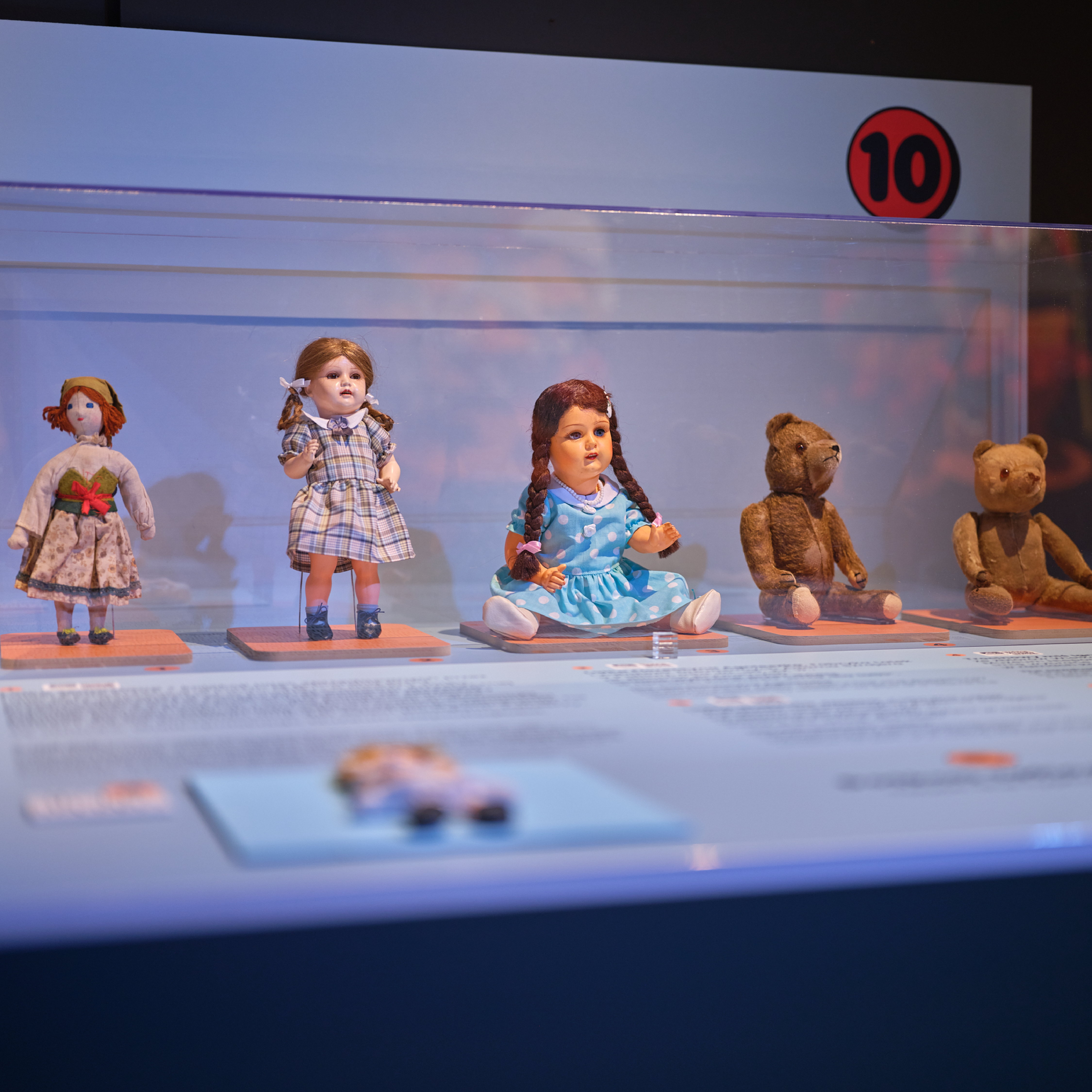
This station presented the world of children’s games and toys from the early twentieth century. Historical dolls, teddy bears, and board games were displayed alongside descriptions and historical context. Accessibility and inclusive design played an important role in the installation. Tactile graphics, Braille descriptions, and QR codes linking to audio descriptions allowed visitors with visual impairments to engage with the content. Educational infographics and large-format archival photographs complemented the display.
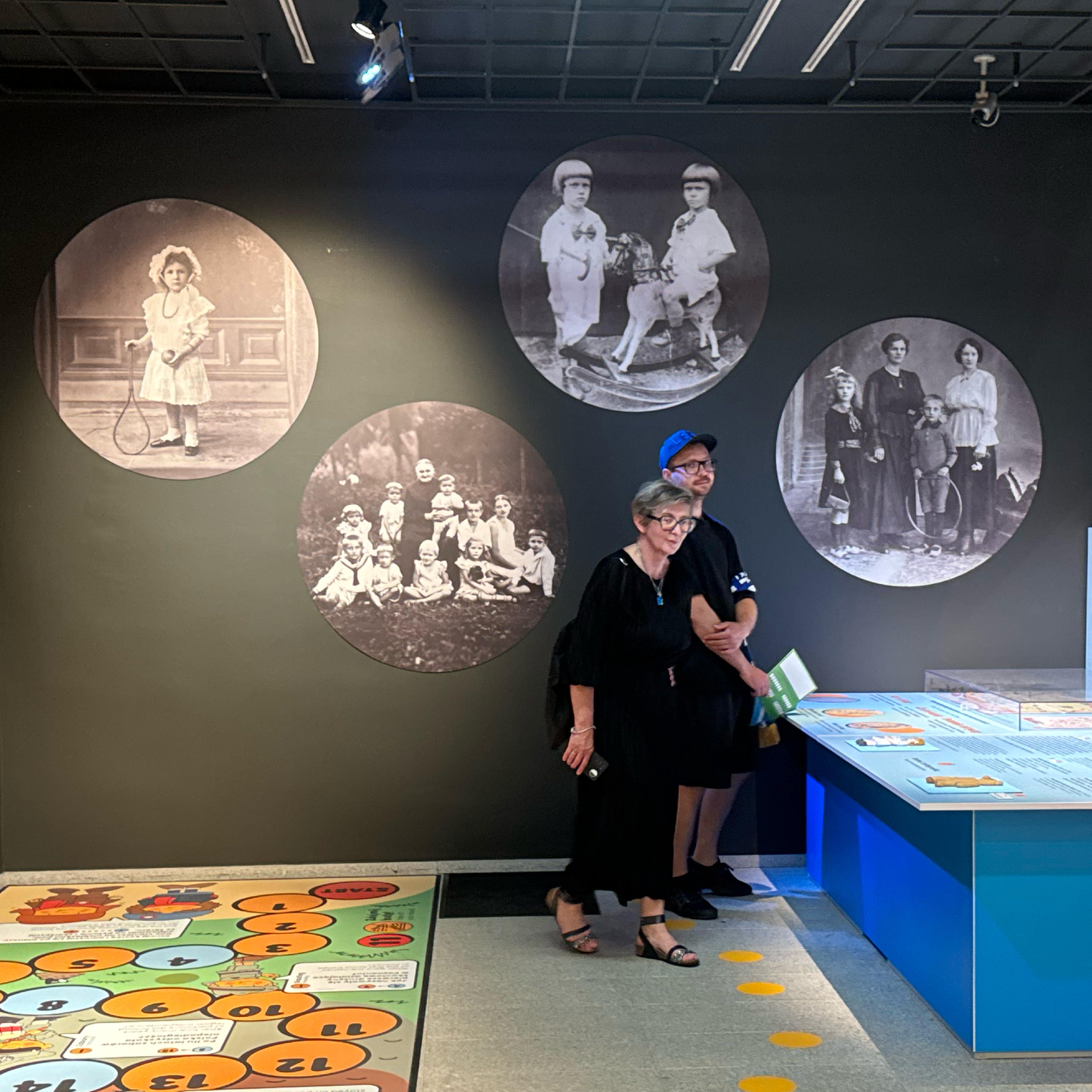
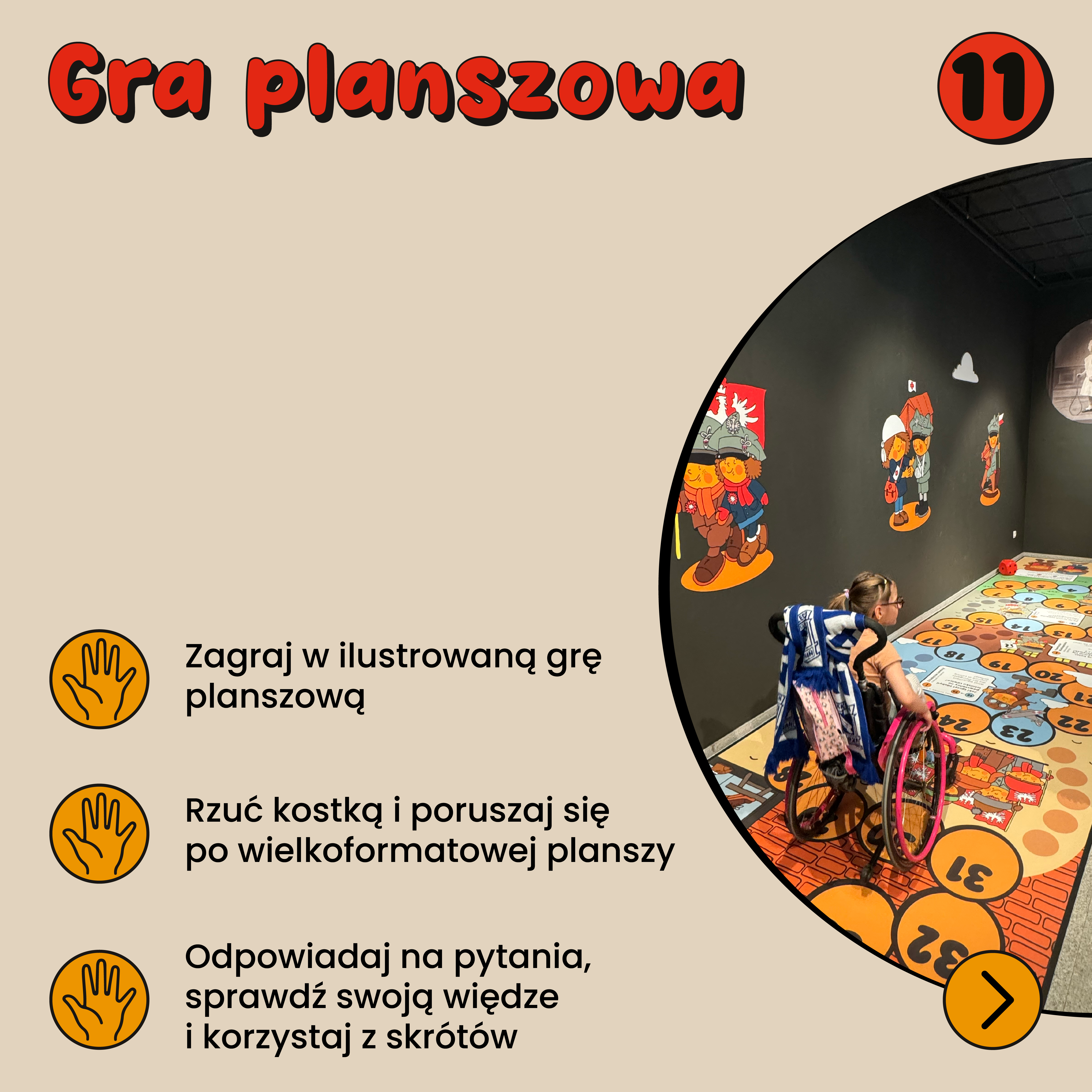
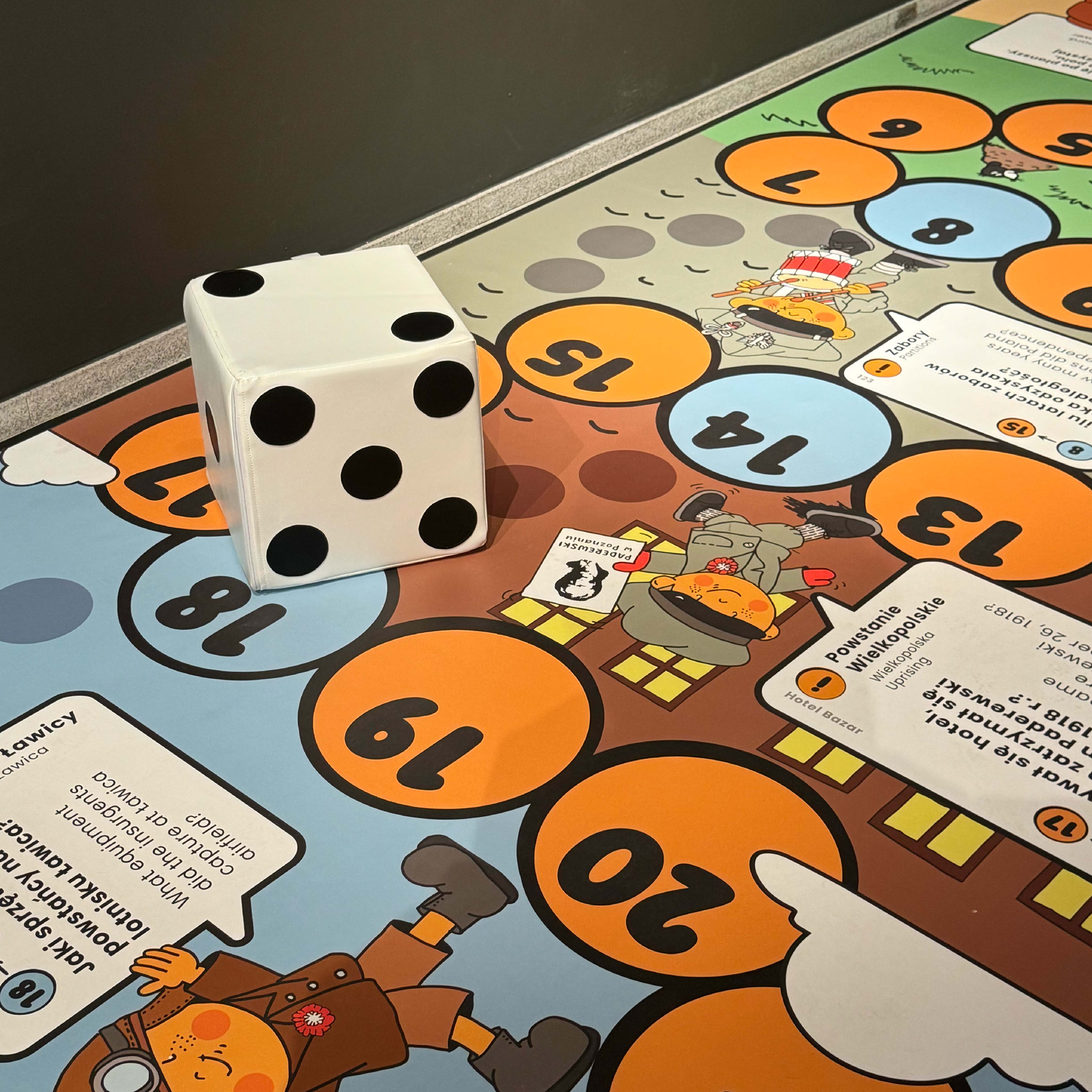
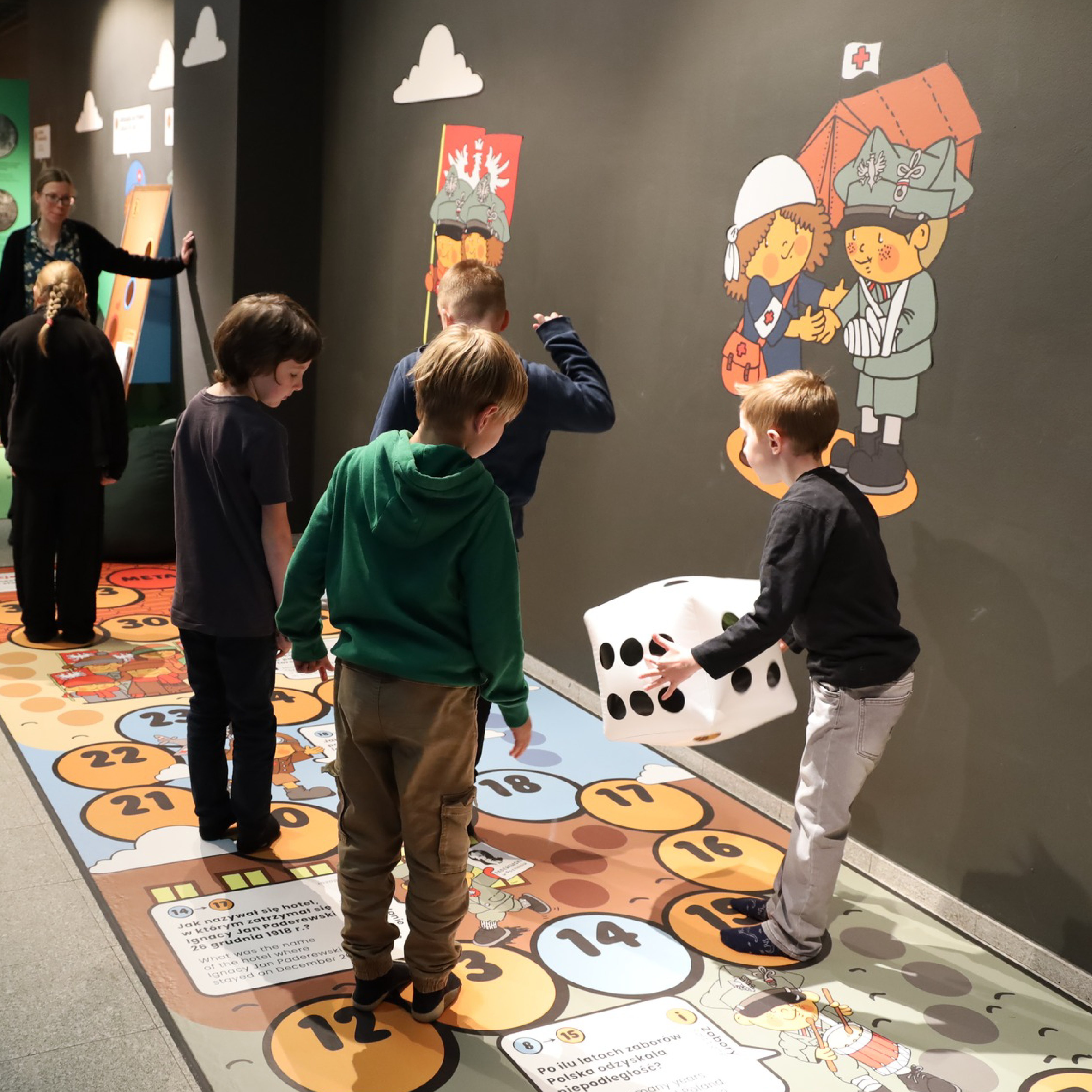
The culmination of the visitor journey was a giant board game featuring Mela and Szczun. Visitors became game pieces themselves, moving across a large board installed within the museum space. Along the route, they answered questions related to the exhibition content, reinforcing knowledge through play, competition, and physical activity. The game served as a natural summary of the entire exhibition experience.
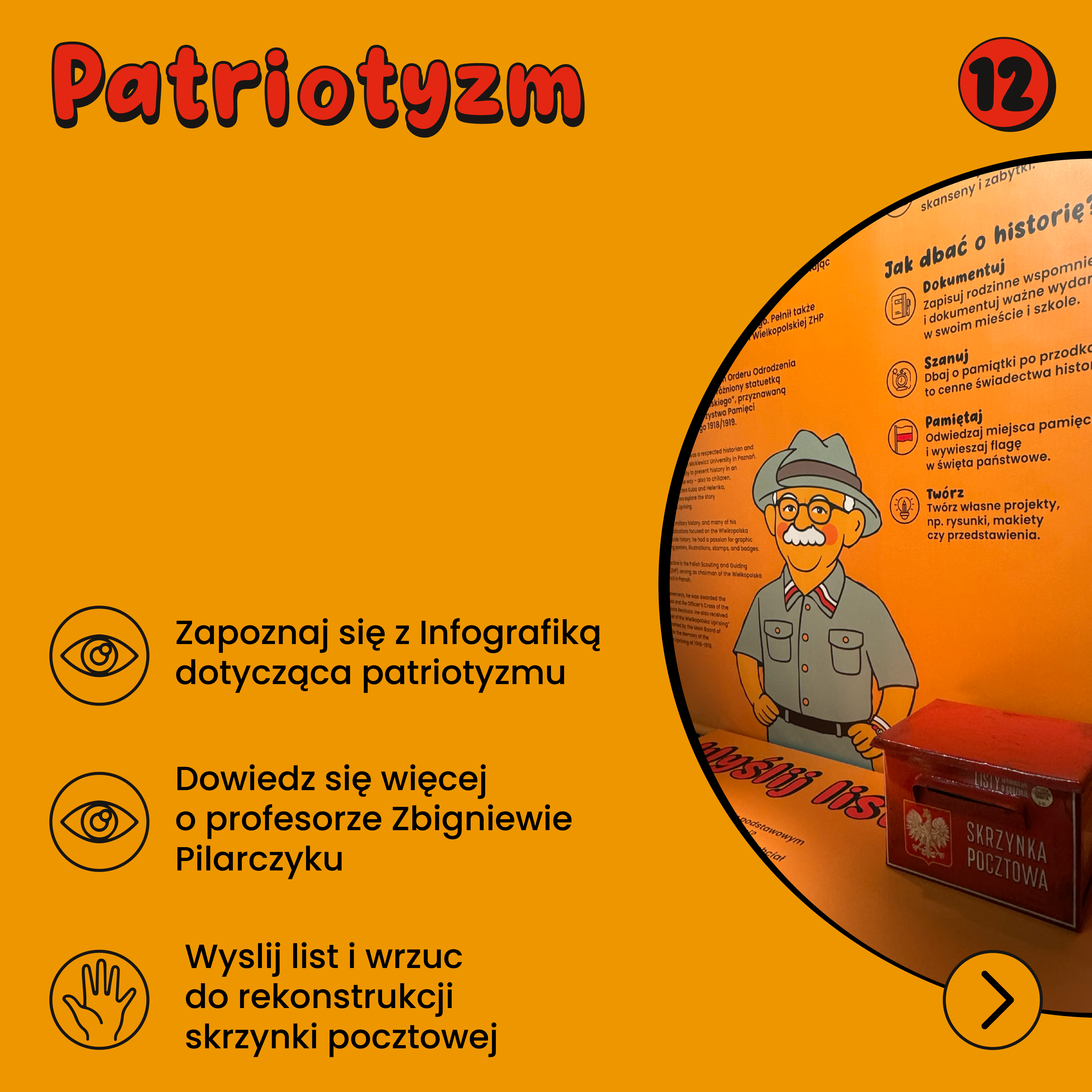
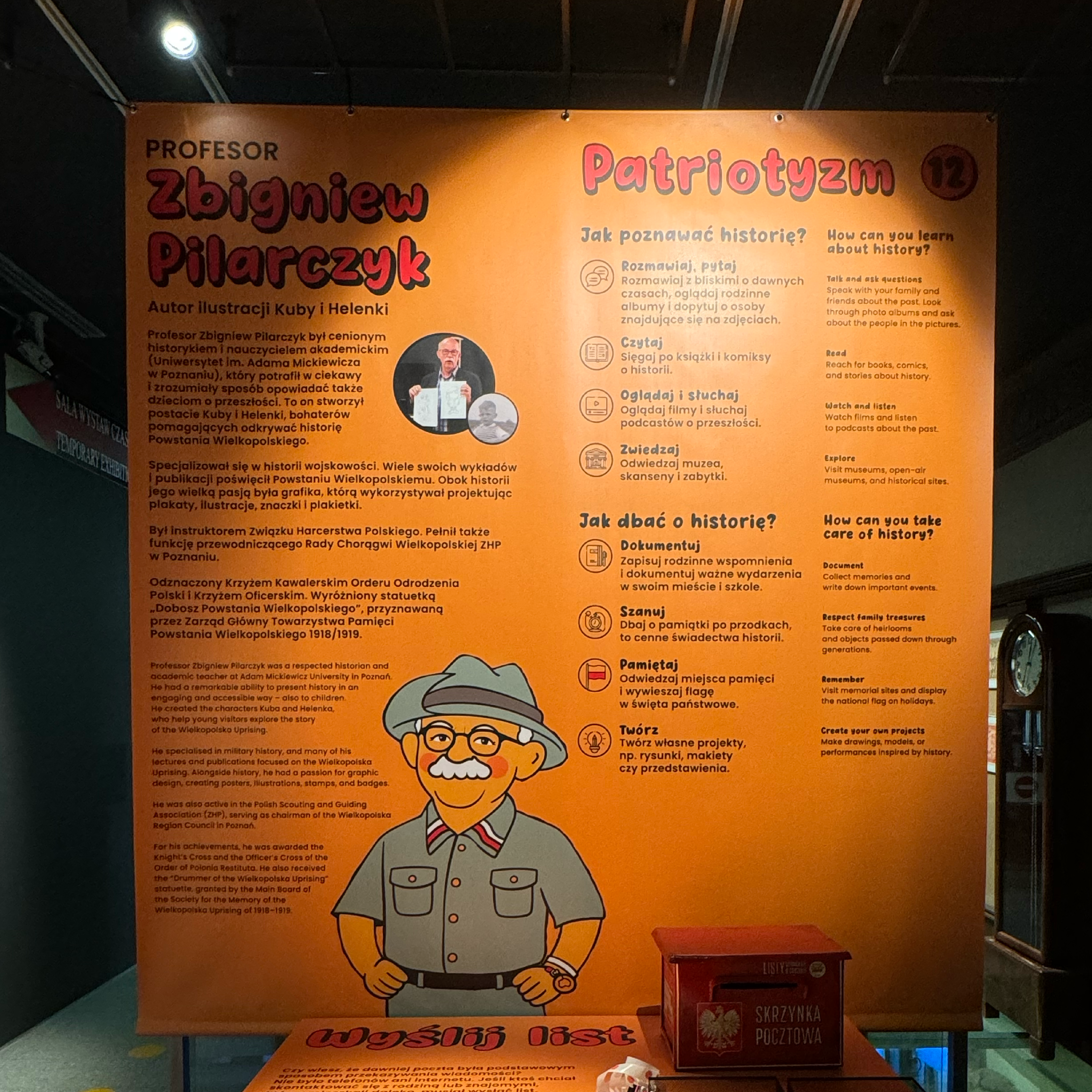
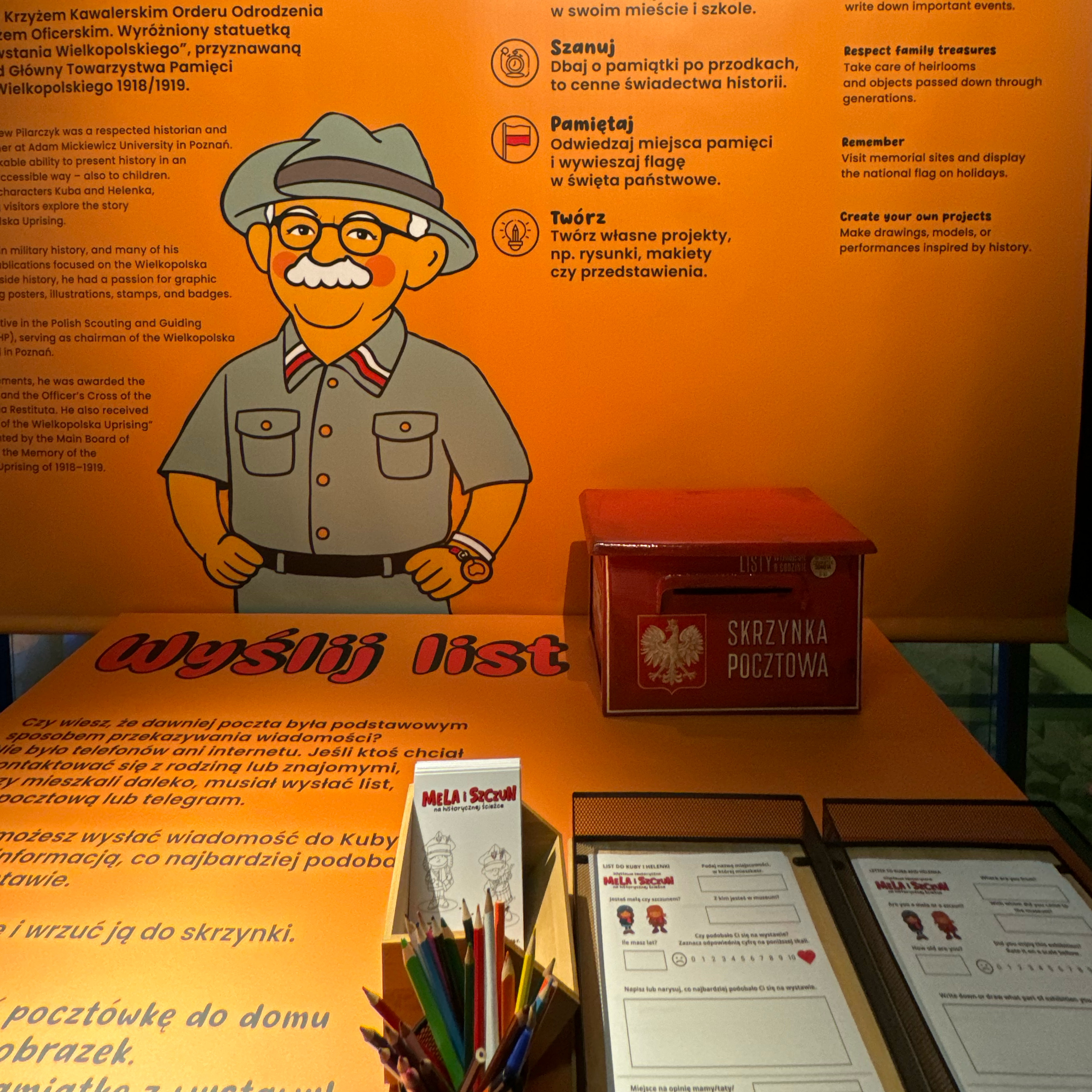
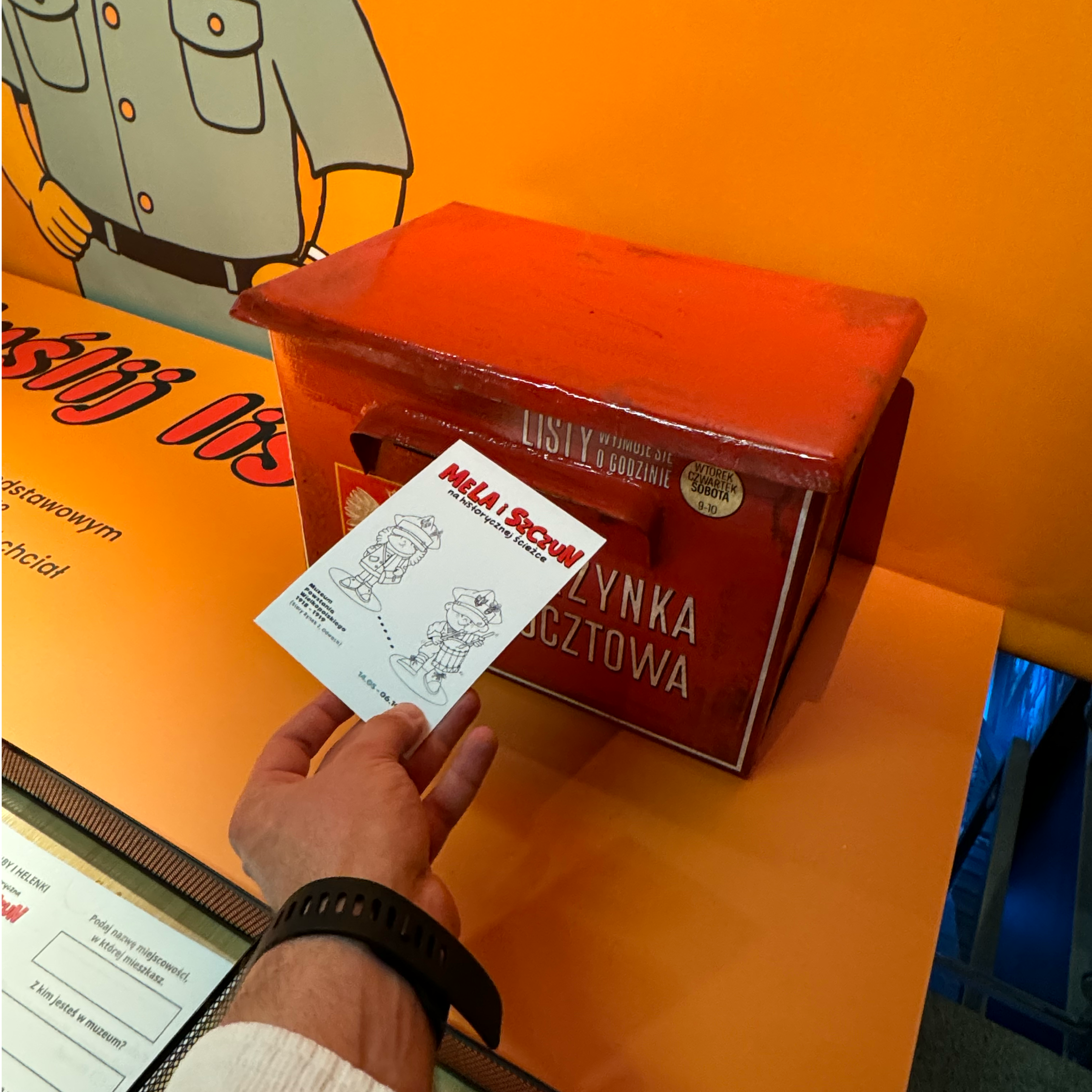
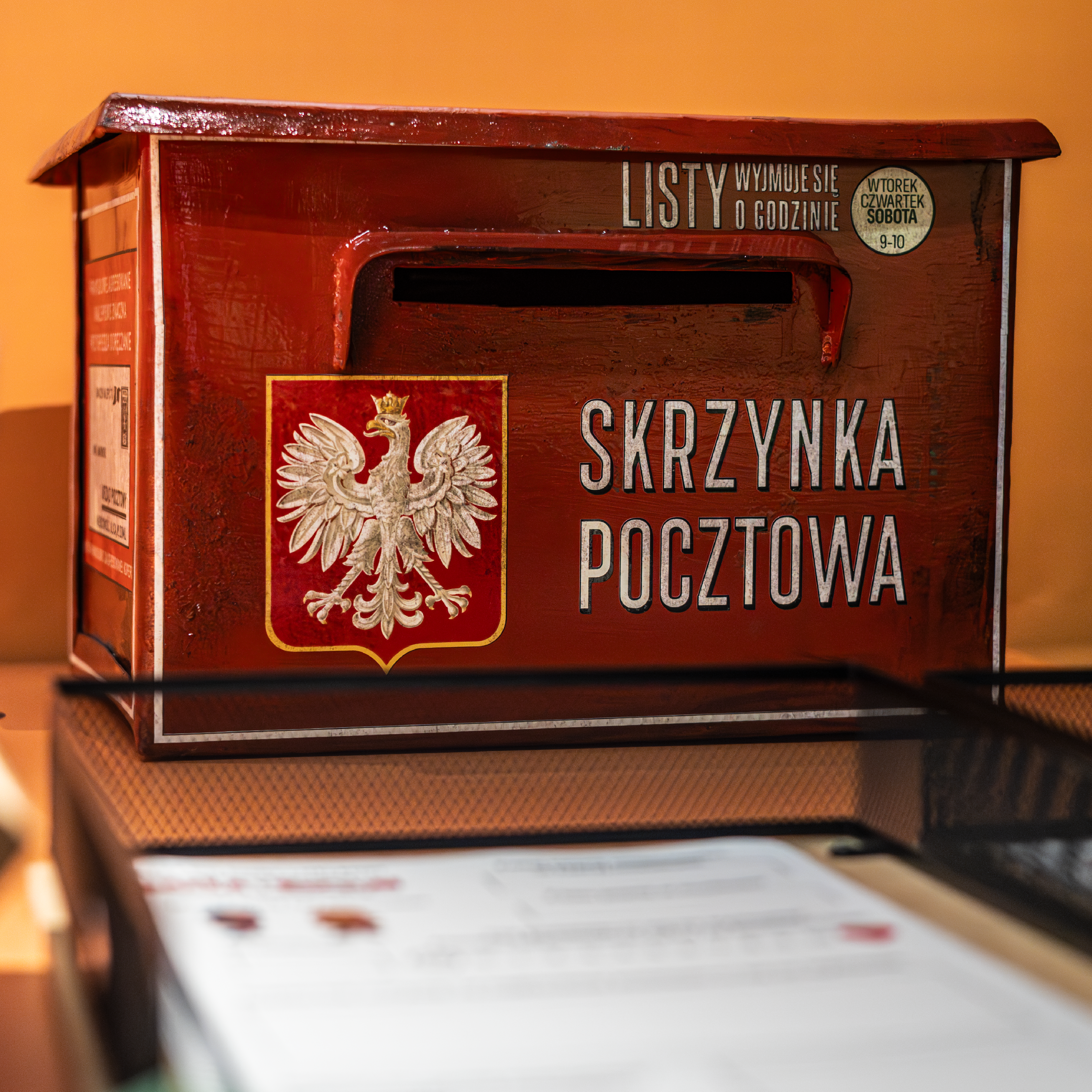
The final station encouraged reflection on the contemporary meaning of patriotism and the importance of preserving historical memory. Visitors could learn about Professor Zbigniew Pilarczyk, the creator of Mela and Szczun, and write their own letters to be placed in a reconstructed historical post box inspired by early twentieth-century originals. As part of the project, we designed, produced, and installed the full-scale replica, including historically accurate graphics and aged surface finishes.

The project encompassed every stage of exhibition development, from visitor journey planning and exhibition design to visual identity, wayfinding, interactive exhibit design, production, installation, and authorial supervision.
We also created educational infographics, illustrations, promotional materials, posters, invitations, and social media graphics. The result is a contemporary sensory exhibition that introduces the history of the Greater Poland Uprising through play, movement, and direct experience.
Mela and Szczun on a Historical Trail is an example of a comprehensive interactive exhibition project that combines education, spatial design, visual communication, and innovative visitor engagement tools to create a memorable museum experience.
Looking for a Wayfinding System for Your Museum or Exhibition?
See our projects:


THow can the story of the Greater Poland Uprising be made engaging for children? How can historical events from more than a century ago be presented in a way that is accessible, interactive, and enjoyable for entire families?
The answer was Mela and Szczun on a Historical Trail – a temporary exhibition created for the Greater Poland Uprising Museum in Poznań.
Our task was to develop a complete educational exhibition concept for children and families that uses play, movement, and sensory experiences to introduce visitors to the history of Greater Poland and the Greater Poland Uprising. The exhibition consisted of twelve interactive stations engaging sight, hearing, touch, smell, and physical activity. Visitors explored the region’s history through games, experiments, tasks, and hands-on interactions designed specifically for younger audiences.


The starting point for the project was a series of illustrations created by Professor Zbigniew Pilarczyk depicting Mela and Szczun – two characters inspired by the Poznań dialect. Our role involved digitising the original drawings and creating a complete visual identity system for the exhibition.
We developed the exhibition title, typography system, visual communication guidelines, exhibit signage, and a set of sensory icons used throughout the display. The visual identity was designed to appeal to children while remaining clear and readable for adult visitors. Hand-drawn, comic-inspired typography was combined with a clean geometric sans-serif typeface for educational content.
An important element of the project was the wayfinding and sensory icon system, which informed visitors about the type of activity available at each station. The icons clearly indicated whether a particular exhibit encouraged listening, touching, smelling, observing, or physical participation.


The first station introduced visitors to the exhibition by presenting the history of Greater Poland and the changing borders of the region over time. As part of the exhibition design, we created a large-scale map illustrating key territorial changes related to Polish history and the Greater Poland Uprising. The display also included tactile graphics produced using 3D printing technology, allowing visually impaired visitors to explore historical borders through touch. Braille descriptions and three-dimensional figures of Mela and Szczun completed the installation.


The second station presented the key historical events that preceded the outbreak of the Greater Poland Uprising. Its central element was a large-scale timeline illustrating the history of Poland and Greater Poland during the period of the partitions. Through a clear visual structure and carefully designed narrative, visitors gained an understanding of the political and social context that led to the struggle for independence.


Dedicated to the natural environment of Greater Poland, this station was designed as a sensory learning experience. Visitors explored the layers of the forest through four interactions engaging sight, touch, smell, and hearing. Children searched for hidden ladybirds within forest-floor illustrations, touched elements representing woodland vegetation, discovered the scent of the forest, and listened to authentic nature sounds. The installation demonstrated how learning can be based on direct experience and exploration.


This section introduced visitors to the history of scouting and the origins of Polish scouting organisations. The central feature was a large-scale obstacle course inspired by scouting challenges. Participants practised balance, identified animal tracks, and answered questions related to the exhibition. The station combined historical education with physical activity, encouraging children to learn through movement and play.


This station focused on the outbreak of the Greater Poland Uprising and the arrival of Ignacy Jan Paderewski in Poznań. Interactive panels equipped with movable flaps allowed visitors to discover archival photographs, illustrations, and stories about everyday life during the uprising. A key attraction was a LEGO model of the Summer Railway Station, representing the location where Paderewski arrived in Poznań.


One of the most spectacular elements of the exhibition was dedicated to the capture of Ławica Airfield. We designed a large-scale aircraft installation that children could enter and explore while taking on the role of a pilot. Inside the structure, sensory controls and interactive elements encouraged imaginative play. The station also featured a large map of Poznań highlighting locations connected with the Greater Poland Uprising.


This station explored the everyday experiences of children attending school during the period of the partitions. Visitors could view archival class photographs, historical report cards, and educational materials from the era. A historic school satchel was available for children to try on, helping them imagine the lives of their peers more than a century ago.


Dedicated to language and regional identity, this station explored the Poznań dialect through interactive audio experiences. Visitors could listen to characteristic local words such as bimba, tytka, and kejter, learning their meanings and pronunciation. The installation also included a listening area where selected works by Julian Tuwim could be heard in dialect form.


The reading corner provided a quiet space for rest and reflection during the exhibition visit. It featured books and publications from more than one hundred years ago, introducing visitors to the reading culture of children living during the time of the Greater Poland Uprising. Visitors could browse publications and listen to recordings of the classic poem The Sick Kitten, known to generations of children.


This station presented the world of children’s games and toys from the early twentieth century. Historical dolls, teddy bears, and board games were displayed alongside descriptions and historical context. Accessibility and inclusive design played an important role in the installation. Tactile graphics, Braille descriptions, and QR codes linking to audio descriptions allowed visitors with visual impairments to engage with the content. Educational infographics and large-format archival photographs complemented the display.


The culmination of the visitor journey was a giant board game featuring Mela and Szczun. Visitors became game pieces themselves, moving across a large board installed within the museum space. Along the route, they answered questions related to the exhibition content, reinforcing knowledge through play, competition, and physical activity. The game served as a natural summary of the entire exhibition experience.


The final station encouraged reflection on the contemporary meaning of patriotism and the importance of preserving historical memory. Visitors could learn about Professor Zbigniew Pilarczyk, the creator of Mela and Szczun, and write their own letters to be placed in a reconstructed historical post box inspired by early twentieth-century originals. As part of the project, we designed, produced, and installed the full-scale replica, including historically accurate graphics and aged surface finishes.


The project encompassed every stage of exhibition development, from visitor journey planning and exhibition design to visual identity, wayfinding, interactive exhibit design, production, installation, and authorial supervision.
We also created educational infographics, illustrations, promotional materials, posters, invitations, and social media graphics. The result is a contemporary sensory exhibition that introduces the history of the Greater Poland Uprising through play, movement, and direct experience.
Mela and Szczun on a Historical Trail is an example of a comprehensive interactive exhibition project that combines education, spatial design, visual communication, and innovative visitor engagement tools to create a memorable museum experience.
Looking for a Wayfinding System for Your Museum or Exhibition?
See our projects: